Photo by: Miles Cull / Snappr News
AI Rabbit Hole 2026 gathers frontier AI leaders in SF
More than 600 founders, investors and researchers gathered on Treasure Island on June 5 for the fourth annual AI Rabbit Hole conference, where speakers from Anthropic, Perplexity, Inception Labs and Future Ventures debated AI infrastructure, agentic applications and whether the industry is in a bubble.
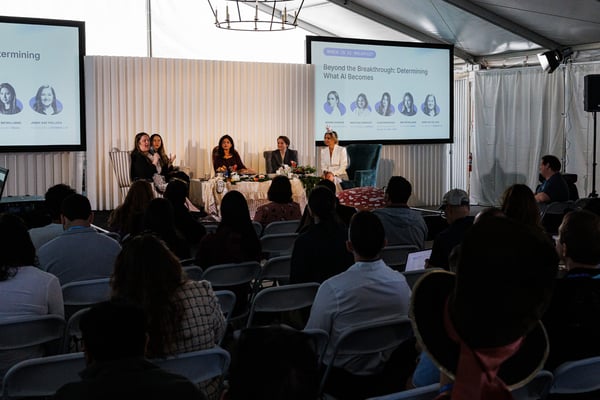
More than 600 founders, investors, researchers and corporate leaders convened on Treasure Island on June 5, 2026, for the fourth annual AI Rabbit Hole conference, an invite-only event organized by MadHats and venture firm DVC that has grown into one of San Francisco's most prominent independent AI gatherings.
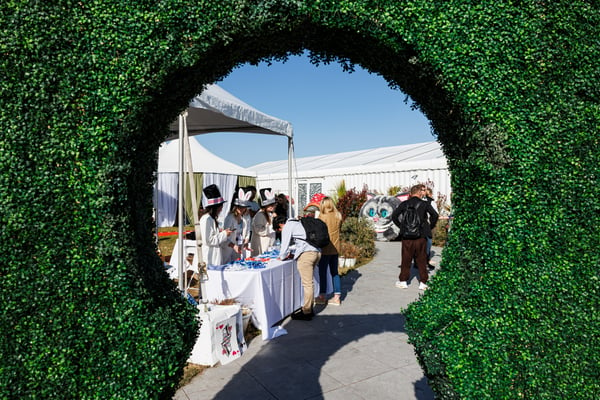
Held at the Skyline Events SF venue, the all-day program covered five thematic arcs spanning the state of AI research, infrastructure, agentic applications, physical AI and the venture capital outlook. Speakers came from Anthropic, Perplexity, Future Ventures, Nebius, JetBrains and Inception Labs, among others.
Anthropic Engineer Details How Claude Code Is Used Internally
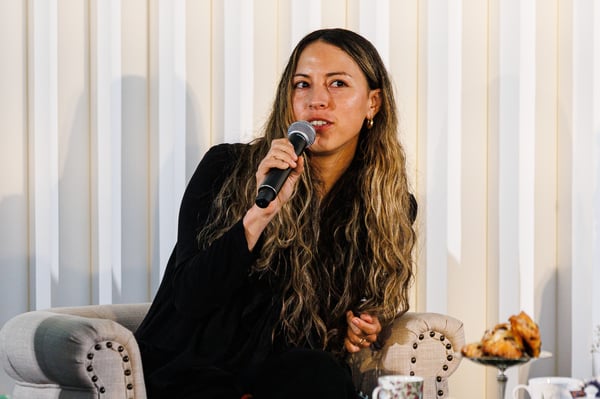
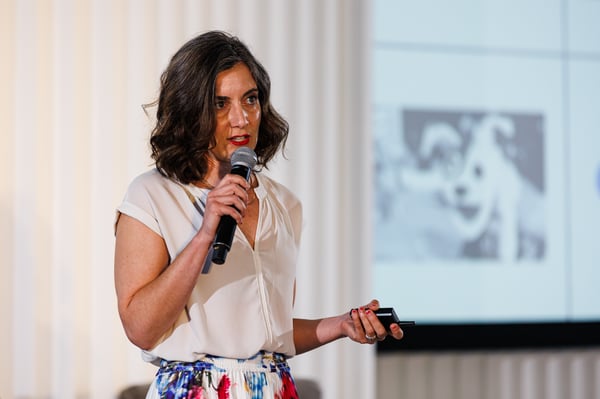
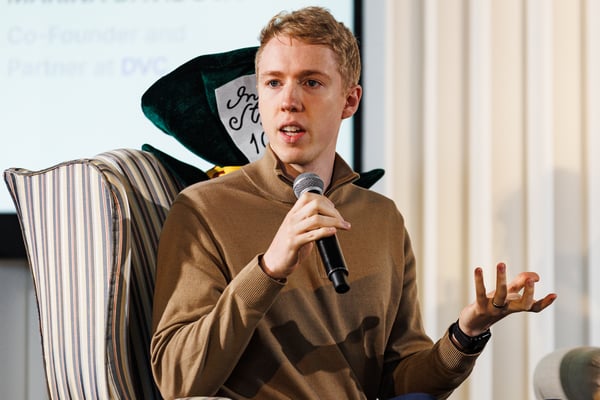
One of the morning's most closely watched sessions featured Lydia Hallie, a member of technical staff at Anthropic, discussing how the company uses its own Claude Code development tool internally. The fireside chat, moderated by DVC co-founder Marina Davidova, offered a rare look at how one of the leading AI labs uses its own agentic coding products as developer tools powered by large language models have proliferated.
Perplexity, Neon Detail the Infrastructure Behind Agentic AI
Two sessions in the late morning addressed the infrastructure beneath AI applications. Alexandr Yarats, head of search at Perplexity, argued that modern search is increasingly a code generation problem, contending that retrieving relevant information at the quality and speed users now expect requires treating queries less like lookups and more like programs to be compiled and executed.
Stas Kelvich, co-founder of Neon, the database startup acquired by Databricks, followed with a session on agentic data infrastructure in the enterprise, exploring how database architecture needs to change as AI agents become the primary clients making queries and writing records.
Inception Labs Founder Makes Case for Diffusion LLMs
Stanford professor and Inception Labs co-founder Stefano Ermon took the afternoon stage to argue that the transformer-based, autoregressive architecture underpinning most of today's large language models is not the end state. Ermon's company raised $50 million and launched Mercury 2, billed as the first reasoning diffusion language model, which generates tokens in parallel rather than sequentially. The company says the approach delivers inference speeds five to 10 times faster than comparably capable autoregressive models. The World Economic Forum named Inception Labs to its 2026 Technology Pioneers list earlier this year.
Joscha Bach Asks: Is There AGI?
Among the day's more philosophical sessions was a talk by Joscha Bach, executive director of the California Institute for Machine Consciousness, framing the question of whether any existing system constitutes artificial general intelligence and what the answer would mean if true. Bach has been a consistent voice of skepticism toward both the most optimistic and most alarmed camps in the AGI debate, and the session drew a full room.
Flo CMO on AI and 80 Million Users
Anna Klepchukova, chief medical officer at women's health app Flo, addressed what she described as the particular obligations that come with deploying AI at consumer health scale. With more than 80 million users relying on Flo for reproductive and menstrual health tracking, Klepchukova said the stakes of AI errors or biases are categorically different from those in enterprise software, a distinction she argued the industry has been slow to internalize.
Enterprise AI Panel Surfaces a Familiar Frustration
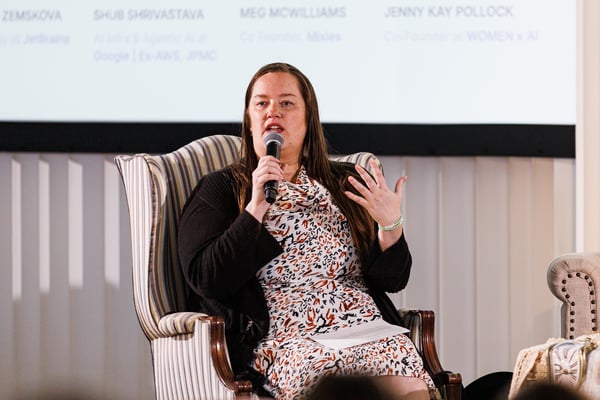
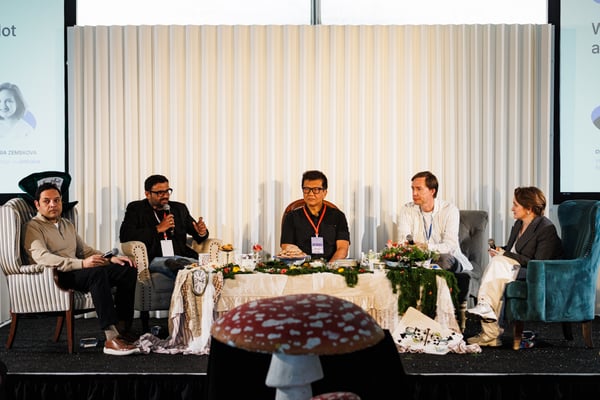
A five-person panel on why enterprise AI stalls between the pilot and the profit-and-loss statement drew on perspectives from JetBrains, SAP Americas, Google and Gruve. Anastasia Zemskova, VP of strategy at JetBrains, and Oleg Koverznev, the company's VP of agent systems, joined Kevin Tsai of Google's Applied AI Engineering team and SAP Americas enterprise AI advisor VenkataRaghu Banda for a discussion touching on change management, data readiness and the gap between what vendors promise and what enterprise IT organizations can absorb.
VC Panel Weighs "Bubble or Bubble Tea?"
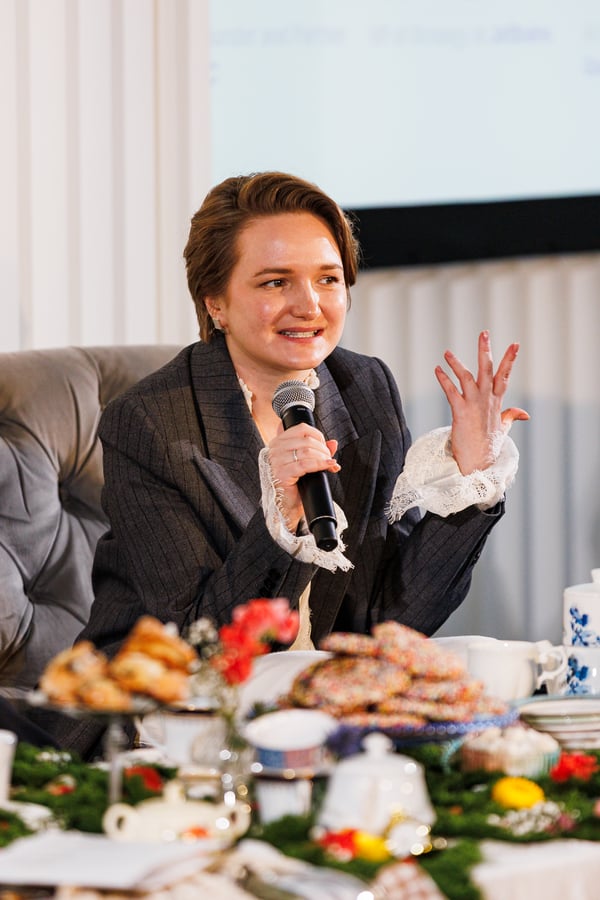
The investor panel, titled "AI Bubble Tea with VCs," brought together Ann Bordetsky of Elora Capital, Serik Kaldykulov of Elefund, Michael Stewart of M12, Microsoft's venture fund, and Anu Maheshwari of Nebius to discuss where capital is flowing, which bets look overpriced and what categories remain underfunded. Marina Davidova moderated.
The conference closed with a conversation between Steve Jurvetson, managing director of Future Ventures, an early backer of SpaceX, Tesla and xAI, and Marina Mogilko, creator of Silicon Valley Girl, on what Jurvetson described as the next one or two significant bets in AI. Jurvetson's firm recently closed a $169 million AI-focused fund.
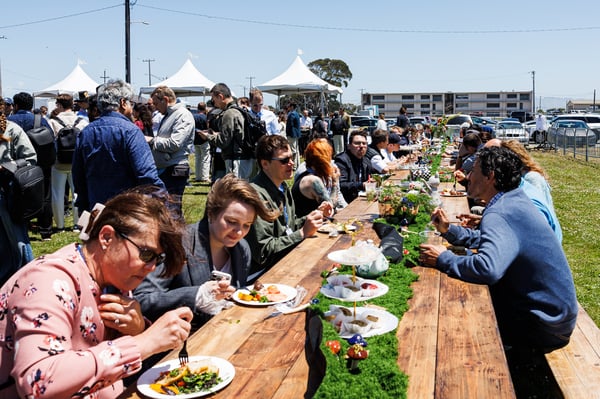
The 2026 event was sponsored by Nebius, JetBrains, Gonka, Flo and Adjust.
Related stories
View all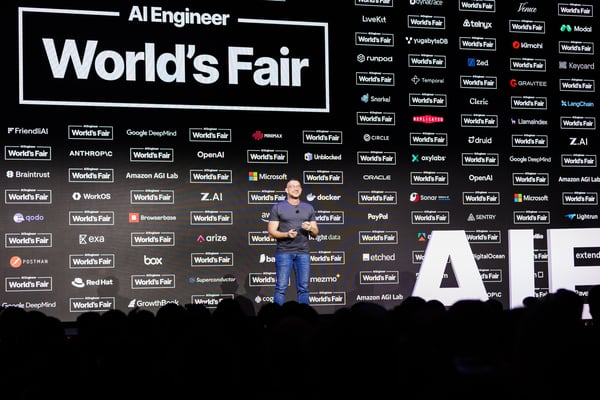
AI engineers told 'the model alone is no longer the product' as World's Fair opens in San Francisco
The AI Engineer World's Fair opened Tuesday at Moscone West in San Francisco, drawing more than 6,000 attendees and keynotes from Microsoft, OpenAI and Hugging Face, with a surprise appearance from OpenClaw creator Peter Steinberger.
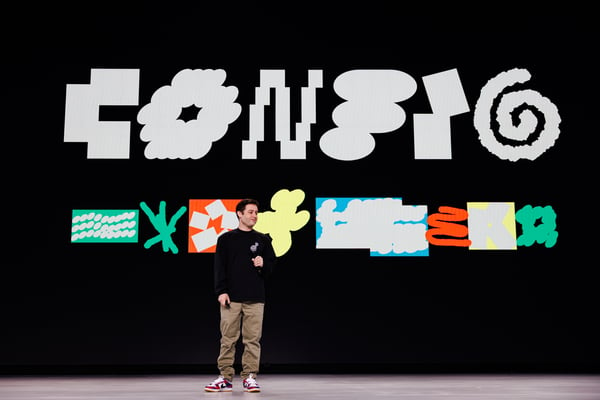
'Code is material for design': Figma announces new code layers at Config 2026
Figma unveiled new coding, animation and AI features at its Config 2026 conference in San Francisco, including code layers, native motion support, generative plugins and AI agent upgrades.
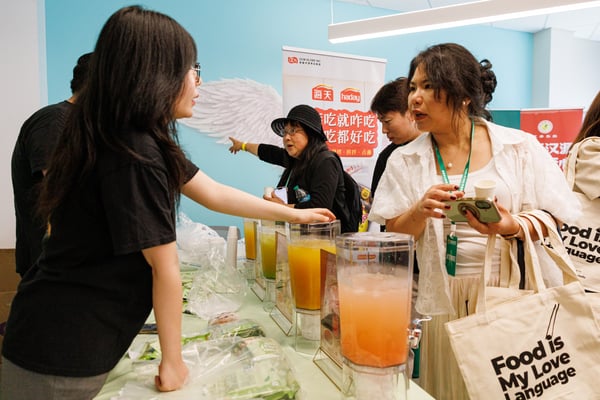
Food & Beverage Leaders Gather at SF's Taste of Asia Summit
The eighth annual Taste of Asia North American Food & Beverage Industry Summit drew restaurant operators, brand founders, investors and industry partners to Shenzhen Bay Innovation Center in San Francisco on June 15 for an evening of networking and deal-making. The event, part of a 2026 multi-city tour organized by NAAFIA and Asia Creative, featured a VIP mixer and programming on market trends, brand growth and cross-border business opportunities in the Asian food industry.