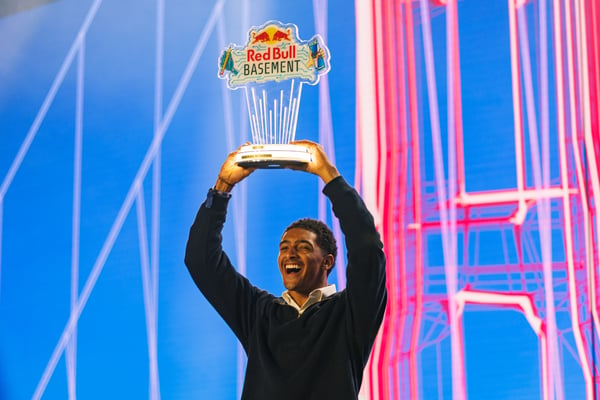
Photo by: Miles Cull / Snappr News
Lifeline AI Beats 135,000 Startups to Take the Red Bull Basement 2026 World Title
San Francisco's Darnell Adler wins the Red Bull Basement 2026 World Final with Lifeline AI — a discreet emergency SOS system that beat 135,000 global applicants to claim $100,000 in equity-free funding.
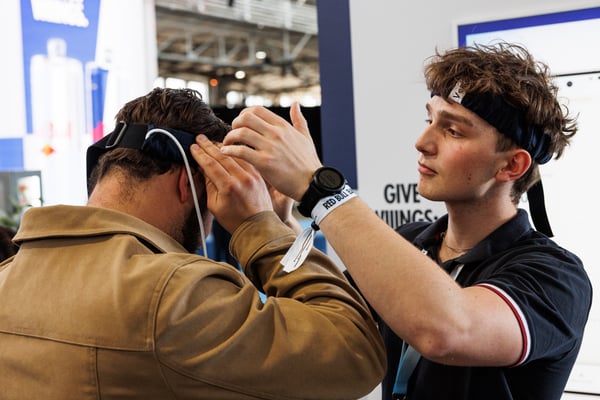
The Red Bull Basement World Final made its U.S. debut at Pier 48 in San Francisco on Tuesday, with hometown founder Darnell Adler claiming the global title and a $100,000 prize for his emergency safety startup, Lifeline AI.
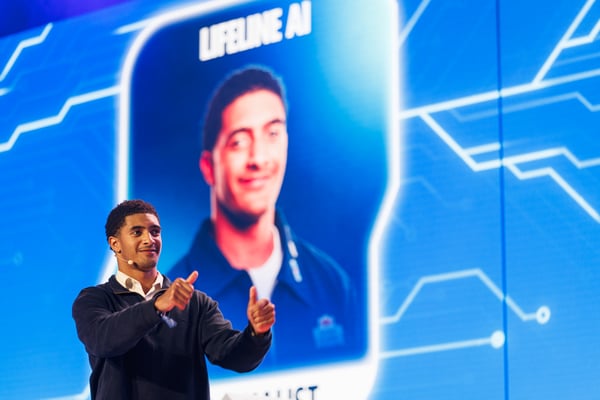
Adler, a recent University of Southern California graduate, beat representatives from 40 countries to win the competition, which drew more than 135,000 applicants worldwide in 2026.
The three-day event brought together founders, investors, tech leaders and Red Bull athletes at the San Francisco waterfront venue. It was the first time the World Final had been held in the United States, following previous editions in Istanbul and Tokyo.
What Is Red Bull Basement?
Red Bull Basement is a global innovation incubator and competition for first-time founders. Applicants submit ideas through an AI-assisted platform, refine them with built-in mentoring tools, and compete through a series of national finals before the top teams advance to the World Final.
National winners receive access to expert mentoring, vibe coding tools and a two-week development phase to build a minimum viable product ahead of the global event.
The grand prize includes $100,000 in equity-free funding from Red Bull, $25,000 in Microsoft Azure credits and ongoing mentorship from Red Bull Ventures.
Who Is Darnell Adler?
Adler is a San Francisco resident who graduated from USC's Dornsife College of Letters, Arts and Sciences with a degree in economics and a concentration in data science. He entered Red Bull Basement during his final semester after a friend encouraged him to apply.
He first competed against more than 24,000 U.S. applicants before traveling to Michigan for the National Final, just one week before his graduation ceremony. He won that round as well.
Lifeline AI: The Idea That Beat 135,000 Others
Lifeline AI is a personal safety platform that allows users to send a silent SOS alert to emergency responders and trusted contacts without unlocking their phone, typing or speaking aloud.
Adler said the product was built around a core observation: most safety tools assume the user is in a position to use them.
"The key problem is that existing safety solutions assume that you're in a position to use them, whereas Lifeline assumes that you're not," Adler said.
Artificial intelligence played a significant role in building the product. Adler used AI tools to develop his demo, build backend infrastructure, refine his pitch and create a working prototype, all within a compressed two-week development window.
How the World Final Unfolded
The competition began with workshops, keynotes and a live Demo Gallery where national winners from across the globe showcased their minimum viable products to judges, investors and attendees.
Entries included an app that converts museum art into 3D models for visually impaired users and AI-driven tools for agriculture and medical diagnostics. The top 10 teams were then selected to pitch in the Grand Final. Lifeline AI also won the People's Choice Award during the Demo Gallery phase.
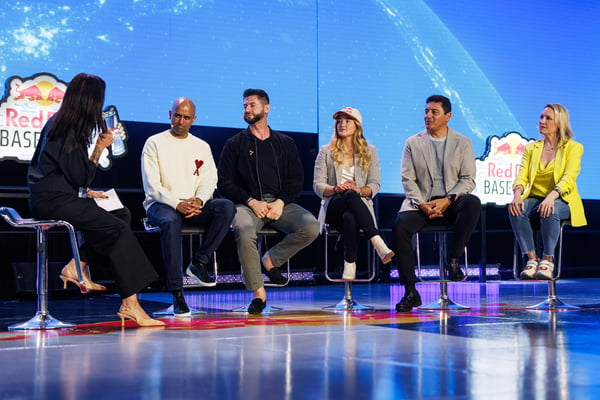
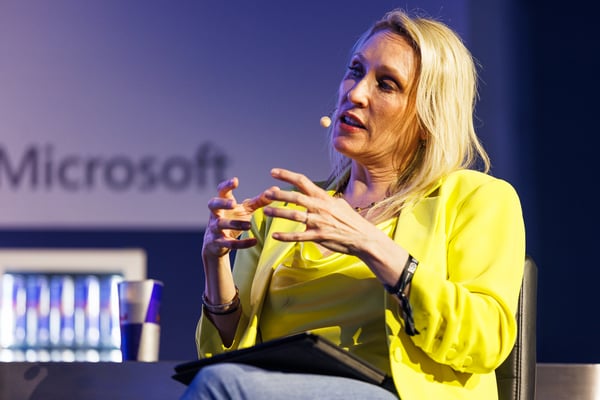
Adler was the final presenter in the Grand Final. He pitched to a panel of judges that included Michele Catasta, Partner and Head of Artificial Intelligence at Replit; Sasha DiGiulian, Red Bull Athlete and founder of Send Bars; Jessica Hawk, Corporate Vice President of Microsoft Azure Product Marketing; Gaston Sandoval, Corporate Vice President of Global Client Marketing at AMD; and Ashwin Sreenivas, President and Co-founder of Decagon.
When his name was announced as the winner, the crowd, which included his family and friends, erupted in cheers.
"I still don't have words for this, I'm shaking," Adler said. "But being the Red Bull Basement global winner means that I can help people at scale, hopefully making the world a safer place for everybody. And that means the world to me."
What's Next for Lifeline AI
Adler said he plans to use the $100,000 prize and Microsoft Azure credits to move Lifeline AI from a prototype to a consumer product. His long-term goal is for Lifeline to become the global standard for emergency help requests.
He also offered a message to first-time founders considering entering future editions of the competition.
"Don't be afraid of having an idea you think someone else had, or be afraid that you don't have the expertise. Use AI. Any idea is a good idea, so just go after it."
Related stories
View all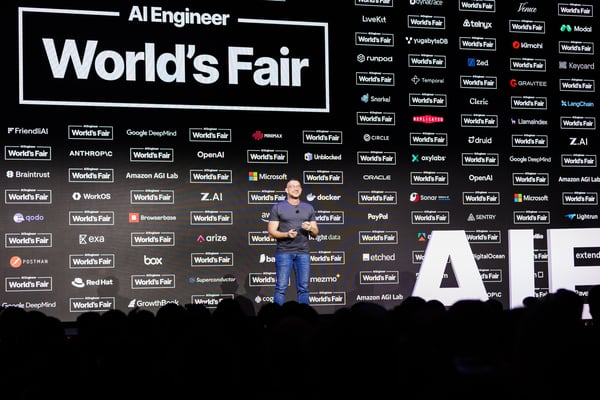
AI engineers told 'the model alone is no longer the product' as World's Fair opens in San Francisco
The AI Engineer World's Fair opened Tuesday at Moscone West in San Francisco, drawing more than 6,000 attendees and keynotes from Microsoft, OpenAI and Hugging Face, with a surprise appearance from OpenClaw creator Peter Steinberger.
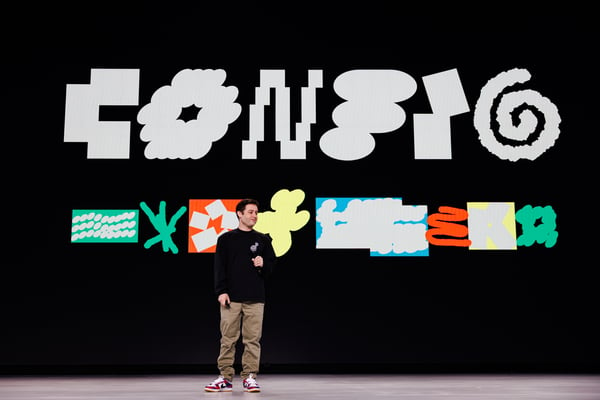
'Code is material for design': Figma announces new code layers at Config 2026
Figma unveiled new coding, animation and AI features at its Config 2026 conference in San Francisco, including code layers, native motion support, generative plugins and AI agent upgrades.
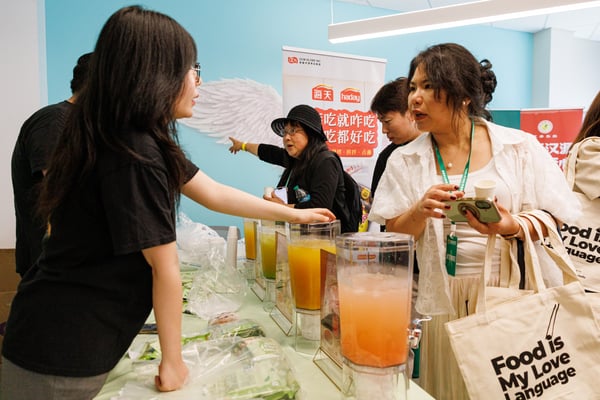
Food & Beverage Leaders Gather at SF's Taste of Asia Summit
The eighth annual Taste of Asia North American Food & Beverage Industry Summit drew restaurant operators, brand founders, investors and industry partners to Shenzhen Bay Innovation Center in San Francisco on June 15 for an evening of networking and deal-making. The event, part of a 2026 multi-city tour organized by NAAFIA and Asia Creative, featured a VIP mixer and programming on market trends, brand growth and cross-border business opportunities in the Asian food industry.