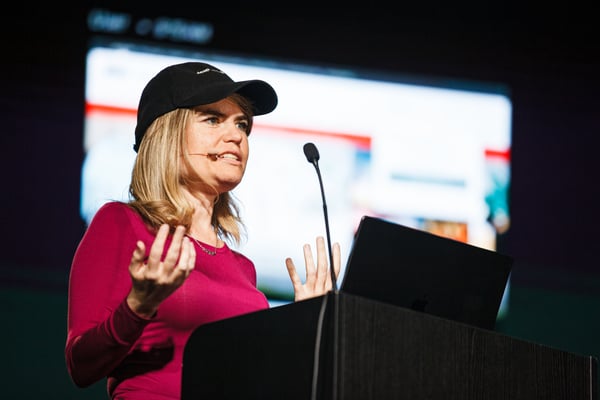
Photo by: Miles Cull / Snappr News
Vector Space Day SF 2026: Vector Search at Scale
Engineers from HubSpot, Slack, Google DeepMind, Adobe and Qualcomm gathered in San Francisco for Qdrant's first U.S. conference on vector search, AI agents and edge AI.
Qdrant's Vector Space Day came to San Francisco on June 11, 2026, gathering engineers, AI researchers and product builders from companies including HubSpot, Slack, Google DeepMind, Adobe, Qualcomm and AWS for a full day of technical talks on vector search, AI agents, retrieval-augmented generation and edge AI.
Held at The Midway on Marin Street, the single-track conference was Qdrant's first U.S. edition of Vector Space Day, following an inaugural Berlin event in September 2025 that drew more than 400 attendees and 20 speakers. The San Francisco program covered three tracks — Search & AI Retrieval, Agents & Memory, and Edge & Robotics AI — before closing with a happy hour and hackathon awards ceremony.
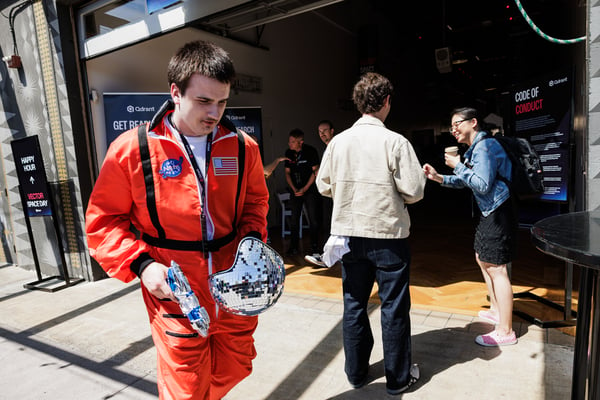
Qdrant CEO Previews Product Roadmap, Launches Qdrant Edge
Qdrant co-founder and CEO Andre Zayarni opened the conference with a keynote tracing the vector database company's origins as an open-source side project to its current position supporting thousands of production deployments and enterprise customers worldwide. The session, titled "We Do it the Hard Way," previewed significant upcoming developments to Qdrant's roadmap, though the company declined to share specifics ahead of release.
The conference also served as a stage for Qdrant to formally present Qdrant Edge, a new product designed to run local vector search directly on edge devices without requiring round trips to the cloud. DevRel engineer Dylan Couzon described it as part of a broader shift in which more physical and digital environments become searchable at the device level — from phones to robotics systems — as on-device AI inference matures.
HubSpot and Slack Detail Vector Search Infrastructure at Billion-Scale
Two of the day's most technical sessions came from engineers operating some of the largest vector search deployments in production.
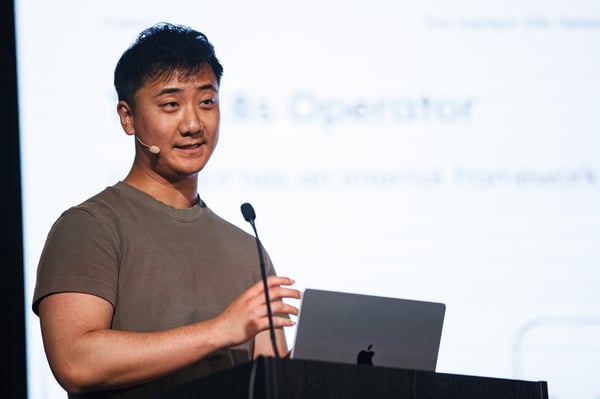
HubSpot engineers Oleg Tereshin and Xin Liu described the infrastructure behind a Qdrant cluster managing more than 20 billion vectors. The team walked through its migration from a manual, Helm-based deployment to a fully automated Kubernetes Operator — built on HubSpot's internal framework — that handles rolling upgrades, automated scaling and self-healing without human intervention.
Slack staff software engineer Avirek Ghatia offered a look at the semantic search pipeline underpinning the messaging platform's search feature, which indexes trillions of messages and surfaces results within seconds. Ghatia described a Lambda architecture built around what the team calls a "snowball" caching system, designed to avoid recomputing billions of embeddings on a weekly cycle. A greedy batching approach delivered a threefold speedup in embedding inference. Ghatia was candid about what did not work: more complex quantization methods that looked promising in testing failed in Slack's production environment.
AI Agent Memory Takes Center Stage
The Agents & Memory track reflected the growing centrality of persistent context to agentic AI systems — a challenge that speakers framed not just as a modeling problem but as a retrieval and infrastructure problem.
Mem0 CEO Taranjeet Singh argued that continual learning in production agents has been misframed as a training problem requiring new model weights. The more practical unlock, he said, is memory: capturing agent interactions, structuring durable context, and enabling better decisions over time using vector databases and retrieval systems. Singh shared architecture patterns and trade-offs from building Mem0, including what breaks when a memory layer scales.
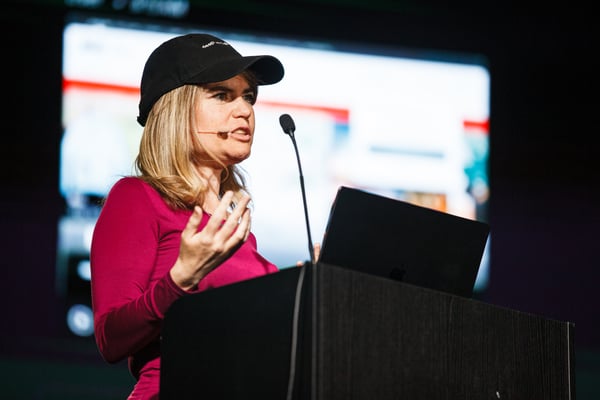
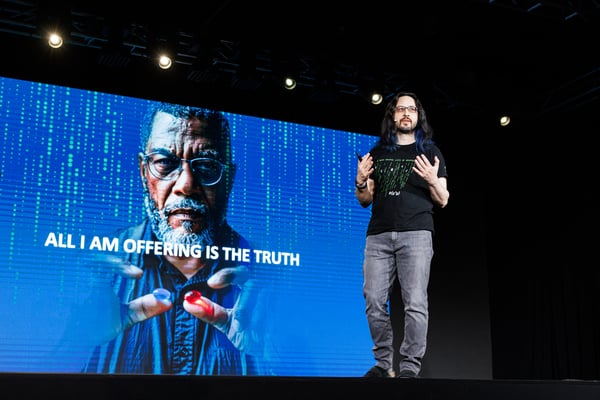
Google DeepMind developer relations lead Paige Bailey addressed the debate over SKILLS.md files — static markdown documents that describe what an AI agent can do. While the format has offered a simpler alternative to MCP server complexity, Bailey argued it creates its own ceiling: brittle maintenance loops and capability limits that prevent agents from evolving. Her talk outlined a path toward dynamic, self-updating agent tooling.
Neo4j VP of developer relations Stephen Chin introduced the concept of context graphs — a structured representation of not just what was retrieved, but how context flowed through tool calls, constraints and outcomes over time — as a complement to pure vector retrieval for enterprise AI agents requiring provenance and multi-hop reasoning.
GraphRAG, Retrieval Evaluation and the Enterprise AI Stack
Adobe principal engineer Murthy Chandrapaty and software engineer Ankush Gumber demonstrated a GraphRAG architecture for enterprise AI governance, combining Qdrant's vector search with a Neo4j graph layer. A live demo showed identical queries returning different results for different users based on access policies embedded in the graph — retrieval that is not only fast but policy-compliant by design.
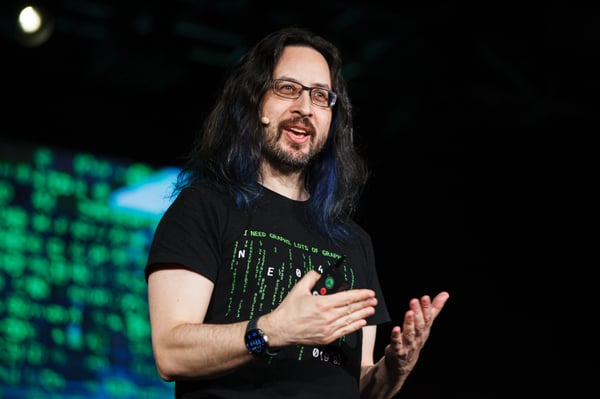
Arize head of developer relations Laurie Voss made the case for treating retrieval evaluation as an engineering discipline rather than an afterthought. Her talk, titled "Stop Vibe Shipping: Evaluate Your Retrieval," covered retrieval metrics, building golden evaluation datasets, appropriate uses of LLM-as-judge scoring, and wiring continuous evaluations into CI pipelines so regressions surface before they reach users.
LlamaIndex AI engineer Preston Carlson turned to a persistent blind spot in enterprise AI deployments: the roughly 90 percent of business data that lives in unstructured formats — PDFs, PowerPoints, Word and Excel files — that most retrieval pipelines handle poorly. His talk covered advances in document OCR and agent harnesses designed to unlock that data for AI-driven workflows.
Edge AI and Robotics: Vector Search Moves Off the Cloud
The Edge & Robotics AI track examined what happens as vector search and agentic AI move from cloud data centers onto phones, laptops and physical devices.
Qualcomm senior product manager Alan Zhu discussed patterns for running on-device agentic AI using the neural processing unit, a chip optimized for AI inference workloads. For use cases where latency, privacy or connectivity are constraints, Zhu argued that on-device inference via Qualcomm AI Hub delivers performance cloud-based approaches cannot match.
AWS senior developer advocate Sandhya Subramani closed the track with a live demonstration of a robot responding to natural language commands through an open-source agentic framework in which physical sensors and actuators function as agent tools, with a lightweight local model handling real-time control and a cloud model handling more complex reasoning.
Oncotelic Case Study: Vector Search in Drug Discovery
A joint session from Qdrant and Oncotelic Therapeutics highlighted a biomedical use case: indexing 28 million PubMed abstracts using Qdrant's hybrid retrieval and metadata filtering to power AI-driven drug discovery research. Oncotelic chief business officer Saran Saund said the vector search infrastructure helped compress concept-to-clinic timelines to roughly two years — a fraction of the typical biotech development cycle.
Vector Space Day SF 2026 was sponsored by AWS and Vultr. Talk recordings are expected to be made available to registered attendees in the weeks following the event. Qdrant develops an open-source vector database used in RAG pipelines, semantic search systems and AI agent applications.
Related stories
View all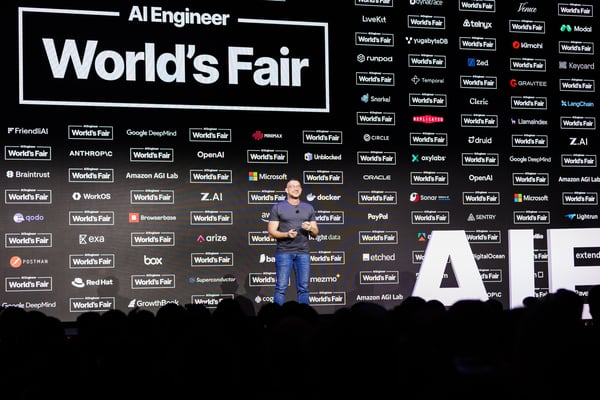
AI engineers told 'the model alone is no longer the product' as World's Fair opens in San Francisco
The AI Engineer World's Fair opened Tuesday at Moscone West in San Francisco, drawing more than 6,000 attendees and keynotes from Microsoft, OpenAI and Hugging Face, with a surprise appearance from OpenClaw creator Peter Steinberger.
'Code is material for design': Figma announces new code layers at Config 2026
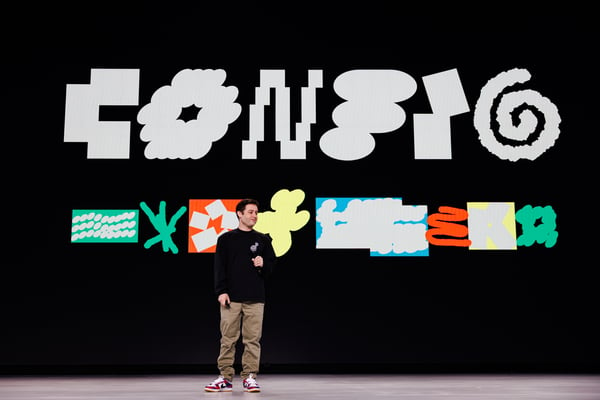
Figma unveiled new coding, animation and AI features at its Config 2026 conference in San Francisco, including code layers, native motion support, generative plugins and AI agent upgrades.
Food & Beverage Leaders Gather at SF's Taste of Asia Summit
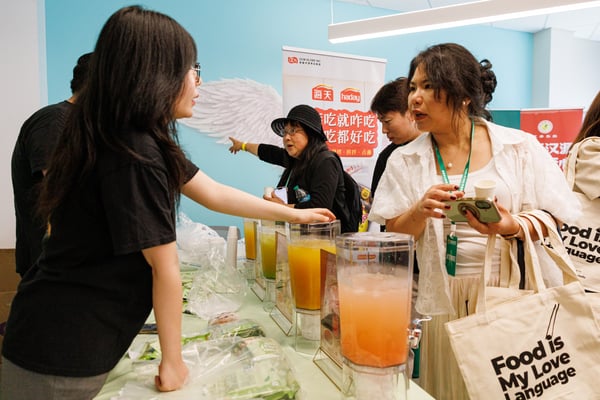
The eighth annual Taste of Asia North American Food & Beverage Industry Summit drew restaurant operators, brand founders, investors and industry partners to Shenzhen Bay Innovation Center in San Francisco on June 15 for an evening of networking and deal-making. The event, part of a 2026 multi-city tour organized by NAAFIA and Asia Creative, featured a VIP mixer and programming on market trends, brand growth and cross-border business opportunities in the Asian food industry.