

Think about the last time you landed on a website and saw a generic, obviously staged stock photo of business professionals shaking hands. Did it inspire confidence? Probably not. Now picture arriving on a company's site and seeing real, high-quality images of their actual team, workspace, and product in action. Which one would you trust?
Replacing stock photos with professional photography is not a matter of taste. It is a measurable lever on trust, engagement, and conversion, and the gap is large enough that one company reported a 45% jump in leads after making the switch. This guide covers the data behind that number, where stock photos cost you the most, a practical playbook for replacing them, and the part almost no one talks about: how to keep every shoot consistent once you have more than one to manage.
The Hidden Cost of Stock Photos
Stock photos are not free, even the ones you do not pay a license for. The cost shows up later, in the form of a brand that blends in and a page that quietly underperforms. It breaks down into three problems.
Your Brand Looks Like Everyone Else's
A stock image is, by definition, available to your competitors too. The moment you build a homepage around a library photo, you accept that the same picture can appear on a rival's site, a spammy ad, and a stranger's blog. In categories where differentiation is the whole game, leaning on the same imagery everyone else can buy is a fast way to become forgettable. Distinct visuals are one of the few assets a competitor cannot copy with a credit-card subscription.
Audiences Tune It Out
People have learned to ignore imagery that feels decorative. In eye-tracking research from the Nielsen Norman Group, users paid close attention to photos that carried real information (actual products, actual people) and skipped right past generic "filler" images the way they skip banner ads. A stock photo of a diverse team high-fiving in a sunlit office is not neutral. It signals "marketing," and attention slides off it.
It Undercuts Credibility
First impressions of a website are overwhelmingly visual, and design is a major driver of whether visitors judge a business as trustworthy. Stanford's web credibility research found that people routinely evaluate the legitimacy of an organization based on how its site looks and feels. When the imagery is clearly borrowed (a "team" that is obviously models, an "office" that is a stock set), savvy visitors notice, and the doubt spreads to everything else on the page, including your claims and your pricing.
What the Data Says About Professional Photos vs Stock Photos
The case for professional photos over stock photos is not a vibe. It holds up in conversion data, in consumer surveys, and in how people remember what they see.
The headline number comes from a company that replaced generic stock photos with professional shots of its actual crew and vehicles and recorded a 45% lift in leads. The mechanism is not mysterious: real photos of real people answer the question every visitor is quietly asking, which is "are these the people I would actually be working with?"
Consumer preference points the same direction. Surveys of online shoppers consistently find that image quality ranks as the single most important factor in a purchase decision, above written product details and even customer reviews. Authenticity compounds it: in a 2022 Stackla survey, 90% of consumers said authenticity matters when deciding which brands to support, and generic stock is the opposite of authentic.
Product pages make the pattern concrete. Shopify's guidance on product photography reflects what its merchants see in practice: high-quality, professional product images meaningfully outperform low-effort ones on conversion. When the photo is the only thing a shopper can touch, its quality is not a nice-to-have. It is the sales pitch.
Real photos of real people answer the question every visitor is quietly asking: "Are these the people I'd actually be working with?"
Where Stock Photos Cost You the Most
You do not have to replace every image at once. Some placements carry far more weight than others, and that is where professional photography earns its keep first.
Homepages and Landing Pages
These are the pages with the highest intent and the highest stakes. A hero image is the first thing a visitor processes, often before a single word. If it is a recognizable stock shot, you have spent your best moment on something borrowed. Real photography of your space, your product, or your people turns that moment into proof.
Product and Ecommerce Photography
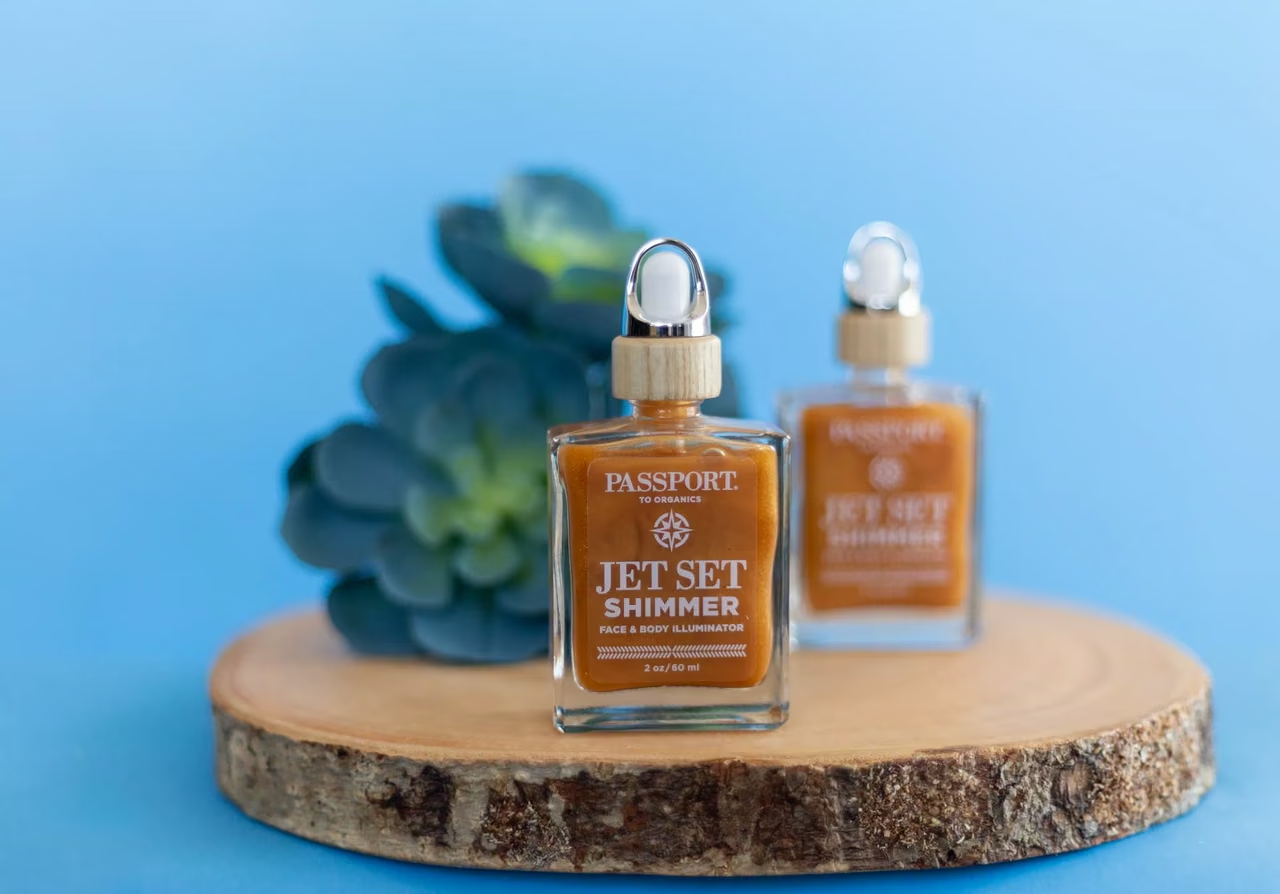
For online stores, the photo is the product until it arrives. This is where professional product photography pays for itself fastest, because there is no showroom to fall back on and no salesperson to fill the gaps. Consistent lighting, accurate color, and multiple angles reduce returns and raise conversion at the same time. If you sell across marketplaces and your own storefront, the same shoot fuels your ecommerce and fashion catalog everywhere at once.
Team Pages and Headshots
Nothing exposes stock photography faster than an "About" page full of obvious models. Consistent, professional headshots for business teams signal that real people stand behind the brand, and they read as a deliberate choice rather than a placeholder. A strong headshot is also a personal asset for everyone on the team, which is why it is worth treating as more than an afterthought. (We break down what separates a good one from a bad one in our guide to the headshot as a personal branding tool.)
Social Ads, Menus, and Local Listings
In the feed and on delivery apps, imagery is competing against professional content on every side. Generic photos lose that fight: social posts using authentic images tend to earn around 35% more engagement than those built on stock. Restaurants are the clearest example: appetizing, professional food photography lifts menu conversion and online orders in a way stock plates of pasta never will, which is why photography is now table stakes for anyone marketing menus and restaurants.
How to Replace Stock Photos, Step by Step
Replacing stock is less daunting when you treat it as a prioritized project rather than an all-or-nothing overhaul. A workable sequence looks like this.
- Audit what you have. Inventory every stock image on your most valuable pages and flag the ones doing real persuasive work (heroes, product shots, team photos) versus decorative filler you can simply remove.
- Start where intent is highest. Prioritize the homepage, top landing pages, and best-selling product pages. A handful of replacements here will move more numbers than repapering a dozen low-traffic pages.
- Write a shot list. Decide exactly what each new image needs to show and communicate before anyone picks up a camera. A clear list is the difference between a productive shoot and an expensive guess.
- Define your look up front. Lock down the details that make images feel like yours (framing, color treatment, background, mood) so the results match your brand instead of the photographer's default style.
- Shoot, then measure. Swap the images in and watch conversion, engagement, and time on page. The 45% stories exist because someone tracked the before and after.
Step four is where most of the long-term value hides, and it is also where the project stops being a one-time task and becomes an ongoing one.
The Real Challenge Isn't the First Shoot: It's Staying Consistent
Here is the part the "stock is bad, custom is good" articles skip. For a growing brand, professional photography is not a single event. It is a recurring need. Every new product drop, every new location, every seasonal campaign, every new hire on the team page means another shoot. And every additional shoot is another chance for your visual identity to drift.
Drift is subtle and expensive. One photographer frames tight and warm; the next shoots wide and cool. A product line shot in New York does not match the same line shot in Los Angeles. Six months in, your catalog looks like it came from six different brands, and the consistency that made professional photography worth the investment is gone. Agencies managing multiple clients and ecommerce brands managing constant new inventory feel this most acutely, because for them the "next shoot" is always right now.
The brands that solve it treat consistency as a system, not a hope. Airbnb is the classic example: as it scaled professional photography across thousands of listings and cities, it did not rely on individual photographers to guess the look. It established rigorous guidelines and standards so every shoot matched, everywhere. That discipline is a big part of how Airbnb used professional photography to build an empire. The lesson is not "hire more photographers." It is "give every photographer the same brief."
Brief Once, Shoot Forever: Keeping Every Shoot On-Brand With Snappr Pro
Most teams cannot staff an in-house creative operation the way Airbnb did. The point of Snappr Pro is to give any brand that same consistency without building the machine themselves.
The core of it is Creative Guidelines. You save your style and visual preferences once (framing, lighting, backgrounds, the shots you always need) and every photographer receives them before the shoot, no matter the city and no matter who picks up the assignment. Brief once, shoot forever. Galleries come back matching what you asked for, which means fewer surprises and fewer reshoots on work that should have been right the first time.
Around that sit the tools that make recurring photography manageable for a team:
- Team workspace so marketing, brand, and ops book and review from one place instead of scattered email threads.
- Smart asset search that lets you find any past shot by keyword, so your library stays usable as it grows.
- Favorite photographers you can request again when a shoot goes well, building continuity across projects.
- A reduced service fee that makes frequent, ongoing shoots more economical than one-off bookings.
If you are replacing stock across a single site, you can book a shoot and be done. If photography is a standing part of how your brand operates (multiple locations, constant new products, a content calendar that never stops), that is exactly what Snappr Pro and Snappr for Enterprise are built for. For a broader case on why this matters at all, our rundown of why professional photography is essential for every business covers the fundamentals.
Replacing stock photos with professional photography is the decision. Keeping every shoot on-brand after that is the discipline. Get both right and the imagery stops being a cost center and starts doing what the 45% number promises.
Frequently Asked Questions
Do professional photos really increase leads?
They can, sometimes dramatically. One frequently cited case study recorded a 45% increase in leads after a company replaced generic stock imagery with professional photos of its real team and equipment. The effect comes from higher trust and authenticity: real photos reassure visitors that the business is legitimate and that the people shown are the ones they will actually deal with. Results vary by page and industry, so the reliable move is to measure conversion before and after the swap.
Are stock photos ever okay to use?
Yes, in the right spots. Stock can work for abstract concepts, background textures, or supporting blog illustrations where no one expects the image to represent your specific business. The problems start when stock stands in for something concrete: your team, your product, your space, your results. Anywhere a visitor would reasonably assume the photo represents you, borrowed imagery undercuts trust.
How much does professional photography cost compared to stock?
Stock has a lower upfront price, but professional photography is usually the better long-term value. You own the images outright, they are unique to your brand, and a single shoot can supply your website, ads, social channels, and catalog at once. On-demand services and subscription models have also narrowed the gap considerably, making recurring professional shoots far more affordable than they were a few years ago.
How do I keep photography consistent across locations and photographers?
Consistency comes from a shared brief, not from luck. Document your visual standards (framing, lighting, color, required shots) and make sure every photographer receives them before the shoot. Snappr Pro's Creative Guidelines are built for exactly this: you save your preferences once and they travel to every photographer on every shoot, so galleries match whether the work happens in one city or ten.
Which stock photos should I replace first?
Start with the highest-intent, highest-visibility placements: your homepage hero, top landing pages, best-selling product pages, and team or "About" page. These pages do the most persuasive work, so replacing a handful of images here typically outperforms overhauling many low-traffic pages. Decorative filler images can often just be removed rather than replaced.
Can I get product photos, headshots, and other shoots from one provider?
Yes, and there is a real advantage to it. Sourcing product photography, headshots, real estate, food, and event coverage through a single platform keeps your look consistent and your process simple, especially when you shoot regularly or across multiple locations. It also means one set of creative guidelines can govern every type of shoot instead of re-briefing a new vendor each time.


