

Restaurant food photography is one of the highest-return marketing investments a restaurant can make, and the economics have shifted decisively in the operator's favor. Diners now decide where and what to eat on a screen, often before they ever see your dining room. Roughly 85 to 93% of people look up a restaurant online before visiting, and once they are looking, the photo does the selling. The question for owners is no longer whether professional images are worth it. It is how to get professional quality without the traditional professional price tag.
This guide breaks down the actual return on professional food photography and shows how a membership model like Snappr Pro changes the equation for restaurants that shoot more than once a year.
Why Restaurant Food Photography Is a Revenue Lever, Not a Cost
Food is an impulse purchase, and appetite is triggered visually. When a diner scrolls a delivery app or lands on your menu page, the image is what converts curiosity into an order. That is why high-quality food photos matter more than almost any other menu detail. The data is consistent across platforms and studies:
- Menus with professional photography have been shown to lift sales by 20 to 45%, with many operators reporting a roughly 30% increase after adding images.
- DoorDash has reported that menu items with photos can see up to 44% higher monthly order volume than items without.
- Listings that include photos and descriptions can receive as many as 70% more orders than text-only listings.
- An estimated 82% of diners will order a dish based purely on how it looks, and 84% want to see photos before choosing a restaurant.
These are not vanity metrics. They map directly to order volume, average check size, and the channels that now drive the majority of discovery. As Square's analysis of menu imagery notes, a strong photo shortens the distance between "just browsing" and "add to cart." A cost that reliably increases revenue is not a cost. It is an investment with a measurable return.
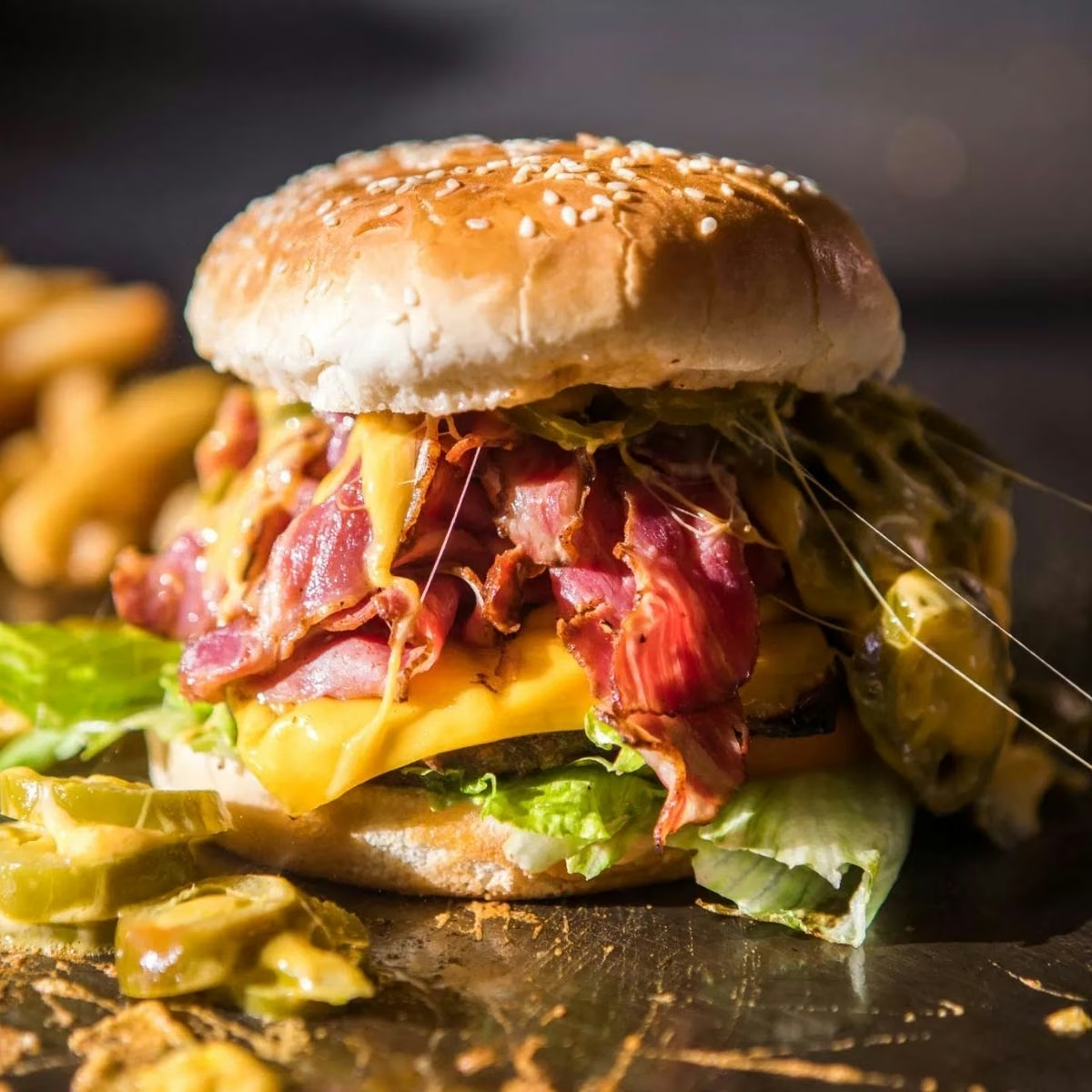
Professional vs. Amateur: What the Difference Actually Costs You
For years, the standard advice to budget-conscious owners was to start with phone photos and upgrade later. That advice made sense when professional photography meant a four-figure minimum and a two-week turnaround. It does not hold anymore, and following it now carries a hidden cost: every week an amateur photo sits on a high-traffic delivery listing, it is suppressing orders you could be capturing.
The gap between amateur and professional images is not about snobbery. It is about the specific technical choices that make food look appetizing rather than flat, and those choices compound on small screens where most ordering happens.
Lighting That Makes Food Look Fresh
Amateur photos are usually lit by whatever is overhead, which flattens texture and turns warm food grey. Professionals shape light to bring out steam, gloss, and crispness, the cues that read as "fresh" and "delicious" at a glance.
Styling That Holds Up Under the Lens
Food behaves badly on camera. Cheese congeals, greens wilt, sauces separate. Professional food photography accounts for this with styling and pacing so the plate looks the way it does in the first thirty seconds after it leaves the kitchen.
Composition and Consistency Across a Menu
A professional shoot delivers a coherent set: consistent angles, backgrounds, and color, so your menu looks like one brand rather than a scrapbook. That consistency is what makes a restaurant look established and trustworthy, and it is nearly impossible to fake across dozens of phone photos taken on different days.
The real cost of amateur photography, then, is not zero. It is the orders you never see, on the channels where the photo is the entire pitch.
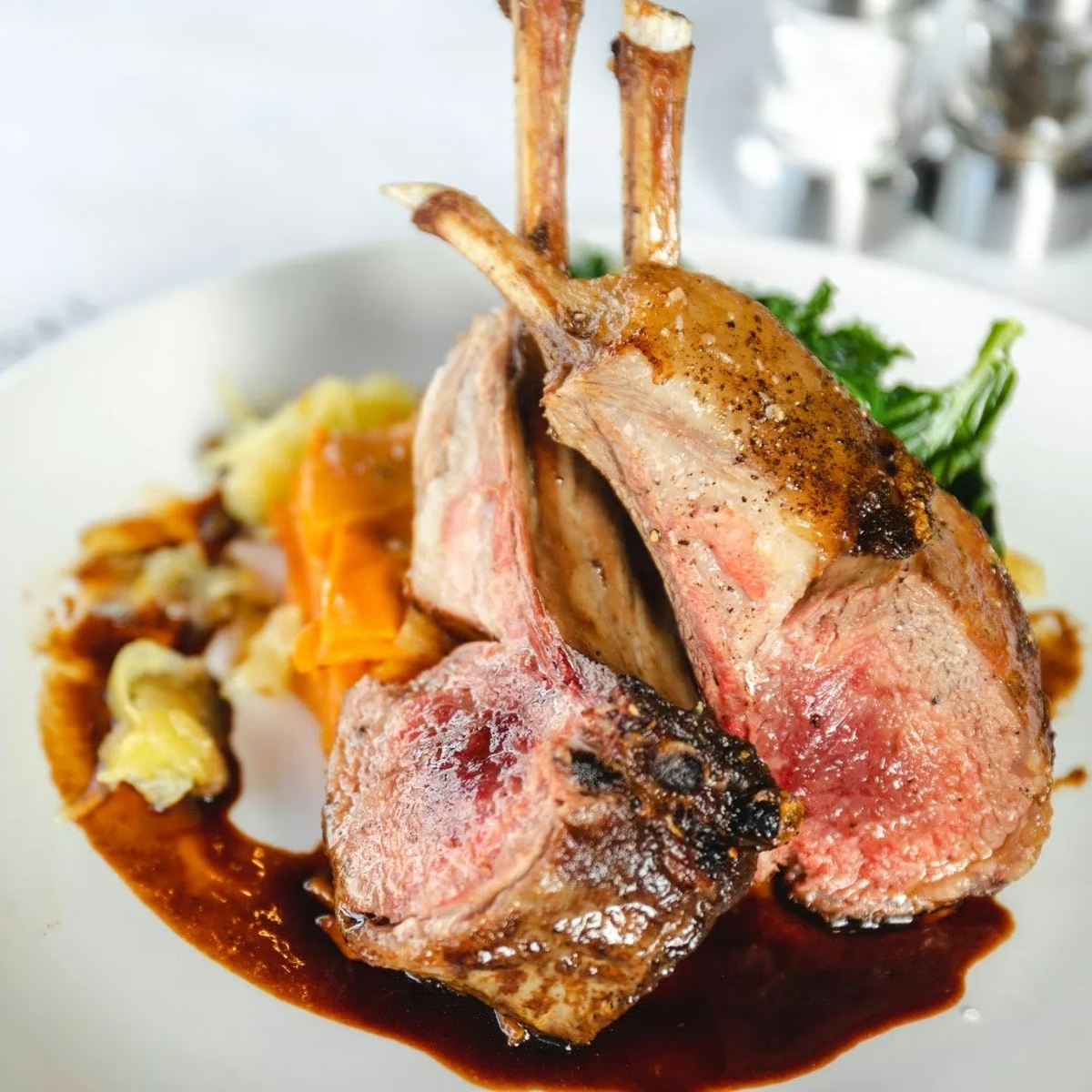
How Snappr Pro Changes the ROI Equation
For restaurants that shoot more than once a year, whether for seasonal menus, new dishes, or refreshing tired listings, the pricing model itself becomes part of the return. This is where Snappr Pro matters.
Snappr offers two ways to book. Pay-as-you-go carries a 15% service fee per shoot with no commitment. Snappr Pro is a membership at $49 a year (a limited-time launch price; $99 regular) that drops the service fee to 9% and adds team features built for recurring work. It is the budget-friendly path to professional results, exactly the option that did not exist when "start with amateur photos" was reasonable advice.
The membership follows one simple promise: it pays for itself. Because Pro cuts the service fee by six percentage points, the $49 fee is recovered once your annual booking spend passes roughly $820, about four to six typical shoots. Every booking beyond that break-even point costs less than it would on pay-as-you-go.
Beyond the lower fee, Pro is designed for the way restaurants actually manage visual content over time. It includes up to three team seats with individual logins, smart keyword image search across every gallery you have shot, stored creative guidelines so each shoot matches your brand, and the ability to favorite the photographers who nail your look. Galleries typically arrive within 48 hours, so a new dish can be live on your menu the same week it launches.
For restaurant groups running many locations, the math tilts further. Snappr Enterprise removes the per-shoot service fee entirely and adds API access and workflow automation to keep imagery consistent across every location. If you operate at that scale, talk to our Enterprise team about volume pricing.
How to Maximize ROI Across Every Channel
The return on a shoot is a function of how many places the images work for you. Shoot once, deploy everywhere, and the cost per use falls toward zero. A practical distribution plan:
- Menu and in-store: Lead with your highest-margin and signature dishes, the ones you most want diners to choose.
- Delivery apps: Photograph every item on DoorDash, Uber Eats, and Grubhub. This is where images move orders most directly, and where amateur photos cost you the most.
- Website and Google Business Profile: Professional imagery raises perceived quality the moment a diner lands, and it is the first thing they see in local search.
- Social and paid ads: A consistent gallery gives you weeks of post material and ad creative without a new shoot each time.
- Reuse over time: With Pro's stored galleries and smart search, last quarter's images stay findable and on-brand instead of getting lost in a phone's camera roll.
The restaurants that get the most from food photography treat a single shoot as a content library, not a one-time asset. One booking should feed your menu, your apps, your site, and your feed for months. And unlike advertising, which stops the day the budget runs out, those images keep converting for as long as the dish is on the menu.
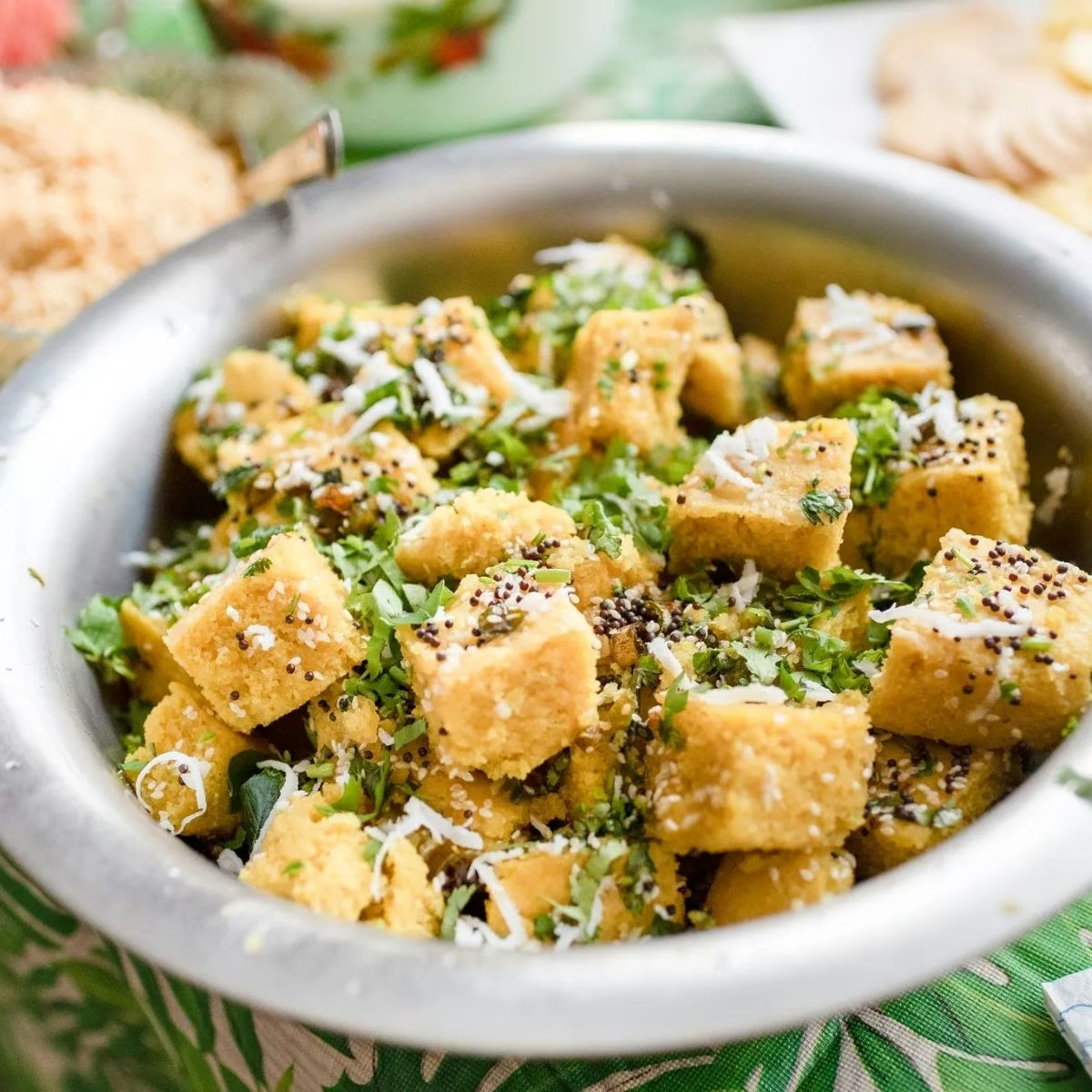
When to Book Professional Food Photography
The best time to book is whenever an image is about to represent your food to a paying customer, which today is nearly always. A few moments carry the clearest return:
- A new or seasonal menu: New dishes deserve images that sell them from day one.
- A grand opening or rebrand: First impressions online set expectations before anyone walks in.
- Launching or refreshing delivery listings: The fastest, most measurable win, since photos map directly to app orders.
- Tired or inconsistent existing photos: If your listings look like a scrapbook, you are leaving orders on the table.
Notice what is no longer on the list: "wait until you can afford it." With a membership at $49 a year and a lower per-shoot fee, professional quality is the affordable option, not the aspirational one. The budget argument for amateur photos has effectively disappeared. Book a shoot when a dish is worth ordering, and let the images do the selling.
Frequently Asked Questions
Is professional food photography worth it for a small restaurant?
Yes. The return scales with how much of your business runs through screens, and for most restaurants that is the majority of discovery. Because a single shoot lifts orders across your menu, delivery apps, and website at once, even a small restaurant typically recovers the cost within weeks. A membership like Snappr Pro lowers the entry point further, so professional quality no longer requires a big upfront budget.
How much does restaurant food photography cost?
Independent photographers typically range from about $500 to $3,000 for a menu shoot, depending on the number of dishes, styling, and market, with full 40 to 50 item menus reaching $3,000 to $5,000. With Snappr, you pay per shoot plus a service fee: 15% on pay-as-you-go, or 9% with a Snappr Pro membership at $49 a year.
How many photos do I need for a menu?
Prioritize your signature and highest-margin dishes first, then work toward full coverage of anything sold on delivery apps, where images most directly drive orders. Many restaurants start with 10 to 20 hero dishes and expand from there as budget allows, which is easy to phase when a membership keeps each shoot's per-item cost down.
How often should I reshoot?
Reshoot when your menu changes, when you add seasonal dishes, or when listings start to look dated against competitors. Restaurants with recurring needs are exactly who Snappr Pro is built for, since the lower service fee and stored galleries make frequent, consistent shoots cost-effective over a full year.
What is Snappr Pro, and how does it lower photography costs?
Snappr Pro is a membership at $49 a year (limited-time launch price; $99 regular) that reduces the per-shoot service fee from 15% to 9% and adds team seats, smart image search, and stored creative guidelines. Because it cuts six percentage points off every booking, the membership pays for itself in roughly four to six shoots, after which every shoot costs less than pay-as-you-go. Compare the tiers to see the break-even for your volume.


