

Property Management. 2026. Attention is the new currency, and Automation Keeps You in the Game.
If you only have 30 seconds, here’s the takeaway:
In 2026, automation doesn’t just collect rent. It collects attention.
And in a market where attention decides occupancy, your visuals aren’t a “marketing task.”
They’re a core system for revenue.
If your team can’t keep up with the new pace and volume needed for photography, 3D tours, and visual content, you’re not just behind, you’re leaving money on the table.
We feel you. Property Management has never been harder.
Property management has to be one of the hardest jobs out there.
Initial inspections.
Legal paperwork.
Financial setup.
Marketing.
Leasing execution.
Maintenance calls at 2 a.m.
You’re managing people, properties, and processes. All at once.
And somewhere between all that, it’s hard to know what to automate first. Among the hundreds of moving pieces, only a few truly move the needle.
That’s why I like how @DoorGrow breaks it down: the high-impact areas where automation actually saves time and sanity.
High-Impact Automation Opportunities (according to DoorGrow)
Rent Collection → automate ACH, late-fee notices, and payment plans so rent day runs itself.
Recommended tools: AppFolio, Buildium, or Yardi for payment automation; Zapier for cross-app reminders.
Lease Management → Automate renewal notices, rent analysis, and e-signatures on autopilot.
Recommended tools: Propertyware, AppFolio, DocuSign, Power Automate for digital workflows.
Maintenance Coordination → smart ticket routing, vendor scheduling, and progress tracking with photos.
Recommended tools: Propertyware or Yardi Maintenance Manager; Slack + Zapier for vendor comms.
Financial Processing → owner payouts, expense categorization, and tax docs — handled through workflows instead of inbox threads.
Recommended tools: QuickBooks Online, AppFolio, Tableau / Power BI, Google Data Studio.
But here’s what’s changing fast… and most property management teams aren’t geared up for it.
The purchasing power has shifted.
Millennials and Gen Zs now dominate the renter base (and soon, the buyers).
They don’t read listings descriptions, they experience them.
They open 3D tours first.
They swipe through your photos, filtering for lighting, layout, and lifestyle.
They vibe-check your community online, looking for connection, energy, and people who feel like them.
Then they check for cool 3rd Spaces around the property:
Coffee shops, co-working spots, gyms, and social spaces.
They consume information across platforms: your website, Instagram, TikTok, Google Maps, Reddit, Yelp.
Attention and engagement are the new currency.
If you can’t keep up, you’re invisible.

2026’s High-Impact System: Visual Content Operations
Most PM teams still handle photography, videography and virtual tours manually.
They Google freelance photographers.
Browse portfolios.
Fill out contact forms.
Wait days for a reply on quotes and availability.
Negotiate unclear pricing.
Email back and forth to ensure brand alignment and photo styles.
Schedule, reschedule, send guidelines, cross your fingers.
After the photoshoot, you wait again.
Photos arrive by email.
You download, rename, sort, pick favorites, and upload them manually — to Zillow, Apartments.com, your site, socials.
And the process repeats for the next project.
Some teams also try to do this in-house.
Hours of work.
It doesn’t scale.
Sound familiar?
Here’s What It Looks Like with Snappr Instead
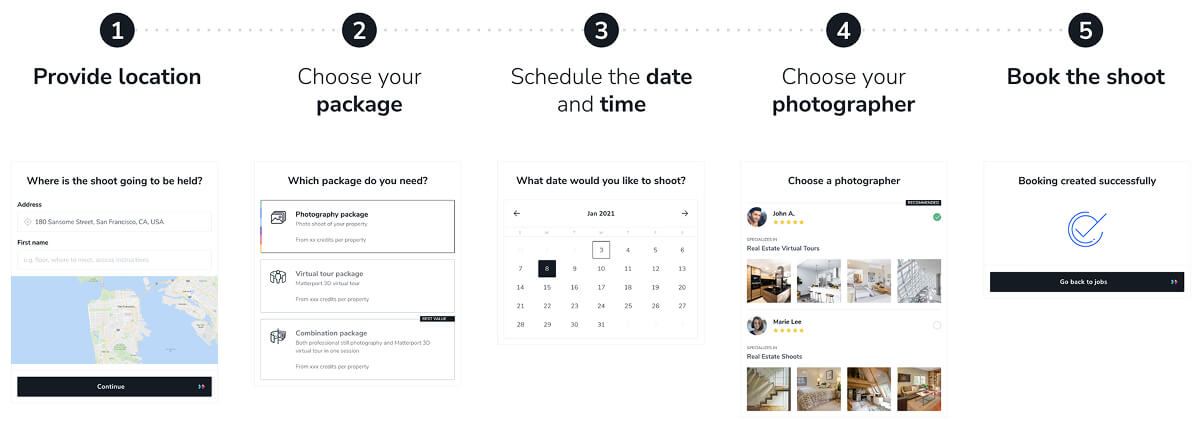
Booking a photoshoot shouldn’t feel like project management. With Snappr, it takes minutes, not days.
You get real-time visibility into local photographer availability, and book instantly when it fits your schedule.
No waiting. No inbox ping-pong when scheduling.
Snappr builds a custom photography and editing guide alongside your brand / creative team once (your preferred angles, lighting, number of photos per room, etc).
From then on, every Snappr photographer already knows your look before they even show up.
Then the automation kicks in.

Photoshoot booking requests can trigger automatically from key events in your workflow:
- Tenant moves out? A new photoshoot booking request auto-triggers for a week out to capture the refreshed space.
- Renovation complete? When the contractor signs off and logs it in your CRM, that info is accessed via API — triggering a notification to your team with a single link to book a professional real estate photographer (or auto-book depending on your setup).
- Listing engagement drops? Auto-trigger a refresh request for updated photos, 3D tours, or short-form video.
- Seasonal demand coming? As soon as event/promotional campaigns are logged into your CRM, auto-schedule community and amenity shoots to prep for peak leasing.
- Upcoming community event? Auto-trigger booking a professional event photographer in your city to capture moments that build brand and trust.
Each trigger is customizable and your team decides what sets it off. Snappr handles the rest.
The right local photographer is matched instantly.
The photoshoot is booked, completed, and your edited galleries land in the Snappr platform within 48 hours or less.
Inside the platform, tagging, sorting, and filtering are built in, so no more renaming files or digging through shared folders.
And Snappr is API-first.
That means:
- Push new visuals to multiple listing sites like Zillow, Apartments.com, your website, social, all in one go.
- Sync directly with your Google Drive or internal storage, so when photographers upload to Snappr, the galleries appear in your folders automatically.
No manual uploads.
No delays.
Just consistent, professional visuals that scale with your operations.
If your team has recurring photography and visual content needs - consider booking time with our Enterprise Visual Partners and hop on a free assessment call to identity gaps in your visual content operations today.


