
The Sale Happens on Their Screen
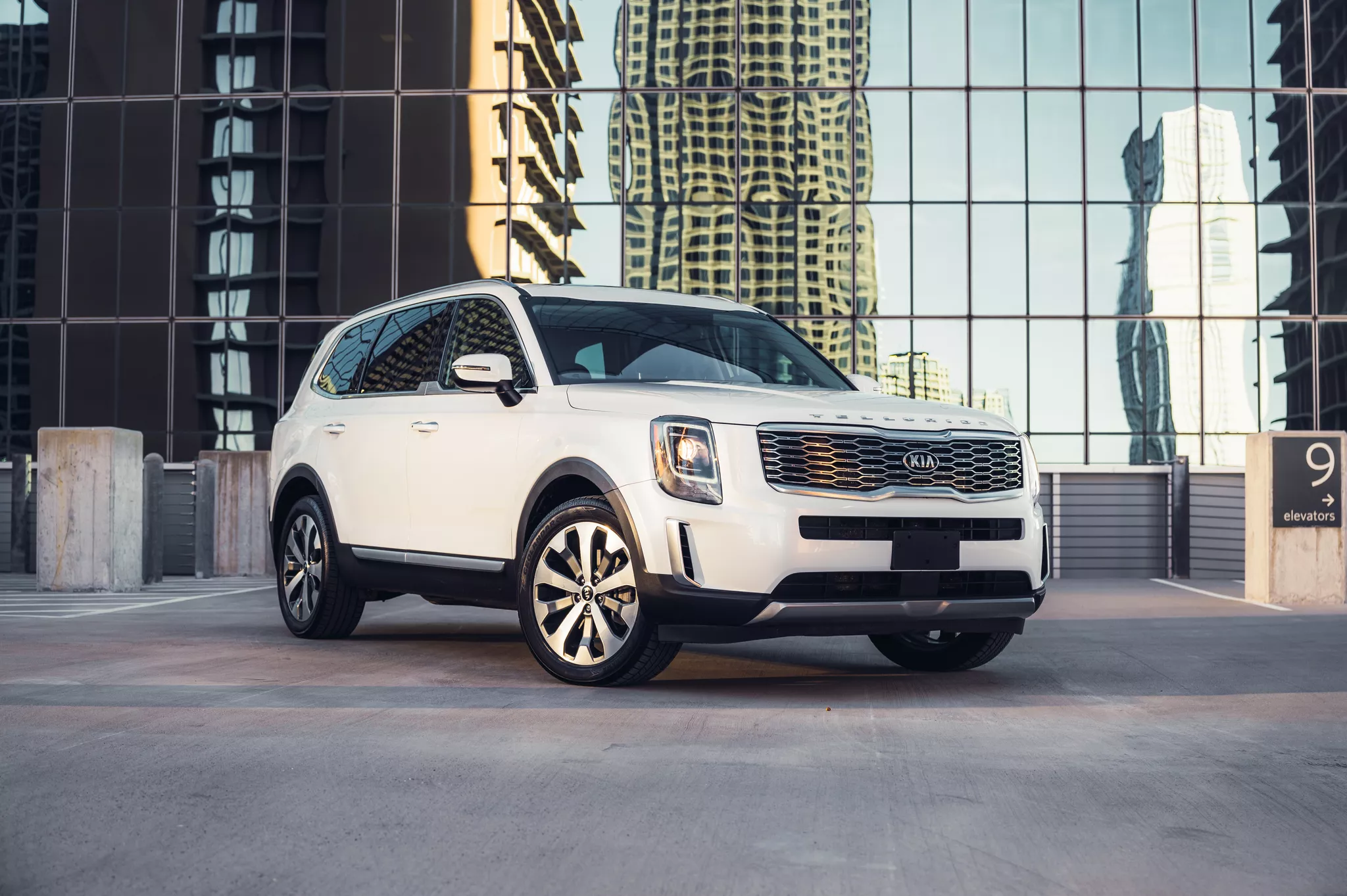
A car buyer in 2026 makes their decision before they ever shake a salesperson's hand. They scroll, they zoom, they swipe, and they decide. By the time someone walks onto a lot or clicks "buy," the photos have done most of the selling. That is what makes auto photography one of the highest-leverage line items in any modern automotive marketing budget.
Auto photography is not an aesthetic exercise. It is the front line of an industry that did $1.5 billion in classic-car auction sales on Bring a Trailer alone in 2024 and $13.67 billion in retail revenue at Carvana — both companies that built their valuations on the strength of a photo gallery. When Cox Automotive's merchandising research shows that swapping stock images for multiple custom photos increases new-car VDP click-throughs by 133%, the conversation stops being about photography and starts being about revenue.
A Short History of Auto Photography
.webp)
Auto photography is almost as old as the car itself. The earliest known automotive advertising photographs appeared in print catalogs in the 1900s, when manufacturers like Ford and Cadillac began commissioning side-profile shots to communicate scale, prestige, and engineering. Through the mid-century, the discipline was almost entirely a glossy-magazine affair: editorial spreads in Road & Track, Car and Driver, and dealer brochures shot on medium-format film with carefully staged lighting.
The shift came with the consumer internet. In the late 1990s and early 2000s, sites like AutoTrader, Cars.com, and eBay Motors moved car listings online, and the requirement changed. Dealers no longer needed one hero photo per model. They needed a dozen photos per individual car, captured quickly, edited quickly, and uploaded quickly. Photography moved from the studio to the back lot, and the lens of choice shifted from a Hasselblad on a tripod to a kit DSLR slung across the lot manager's shoulder.
The next leap arrived with smartphones and consumer-grade auction platforms. Bring a Trailer proved that detailed, narrative-rich photo galleries, flaws included, could drive enthusiast prices to absurd heights. Cars & Bids, Hemmings, and an entire wave of online auctions followed. Today, AI-generated backgrounds, 360-degree spins, and computer vision angle classifiers are the new frontier. The medium has changed every decade. The fundamental job of auto photography has not.
The Business Case for Auto Photography
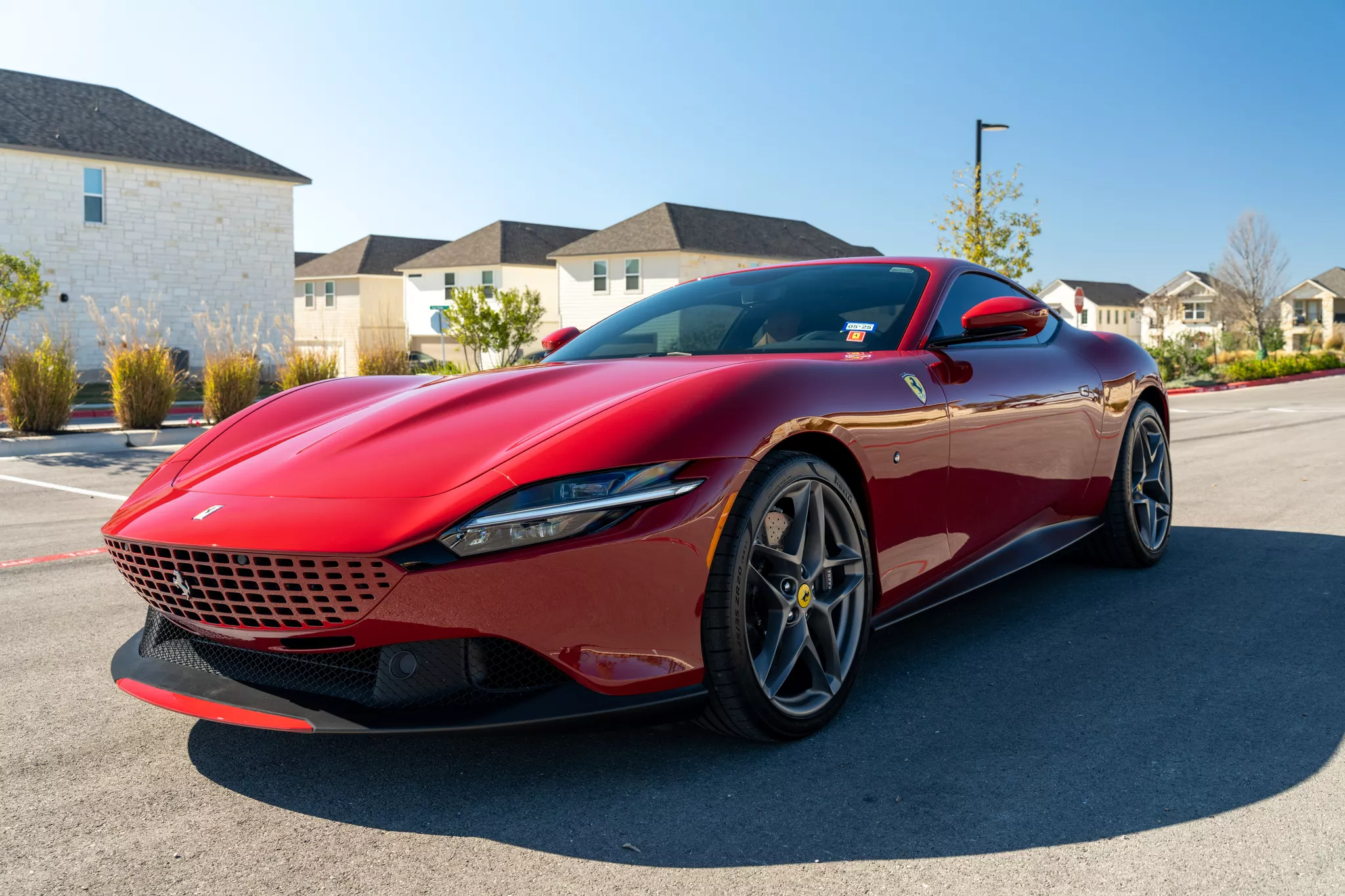
Auto photography is the highest-ROI lever most automotive sellers ignore. The data is unambiguous, and it has been for years.
Photos Drive the Click
Search results, listing tiles, and inventory feeds all live or die by their thumbnails. Cox Automotive's research is unambiguous: swapping a stock image for multiple custom, real photos increases click-throughs to new-car VDPs by 133%, and the same change increases click-throughs to used-car and CPO VDP by 349%. Stock photos are not a placeholder. They are an active drag on demand.
Photos Drive the Sale
Beyond the click, photos drive the conversion. AutoTrader research cited by 360Booth found that listings with professional photos sell 32% faster than those with amateur photos. The Cox Automotive merchandising data showing a 349% lift on used-car VDP click-throughs compounds with that velocity advantage, which is the same dynamic that Snappr's own automotive analysis describes from the dealer side. None of these numbers are marginal. They are the difference between selling a unit in two weeks and watching it age into a markdown.
Photos Drive the Premium
In the auction world, photography is not just a sales aid. It is the product. Bring a Trailer's $1.5 billion in 2024 sales was distributed across nearly 45,000 listings, and Jalopnik's read of the public numbers puts the platform’s sell-through rate at roughly 77% and the average transaction prices around $43,780.
The platform's signature "show every flaw" gallery format, often 100+ photos per listing, is the reason a 20-year-old Honda Civic can sell for $50,000. Trust gets built one photo at a time, and that trust translates directly into bid premium.
Photos Drive the Marketplace
Carvana's rise tells the same story at scale. The company sold 416,348 retail units for $13.67 billion in 2024, a 33% jump in unit volume, and became the most profitable public automotive retailer in U.S. history by Adjusted EBITDA margin. Buyers will spend tens of thousands of dollars sight-unseen, but only because the photos give them confidence. Snappr's deeper read on the company is captured in Lessons from Carvana and How Carvana Became the #1 All-Online Used Car Marketplace.
Equipment for Auto Photography
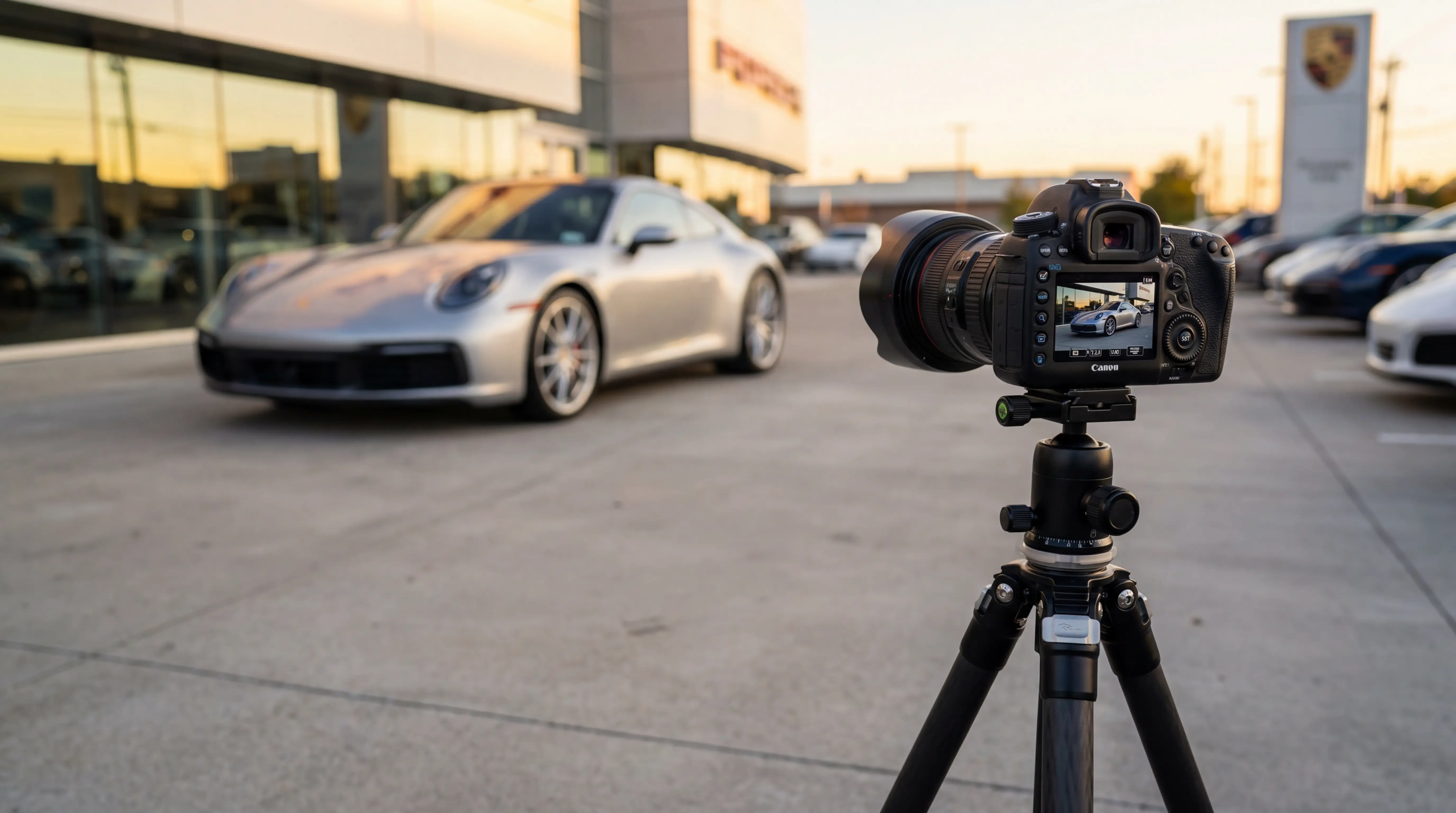
You do not need a studio to shoot great auto photography. But you do need the right combination of camera, glass, light control, and stabilization. Here is what a working setup looks like in 2026.
Camera Bodies
A modern mirrorless body is the default for serious automotive work. Full-frame cameras like the Sony A7 IV, Canon R6 Mark II, and Nikon Z6 III deliver the dynamic range needed to capture the highlights on chrome trim and the shadow detail in a black leather interior in a single exposure. APS-C bodies (Sony A6700, Fujifilm X-T5) are a strong budget step-down. Smartphones (modern iPhones and Pixels with computational HDR) are now genuinely viable for high-volume dealership inventory work, especially when paired with consistent lighting and a fixed composition workflow.
Lenses
Most automotive photographers carry two primary focal lengths: a wide zoom in the 16-35mm range for hero exterior shots and full-vehicle environmental compositions, and a standard zoom around 24-70mm for three-quarter angles, interior shots, and detail captures. A 35mm or 50mm prime is a strong creative addition. For dealership inventory work, a single 24mm or 28mm prime keeps the workflow consistent across hundreds of cars.
Lighting
Outdoor shoots rely on the sun. Indoor shoots and high-volume inventory shoots increasingly rely on continuous LED lighting, often from large softboxes or strip lights mounted on the ceiling of a photo booth or photo studio. For dealerships shooting outside, a simple set of reflectors and a polarizing filter is enough to control glare on glass and paint. Polarizers are the single most underrated tool in automotive photography because they cut reflections without sacrificing color saturation.
Stabilization and Accessories
A sturdy tripod is non-negotiable for indoor and dawn/dusk work. A gimbal is useful for video and rolling shots. Other essentials include lens cloths (paint reflections will show every smudge), wheel chocks for level shots on a slope, and a measuring tape or laser to nail consistent camera height across an inventory run.
Core Technique: Lighting
If composition is the grammar of auto photography, lighting is the vocabulary. The same car shot at the same angle looks completely different at noon versus golden hour, and that difference shows up directly in click-through rate.
Golden Hour and Blue Hour
The first hour after sunrise and the last hour before sunset, sometimes called golden hour, are the most flattering light in automotive photography. The low sun angle wraps around the body of the car, revealing the curvature without the harsh top-down shadows of midday. Blue hour, the brief window after sunset, gives a moody, editorial feel that works especially well for performance and luxury vehicles. The drawback is operational. Golden hour gives a dealership maybe 40 minutes of usable light per day, which is why high-volume inventory operations cannot rely on it alone.
Overcast Light
Cloud cover is the dealership's friend. A heavy overcast day acts as a giant softbox, eliminating harsh shadows on the body of the car and allowing for consistent exposure across an entire inventory run. Many high-volume operations prefer overcast days for outdoor shoots because the consistent lighting simplifies post-production.
Avoiding Midday Sun
Direct overhead sunlight is the worst light for cars. It creates deep shadows in wheel wells, blows out highlights on horizontal panels, and produces unflattering reflections on glass. If you have to shoot at midday, do it in open shade or use a large diffuser overhead.
Indoor and Photo Booth Lighting
Indoor photo booths and dealership studios use continuous lighting from above and the sides to wrap the vehicle in even, controllable light. The major advantage is consistency — every vehicle is shot under the same conditions, which simplifies AI background replacement and cataloging. The downside is capital cost. A full photo booth installation can run six figures, which is why most dealerships outsource or use a hybrid approach.
Core Technique: Composition and Angles
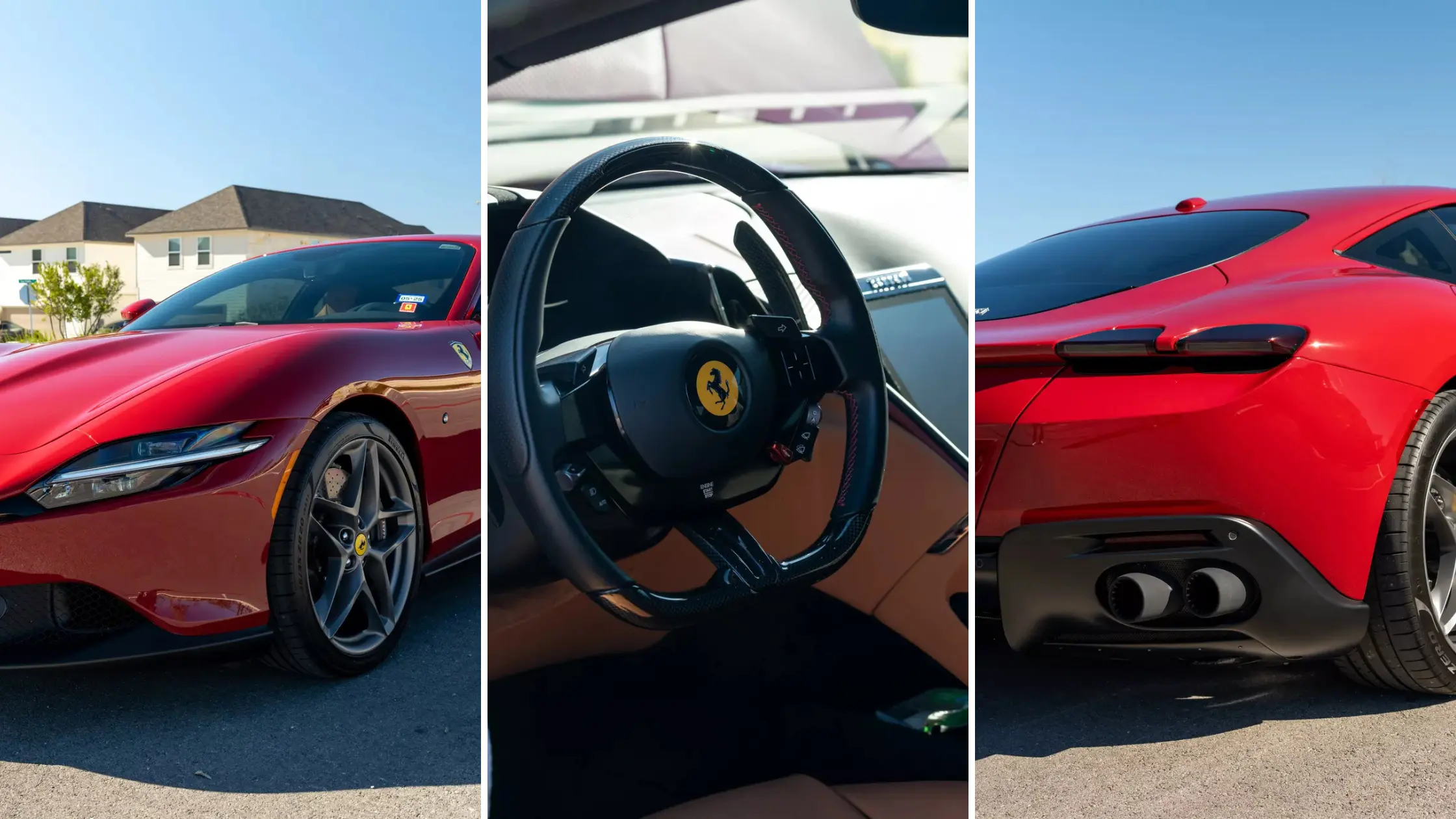
Most amateur auto photos fail in the same way. The camera is too high, the angle is too direct, and the composition has no anchor. Composition is what separates a snapshot from a sale-driving image.
Camera Height
The single most common amateur mistake is shooting from standing eye level. Cars look best when the camera is roughly at the level of the headlights or slightly below. This angle elongates the hood, emphasizes the wheels, and gives the vehicle the muscular stance that designers intended. Drop the camera. The photo immediately improves.
Leading Lines and Reflections
Leading lines from the road, parking lot stripes, or architectural elements draw the eye toward the car and create a sense of depth. Reflections in the paint, when controlled with a polarizer, add dimension and showcase the quality of the finish. A clean, dark-painted car shot in a parking garage with controlled overhead lighting can look as premium as a studio shot.
Negative Space
Resist the urge to fill the frame. Negative space (sky, asphalt, a clean wall) gives the eye somewhere to rest and makes the vehicle the unambiguous subject. This is especially important for the hero shot, the first image a shopper will see in a listing tile.
The Standard Angle Set
Professional automotive photography typically follows a standard angle set across an inventory listing, ensuring buyers see every important view:
- Front three-quarter (driver side and passenger side)
- Direct front
- Direct rear
- Rear three-quarter (driver side and passenger side)
- Direct profile (both sides)
- Interior dashboard
- Interior rear seats
- Engine bay
- Wheel close-up
- Trunk or cargo area
- Odometer
This consistency matters at scale. When every listing on a marketplace follows the same angle sequence, buyers can compare vehicles efficiently, and the platform feels professional rather than chaotic.
Core Technique: Vehicle Preparation
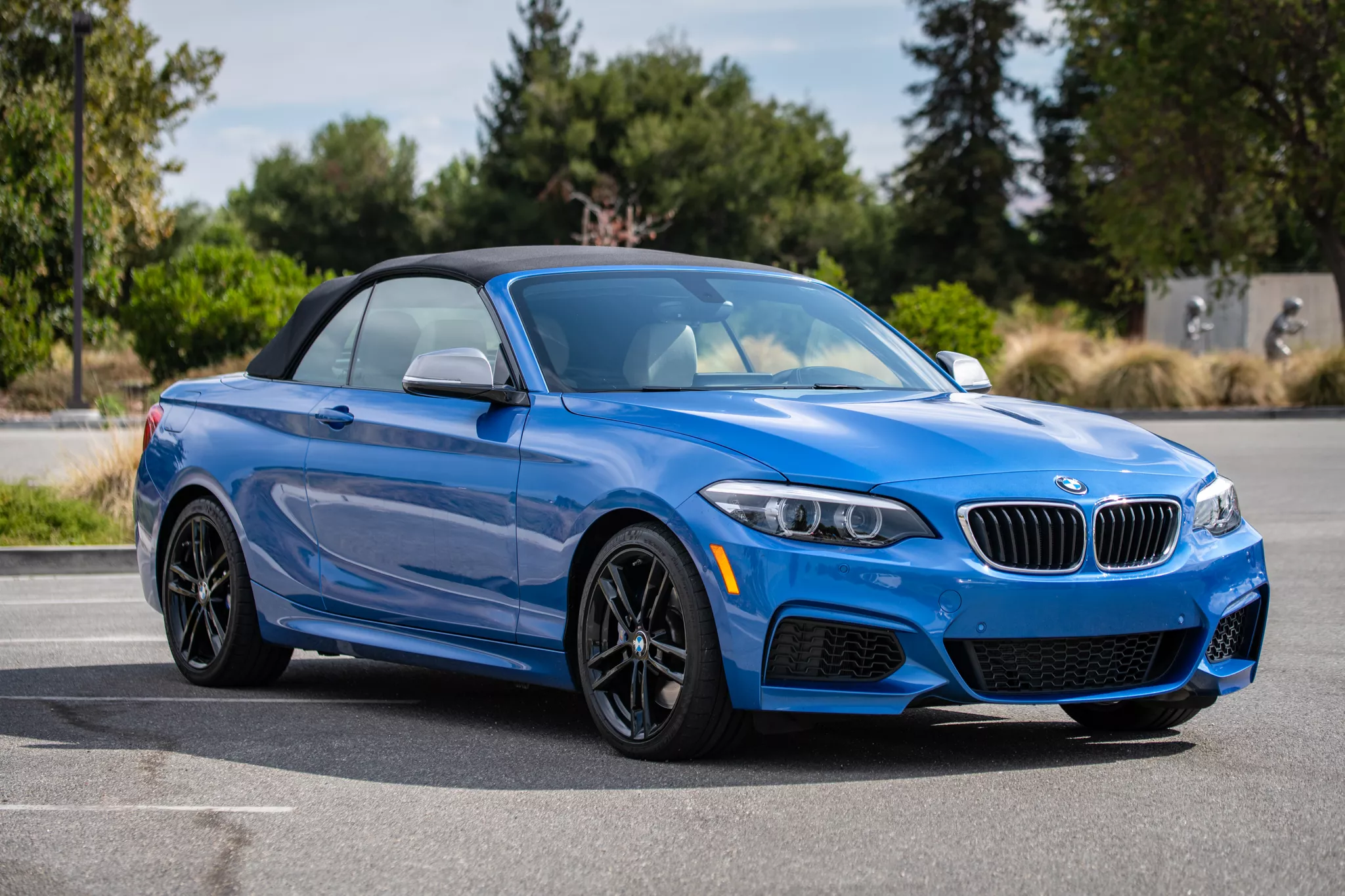
The most expensive camera in the world cannot save a dirty car. Preparation is half the battle.
Wash, Dry, Detail
A pre-shoot detail is the baseline. Exterior wash, claybar treatment if needed, tire dressing, glass cleaner, and a microfiber finish on every painted surface. Interiors need vacuuming, dashboard wipe-down, and steering wheel cleaning. Floor mats either staged or removed, depending on the shoot style.
Remove Distractions
Empty the cup holders. Remove dealer plates, paper floor mats, price stickers from the glass, and the pine tree air freshener from the rearview mirror. Anything that says "this is a transaction" instead of "this is a car" should disappear. Buyers want to imagine ownership, not the showroom.
Check the Background
The background of an automotive photo is half the composition. A row of competing inventory in the background of a hero shot is a visual mess. A power line cutting through the roofline of the car is a permanent eyesore. Walk the location before shooting and identify a clean composition zone, ideally with a neutral wall, an open lot, or an architectural anchor.
Tire Position
Wheels turned slightly toward the camera in three-quarter shots show the face of the wheel and elongate the car's silhouette. Wheels straight ahead make the car look static and squat. This is a small detail with an outsized impact on the final image.
Platform-Specific Applications
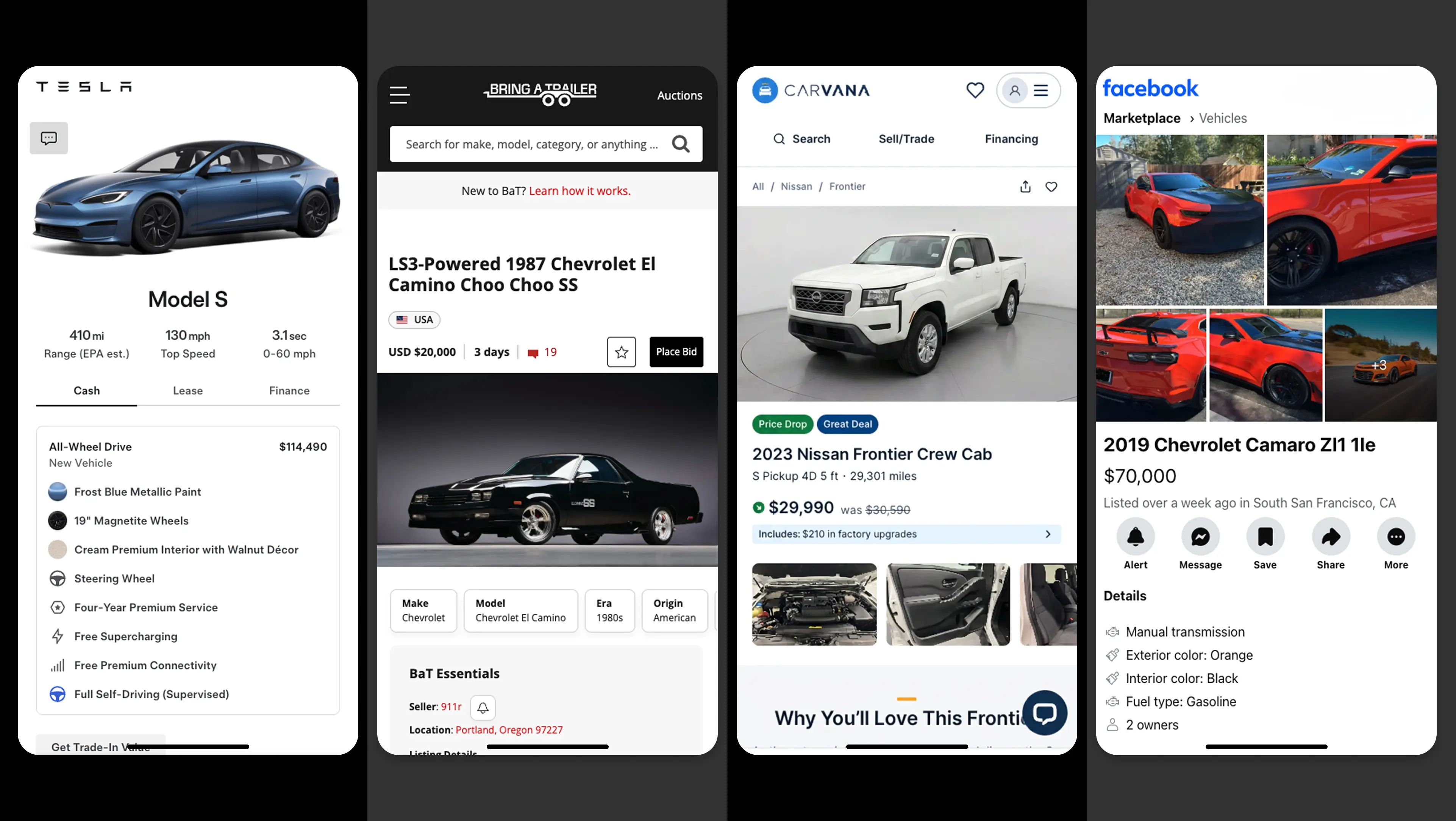
Auto photography is not one job. It is several jobs, each tuned to the platform where the photos will live.
Dealership Inventory Photography
Volume and consistency are the operating constraints. A dealership rotating 200 cars a month needs 12-25 photos per vehicle, captured within 24 hours of acquisition, edited to a consistent style, and pushed to its DMS, its website, and every third-party listing platform it sells on. The photography itself is technically simpler than editorial work, but the operations are vastly harder. Snappr's piece on improving a dealer's car gallery goes deeper on the workflow side.
Auction Platform Photography
Auction sites live and die on transparency. Bring a Trailer, Cars & Bids, and Hemmings reward sellers who photograph every flaw, every panel gap, every undercarriage rust spot. The galleries can run 100-200 photos for a single car, and bidders trust those galleries enough to pay collector premiums. Snappr's analysis of auction-site features and the detailed Bring a Trailer case study show how the format converts skepticism into bid premium.
Online Marketplace Photography
Carvana, Vroom, CarMax, and the new generation of all-online marketplaces operate at a scale that requires photographic standardization. Every car gets the same angles, the same lighting, the same background. Studio-style or AI-replaced backgrounds are common because they make the inventory look uniform and trustworthy. The trade-off is that uniform photography can feel sterile, which is why hybrid approaches (clean studio shots for the gallery, plus a few real-world hero shots) are emerging as best practice. The story behind the model is well captured in Selling Luxury: Professional Photography for Car Auctions.
Private Seller and Classified Photography
A single seller listing one car on Craigslist, Facebook Marketplace, or AutoTrader has the simplest job, but the highest variance. The fundamentals (clean car, good light, low camera angle, multiple angles) are what move a private listing from "still available" to "sold this weekend." Many of the same conversion-rate dynamics described in 4 Ways Top Automotive Sellers Will Win translate cleanly down to the private-seller context.
AI and the Future of Auto Photography
AI has moved from novelty to default in automotive photography over the last 24 months. The honest assessment is that AI has eaten about 30% of the workflow and made the remaining 70% more valuable, not less.
Where AI Already Wins
Background replacement is the clearest win. A used-car dealer can shoot a vehicle on a cluttered lot, drop it onto a clean studio background, and produce a marketplace-grade image in under 60 seconds. AI shadow generation has improved to the point where most consumers cannot detect a replaced background on a static gallery image. Snappr's primer on AI photo editing walks through the specifics.
License plate blurring, dent and scratch removal for cosmetic repair previews (not for hiding flaws; disclosure matters), and color-balance normalization are all places where AI now outperforms a human editor on speed without sacrificing quality.
Where AI Still Falls Short
Fully AI-generated cars (no real shoot, just a rendered image based on a description) are a much weaker fit for retail automotive work. Buyers spending $30,000 on a specific VIN want to see that VIN, with the actual paint, interior wear, and wheels. The credibility ceiling on pure-AI workflows in the retail context is set by buyer skepticism, not by render quality.
AI also struggles with edge cases — unusual paint colors, custom modifications, vintage vehicles with non-standard angles, and any image that requires nuanced creative judgment. Human photographers still own the editorial and hero-shot tier of the funnel.
The Hybrid Workflow
The winning pattern in 2026 is hybrid. A human photographer (or, increasingly, a trained dealership employee) captures the vehicle in a real environment. AI tools handle background replacement, plate blurring, color normalization, and angle classification. A second human reviewer does QC on the final gallery before it goes live. Snappr's piece on advanced editing describes this hybrid pattern in detail.
Scaling Auto Photography Operations
Photographing one car well is a Saturday afternoon. Photographing 800 cars per month, across multiple lots, with consistent quality and a 24-hour turnaround, is an operations problem that breaks most in-house teams.
Why In-House Breaks
The math is brutal. A dealership group with five rooftops and 1,000 cars in monthly inventory needs at minimum two full-time photographers, a full-time editor, dedicated photo booth space, equipment rotation, weather contingency, vacation coverage, sick day coverage, and a software stack to push images to every channel.
Most dealerships do not have the capital or the management bandwidth to build that operation in-house. So they cut corners. Photos are taken by lot porters with smartphones. Edits get skipped. Quality drifts. Click-throughs drop. The whole reason photography mattered in the first place gets undermined.
The Scaling Trifecta: Speed, Quality, Consistency
The teams that win at scale solve for three things simultaneously. Speed, because new inventory loses 1-2% of its market value per week and needs to be live within 24 hours. Quality, because the photos are competing in a search-result tile against every other dealer in the market. Consistency, because a buyer comparing five SUVs across three lots needs the visual language to be uniform enough to compare them on the actual vehicle, not the lighting.
Networked Photography
The model that scales fastest is the networked one. A platform of vetted, on-demand photographers covering 95% of U.S. geography (and 90% of the English-speaking world) means a dealer in Boise gets the same quality of photography on the same 24-hour timeline as a dealer in Manhattan. Booking is a 2-minute process. Shoot guidelines are defined once and automatically applied across every shoot. Edited galleries arrive on a defined SLA.
This is exactly the operating model that Snappr was built for, and why 73% of the Fortune 500 and clients including Cars & Bids and Carvana run on the platform.
Workflow Automation
Photography is one input. The downstream operations of tagging, enhancement, distribution to listing platforms, syndication to a DMS, and archival storage account for most of the operational time. Modern visual content workflow platforms automate the entire chain: a tenant moves out of a property and a shoot is auto-booked, or a new VIN is acquired and a photo session is triggered.
The same logic applies to the automotive vertical. Triggering a shoot from a DMS event, automatically pushing the gallery to 10 listing platforms, and updating the inventory feed without a single manual upload is the operational unlock.
Quick-Reference Auto Photography Tips
For the reader who skipped to the cheat sheet.
.webp)
ROI Framework for Auto Photography
Photography is one of the few line items in an automotive marketing budget that can be modeled directly to revenue. Here is the framework most operators use.
Step 1: Establish the Baseline
Pull current VDP views, lead submissions, and time-to-sale per vehicle from your DMS or marketplace analytics. Segment by photo quality if possible: vehicles with custom photos versus stock or amateur photos.
Step 2: Apply the Photography Lift
Use the published research as the starting estimate. Cox Automotive's 133% click-through lift for custom versus stock photography on new-car VDPs (and 349% on used-car VDPs from the same study) is a defensible mid-range assumption. Run your own A/B if you can. The exact lift will vary by segment, brand, and market.
Step 3: Translate to Revenue
If your dealership currently sells 100 cars per month at a $2,500 average gross profit, and professional photography lifts your lead-to-sale conversion by 20% (well within published ranges), you are looking at 20 incremental units per month, or $50,000 in additional gross profit. Run the same math against your photography spend. A dealership running 200 cars per month at a fully loaded photography cost of $30 per car is spending $6,000 per month. The break-even is about 2.4 incremental units. Anything above that is pure margin.
Step 4: Account for Speed-of-Sale
Faster sale velocity reduces holding cost and floor-plan interest. A dealership floor-planning a $25,000 vehicle at 8% APR pays roughly $5.50 per day in interest. Cutting 10 days off the average sale cycle for 100 cars per month saves $5,500 in holding costs — additional ROI on top of the conversion lift.
Step 5: Layer in Auction or Marketplace Premium
For sellers on Bring a Trailer, Cars & Bids, or similar platforms, the photography premium often shows up directly in the hammer price. A 5-10% bid premium on a $40,000 average transaction is $2,000-$4,000 per unit, which dwarfs almost any photography spend.
Get Auto Photography Right at Scale
If you are managing automotive inventory at any meaningful scale, the question is not whether photography matters. It does. The question is whether your current setup is delivering the lift the data says it should. If your photos look like everyone else's, your listings will too. If they look better, your unit economics will too.
Snappr's automotive solution covers the full operational stack: on-demand photographers in 95% of U.S. geography, 48-hour turnaround, AI-powered editing and background replacement, and workflow automation that pushes finished galleries to every listing platform you sell on. Cars & Bids, Carvana, and other category leaders run on the platform. To see how it would look for your inventory, check out how Snappr's automotive enterprise team can help you scale.
Frequently Asked Questions
What is auto photography?
Auto photography is the practice of photographing vehicles for commercial use, including dealership inventory listings, auction platform galleries, online marketplaces, and editorial or advertising content. Modern auto photography combines traditional photographic technique with AI-assisted editing and high-volume operational workflows to produce gallery-ready images at scale.
How many photos should a car listing have?
For dealership inventory listings, 12-25 photos per vehicle is the working standard. Auction platforms like Bring a Trailer and Cars & Bids reward 50-150 photos per listing because the format rewards transparency. The general principle is that more photos help up to the point of diminishing returns: the additive value drops off after the buyer can see every angle, every panel, and every interior surface in clear detail.
What is the best lighting for auto photography?
Golden hour (the first hour after sunrise and the last hour before sunset) and overcast daylight are the best natural lighting conditions for auto photography. Both produce soft, even light that reveals body lines without harsh shadows. Direct midday sun is the worst because it creates strong reflections and deep shadows in wheel wells.
What camera is best for auto photography?
A modern full-frame mirrorless camera (Sony A7 IV, Canon R6 Mark II, Nikon Z6 III) paired with a 24-70mm zoom lens is the professional default. APS-C bodies and modern smartphones with computational HDR are viable for high-volume dealership inventory work, especially when paired with consistent lighting.
Can AI replace auto photographers?
AI has automated significant portions of the auto photography workflow, including background replacement, license plate blurring, and color correction. Pure AI image generation (no real shoot) is not yet trusted by retail buyers, who want to see the specific VIN they are about to buy. The dominant 2026 model is hybrid: human capture, AI editing, human QC.
How much does professional auto photography cost?
Cost varies by market, vehicle count, and complexity. Snappr offers on-demand professional auto photography starting from competitive per-vehicle rates, with volume discounts for dealerships managing large inventories and custom enterprise pricing for auction-platform editorial galleries. AI-assisted hybrid workflows further lower the per-vehicle cost while maintaining gallery quality, making professional coverage accessible at any scale.
What is the ROI of professional auto photography?
The published research is consistent. Cox Automotive merchandising research shows custom photos drive a 133% click-through lift on new-car VDPs and a 349% lift on used-car VDPs versus stock images, and AutoTrader research finds professional photos help vehicles sell 32% faster than amateur photos. For most dealerships, professional photography pays back its cost within the first few incremental units sold per month.


