
The Return Slip You Never See
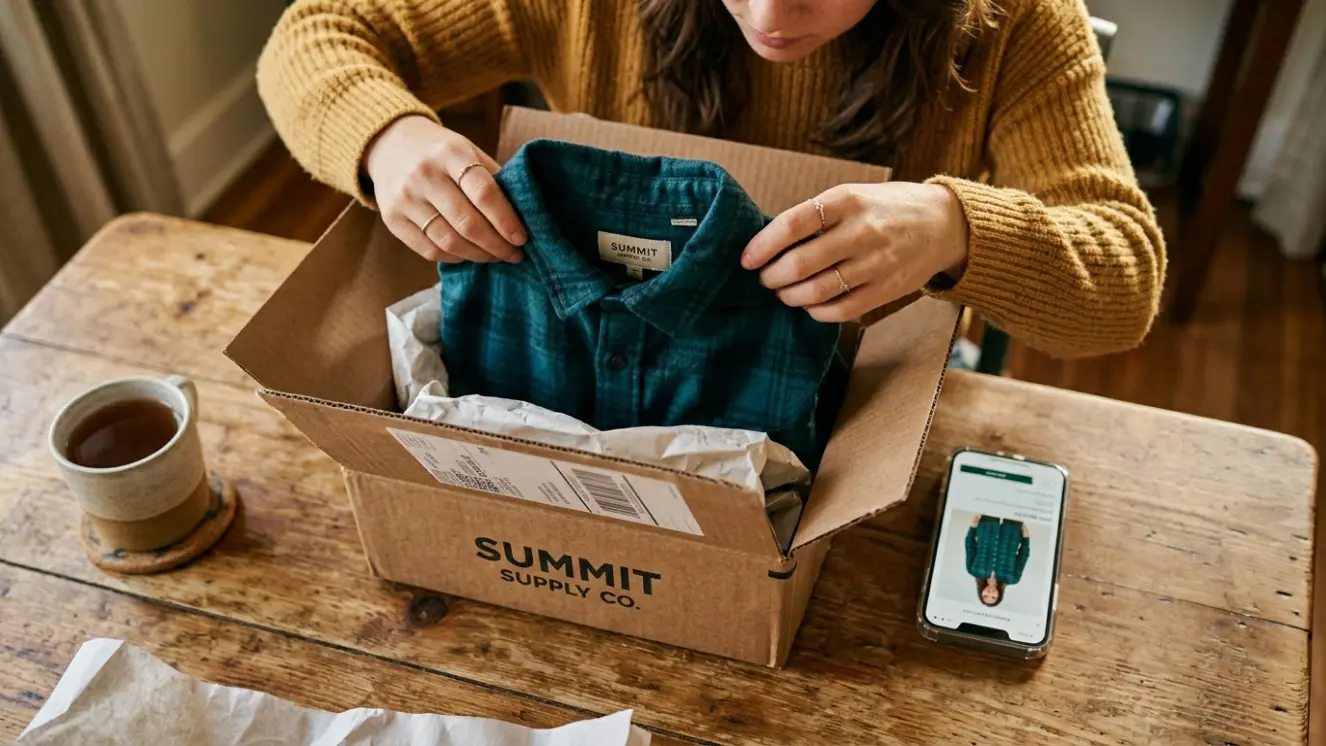
A customer opens a package. The dress is two shades darker than the listing. The "natural oak" finish is closer to honey. The hotel room is half the size the photo suggested. The burrito is missing the salsa shown in the menu thumbnail. None of these are catastrophic failures, but each one becomes a return, a refund request, a chargeback, or a one-star review. Multiply them across a catalog, a delivery footprint, or a national portfolio, and the bill caused by a high ecommerce return rate gets serious.
The National Retail Federation projects $849.9 billion in returns for 2025, or 15.8% of all retail sales. Online is the harder problem: 19.3% of ecommerce orders are expected to be returned. The standard playbook treats this number as a logistics problem (better packaging, faster reverse pipelines, smarter restocking). That misses the point. A large share of those returns are decided long before the box ships. They're decided in the moment a customer compares a photograph to reality and concludes the photograph lied.
The cost of that gap doesn't just show up in returns. It shows up in delivery refunds, hotel cancellations, dropped real estate showings, and a quiet drag on repeat purchase. Here's what bad photos actually cost, and what enterprise visual operations get wrong.
The Mismatch Tax in Ecommerce
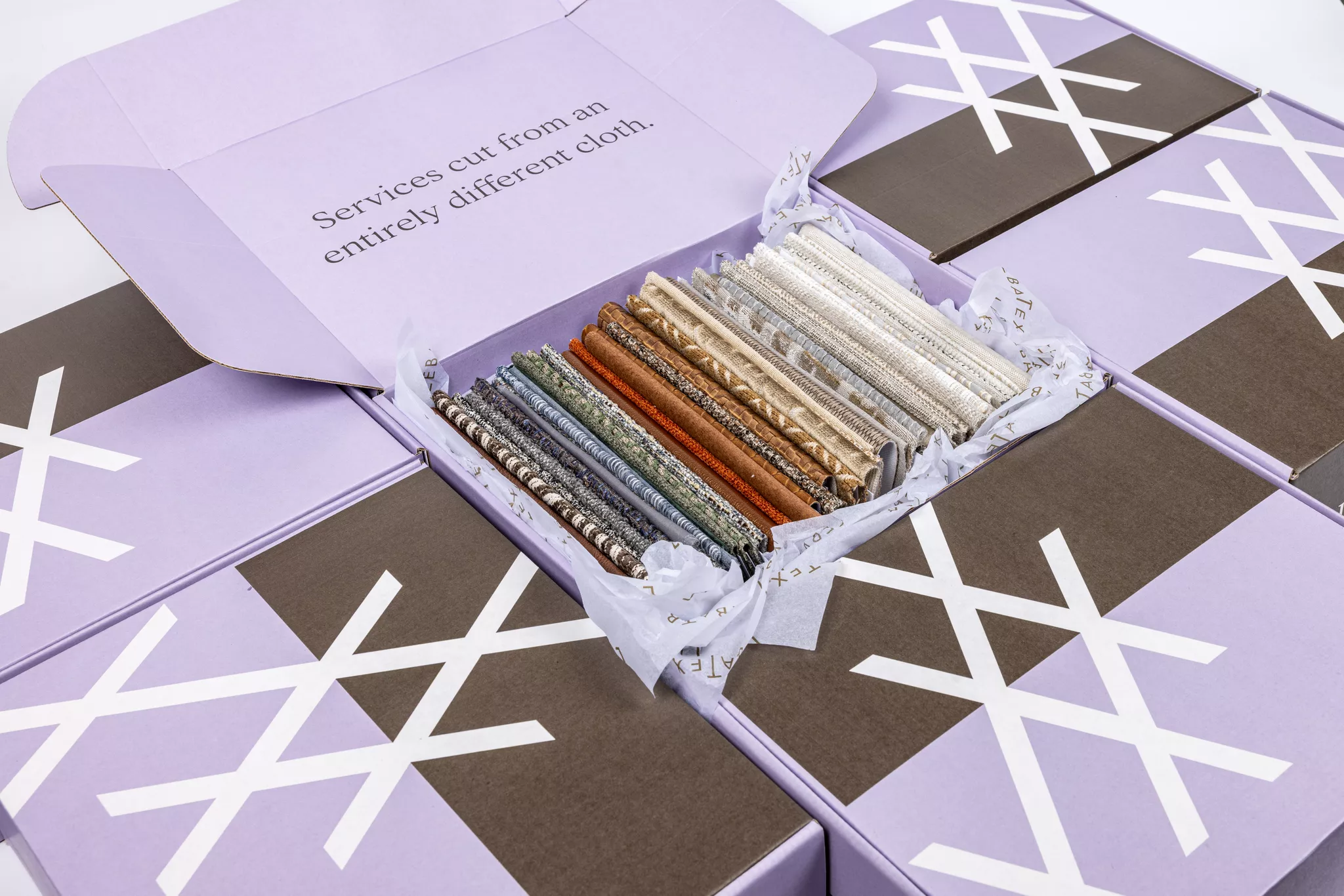
The single most cited reason for an online return is also the most photo-sensitive one. Salsify's 2025 Consumer Research Report found that 71% of consumers have made a return because the product didn't match the online listing. Not "didn't fit." Not "changed my mind." It didn't match the listing. The image, the description, or both promised something the product didn't deliver.
That gap is the most expensive line in the ecommerce P&L. At the NRF's 19.3% online return rate, every $100M in ecommerce revenue generates roughly $19.3M in returned merchandise. Even a 10% reduction in mismatch-driven returns pays for a year of catalog photography many times over.
And returns aren't a cost-recoverable expense. They're a compounding one. The NRF reports that 71% of consumers are less likely to shop with a retailer again after a negative returns experience, up from 67% the year before, and four out of five say they tell friends and family. A mismatched product photo doesn't just trigger one return; it suppresses the next purchase and the one after that. The customer who returned a "natural oak" dresser that turned out to be honey-toned is not your customer again next quarter, and they tell their group chat about it.
The fix isn't airbrushing the catalog to look better. It's the opposite — shooting accurately enough that the box never feels like a surprise. White-balanced color, true scale references, neutral lighting that doesn't oversaturate fabric, multiple angles that show texture and detail. We've covered the production side of this in our product photography pricing guide, and the throughline is consistent: the photograph that reduces returns isn't the most flattering one, it's the most honest one.
The Chargeback Ripple in Food Delivery
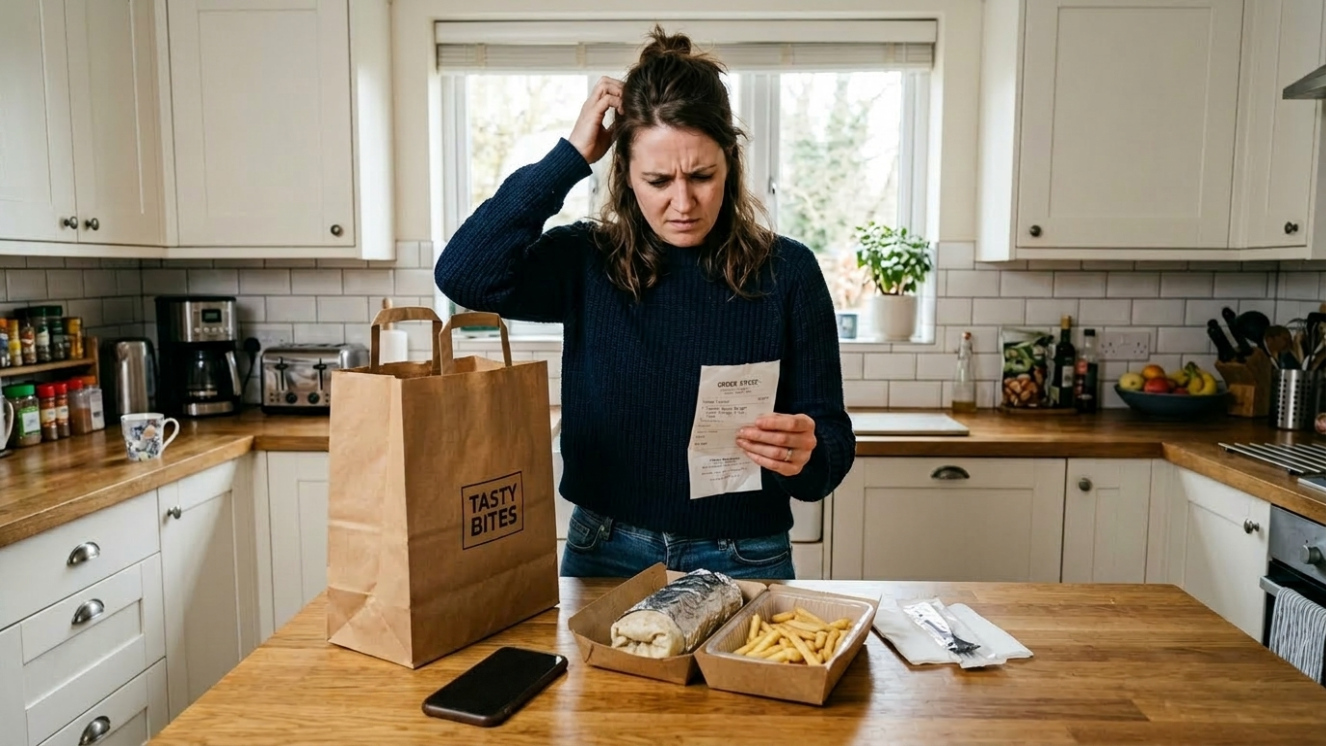
Restaurants face the same dynamic with a different name. The customer doesn't "return" the burrito — they request a refund, file a chargeback, or hit one-star on the app. The cost flows back to the operator either way.
The numbers are sharp. Chargeback rates on food and delivery orders increased 31% year over year in Q1 2023, according to fraud-detection firm Sift. The same Restaurant Business reporting documented a single McDonald's franchisee contesting an average of $500 per location per month in delivery refunds. At scale, 2.5% to 3% of operators' total revenue gets tied up in disputes with delivery providers, which represents roughly 20% of an already-thin delivery margin.
Some of that is fraud, plain and simple. Forty-two percent of Gen Z and 22% of millennials admitted to requesting a refund for an online purchase they actually received. But fraud is opportunistic, and the easiest opportunity is the gap between the menu thumbnail and the bag on the doorstep. A polished hero shot of a burger with crisp lettuce, glistening sauce, and a perfectly stacked tower invites a refund the moment the actual burger arrives squashed in a paper sleeve under a heat lamp. Our piece on delivery app photo issues goes deeper on the operational version of this problem. The visual gap between the menu and the meal is where the dispute lives.
The accurate path is not to make the food look worse. It's to shoot the dish the way it actually plates and lands: same portion size, same packaging context, same visible build. The thumbnail and the bag should belong to the same conversation. Restaurants that close that gap see fewer disputes and fewer "this isn't what I ordered" complaints, even when nothing about the food itself changes.
Hotel Cancellations and the Photo-Lobby Gap
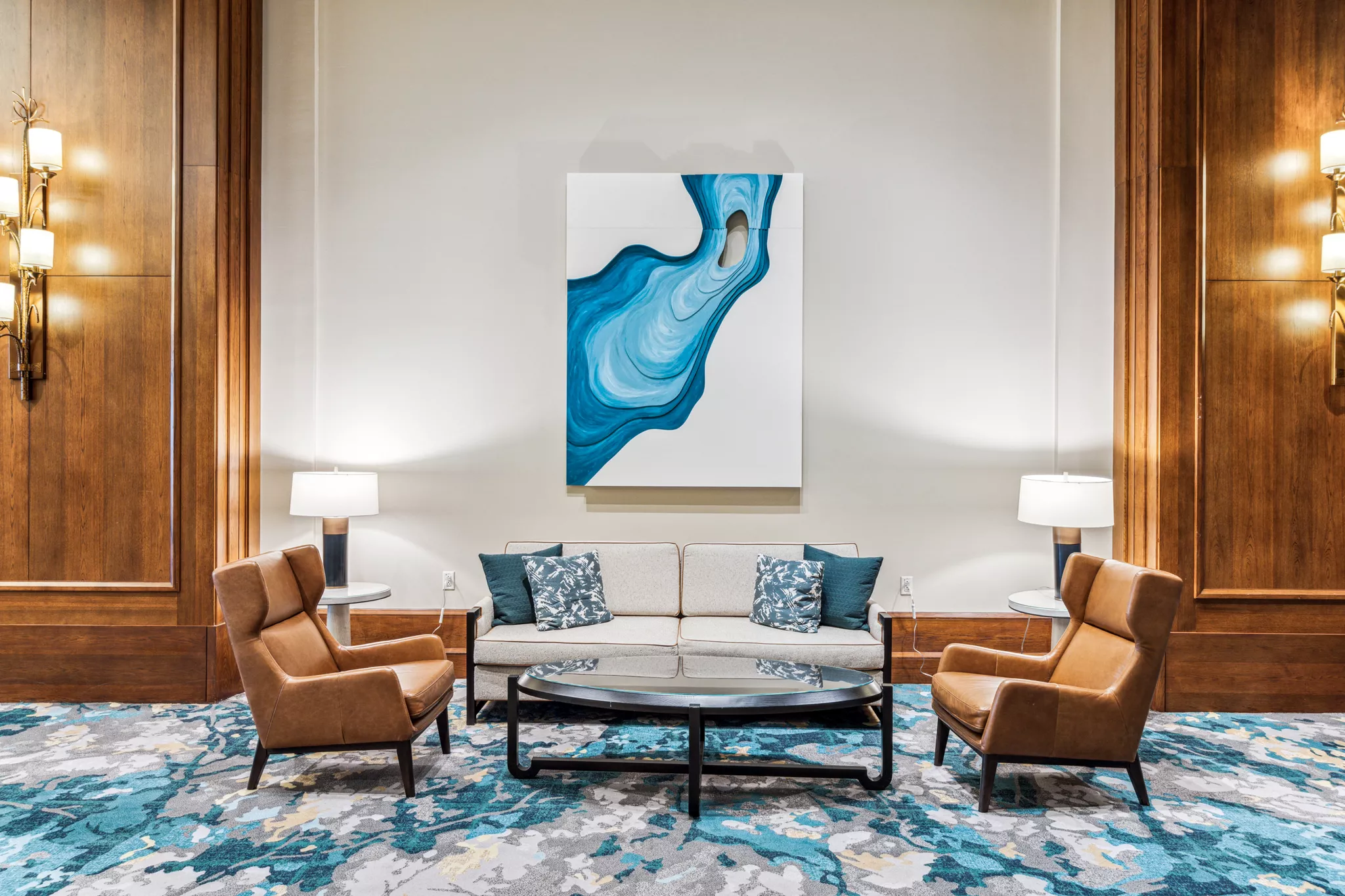
Hospitality has its own version of this problem, and it's louder than the operators usually acknowledge. A Mirai study of forty hotels found Booking.com cancellations ran 104% higher than direct-website bookings, with Expedia 31% higher. Free cancellation policy explains a lot of the gap, but not all of it. Guests booking through an OTA have made the booking decision on the strength of a listing page where the photographs are one of the only commitments either side has made. When the room doesn't match the photos, the cancellation, the refund request, and the bad review all follow.
The mechanism is the same as in ecommerce. A wide-angle lens makes a 250-square-foot room look like 400. A late-afternoon golden hour shot turns a north-facing room into a south-facing one. A staged turndown sequence sets an expectation no front desk can deliver during a 3 p.m. check-in. The guest walks into the room, runs the four-minute comparison, and either accepts the gap or starts the cancellation clock.
There's a regulatory tail here too. California now requires listings with digitally altered images to include disclosures and access to the original photos, and Wisconsin is heading toward a similar rule. The era when a property could be photographed to a fantasy version of itself and face no downstream consequence is ending in the law as well as in the booking funnel.
The Real Estate Showing Tax

The same gap shows up in residential real estate, and the cost is one of the most expensive forms of "return" in the economy: a buyer drove to the showing, walked in, and walked out within ten minutes. Florida Realtors recently flagged the issue head-on, warning agents about the risk of over-perfected listings as buyers grow more sophisticated about virtual staging and AI edits.
It's not that staged photography doesn't work. Professionally photographed homes sell 35% faster and at higher prices. The damage comes from the version of staged photography that asks a wide-angle lens to do the work of an actual renovation. Buyers who arrive expecting the listing and find the reality don't typically negotiate the gap. They vote with their feet, the agent absorbs the lost half-day, and the seller's days-on-market clock keeps ticking. Compound that across a brokerage and the cost of overpromising photos starts to look like a tax line on a P&L the operator can't see directly.
What Accurate Looks Like
Across all four verticals, the cure is the same and it's unglamorous: shoot the product, the dish, the room, or the property the way it actually exists, with enough craft that "accurate" doesn't translate to "unflattering." Three operational ingredients tend to separate teams that pull this off from teams that don't.
Consistent capture standards across every shoot. Same color science, same scale references, same angle library, same lighting kit. The accent chair photographed in studio A should look like the same accent chair photographed in studio B. The hotel room shot in March should look like the same room shot in November. Consistency is what turns a catalog from a collection of moods into a system that customers can trust.
Post-production with a guardrail. Editing is fine; misleading is not. Color correction to match real-world appearance, not to push it toward a more saleable lie. Background cleanup that doesn't change the product's silhouette. Cropping that doesn't change the apparent size of a space. The line between editing and overpromising is operational, not philosophical.
Speed-to-publish. A photo that's accurate today may not be accurate next quarter — a refreshed dish, a renovated room, an updated SKU. Visual content rots, and a stale-but-still-flattering image is one of the most common sources of mismatch. Treat photography as inventory, not as a one-time asset, and the gap stays closed.
How Snappr Closes the Gap
Booking a photographer shouldn't feel like project management, and operating a national catalog shouldn't feel like coordinating a thousand independent shoots. Snappr's photographer network covers 95% of US geography and bookings happen in about two minutes with as little as 2 hours' notice. Custom shoot guidelines (angles, lighting, color targets, props) are written once and applied automatically to every shoot, so the accent chair in Phoenix and the accent chair in Brooklyn come back looking like the same product.
For teams operating at catalog scale, Snappr Workflows lets visual content trigger on the events that actually matter: a new SKU goes live, a hotel room is renovated, a restaurant updates a menu item, a property turns over. The shoot books itself, the photos route through QC, and the assets land in the listing system without a human touching the inbox.
And when a photo is fine but a single detail is off (a background distraction, a stray reflection, an out-of-season element) Snappr's editing tools fix the detail without dragging the image into overpromise territory. The product looks like the product. The room looks like the room. The dish looks like the dish.
The 19.3% ecommerce return rate isn't going to zero, and neither are food delivery chargebacks, hotel cancellations, or dropped showings. But the slice of each of those numbers that's driven by photographs that overpromise is the slice most operators can actually move, and the lift compounds quietly across the P&L.
Book a Snappr shoot at snappr.com/shoots and start closing the photo-to-reality gap on your catalog.


