

One of the largest online collector car auction marketplaces sees a 2.5% higher average sale price on listings shot by professional photographers. On a $60,000 car that is $1,500, a long way past what the photography cost. It is also measured across more than 30,000 shoots rather than inferred from one good result.
That number is the whole argument for professional auction photography, and it is worth being specific about where it comes from and what it does not tell you. It compares listings on one platform, in one category of vehicle, over a particular period. It is not a promise. But it is the kind of evidence this subject usually lacks entirely.
What Auction Buyers Are Actually Looking For
Someone bidding on a car they cannot touch is doing one thing: trying to work out what is wrong with it. Every photograph either answers that question or raises it.
Smartphone photos may work for the average used car on Craigslist or Facebook. But not for luxury or classic cars. Luxury car buyers want cars that stand out. They want intricate hood ornaments, wood dashboards, and smooth leather seats.
The difference is that those buyers are not admiring the trim. They are checking it. A photograph of a wood dashboard is evidence about sun damage and cracking. A clear shot of the leather tells them whether the bolsters are worn. Treat each image as a question answered rather than a feature shown, and the shot list writes itself.

This also explains why generic beauty shots underperform. A low angle at golden hour on an empty road looks like an advertisement, and bidders have learned that advertisements hide things. A plain, evenly lit photograph of the same car in a car park is less attractive and more useful.
The Shot List Auction Platforms Expect
Listings that sell well are not more artistic than listings that do not. They are more complete. The set below is close to what the major online auction platforms look for, and it is also what they hire photographers to deliver.
- Exterior walkaround. Front three-quarter, rear three-quarter, both profiles, straight front and straight rear. Six frames, consistent distance, consistent height.
- Wheels and tires. Each corner, close enough to read the tire brand and the date code. Curb damage shows here and bidders look for it.
- Interior. Driver’s seat, passenger side, rear bench, headliner, pedals and the gear selector. Pedal and steering wheel wear is how experienced buyers sanity-check the odometer.
- Engine bay. Lid up, whole bay, then the identification plate and any fluid reservoirs.
- Undercarriage. The shot amateurs skip and the one that most changes bidding on an older car. Rust, leaks and prior repairs all live underneath.
- Documentation. Service records, title, window sticker, owner’s manuals, spare keys. Photograph the paperwork, not just a sentence claiming it exists.
- Detail and provenance. Badges, build plates, numbers-matching stampings, period-correct options.
- The flaws. Covered below, and not optional.


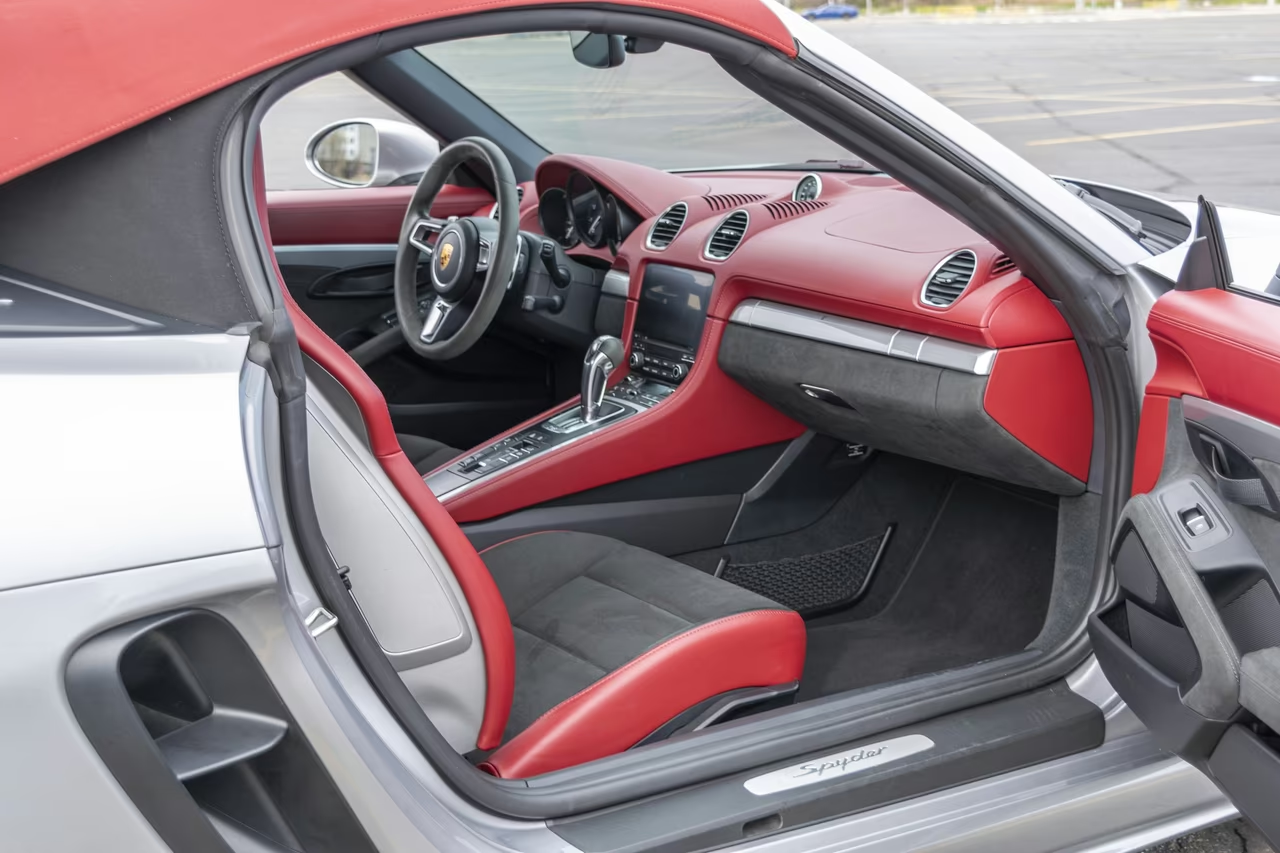
Note how little of this is about photographic skill. Most of it is about not leaving anything out. The craft matters at the margins, in even lighting and clean backgrounds, but the completeness matters first. Marketplace guidance tends to agree: eBay’s own listing photo guidance is almost entirely about coverage, clarity and honesty rather than artistry.
Photograph the Flaws
The instinct is to photograph a car at its best and leave the stone chip out. At auction that instinct costs money.

A bidder who finds no photograph of a known weak point does not conclude that the car is perfect. They conclude the seller is hiding something, and they bid defensively or not at all. A clear, well-lit photograph of a scuffed bumper with a note explaining it removes that doubt for the price of one frame. The flaw is priced in once; the suspicion is priced in everywhere.
This is the same logic behind one of the more counterintuitive success stories in online car retail, which we covered in how Carvana grew by showing the ugly. Photographing every imperfection turned out to be a competitive advantage rather than a liability.
Why Consistency Beats Artistry at Auction
A single striking photograph helps one listing. A consistent set helps every listing on the platform.
Showing professional photos will keep users interested. The photos should be uniform. This will help keep users engaged on the site.
When every vehicle in a catalog is shot from the same angles at the same distances with the same treatment, buyers can compare cars rather than compare photographers. Inconsistency does the opposite: a car shot in flat shade next to one shot in bright sun reads as the worse car, whatever its actual condition. At platform scale that is the difference between a catalog and a pile of listings, and it is also the hardest thing to maintain when a marketplace is using whoever happens to be local.
We have written more broadly about this effect in five case studies on marketplaces and photography, and about the measured impact on listing engagement in improving car detail page views.
When a Phone Is Enough, and When It Is Not
It is worth being honest that professional photography is not always the right call. UK salvage auction house Raw2k tells sellers plainly that for general auction stock a modern smartphone is more than adequate, and they are right. A clean, complete set of phone photographs in good daylight beats a sparse set of beautiful ones every time.
The gap opens where condition is the price. On a commodity hatchback, buyers are pricing the model, the mileage and the service history, and photographs mostly confirm the car exists. On a classic, a collectible or anything where two outwardly identical cars can differ in value by a factor of three, photographs are the valuation. That is where a phone starts to fail: not in resolution, but in controlling reflections on paint, holding detail in a dark engine bay, and lighting an undercarriage at all.
The other case is volume. One car is a task. Four hundred cars a month across nine states is a logistics problem, and the limiting factor stops being camera quality and becomes whether every car gets the same treatment on time.
What This Looks Like at Scale
Snappr has delivered 50,770 automotive shoots, working with 50 marketplaces and auction platforms through 2,265 photographers across 1,207 cities. The largest of those relationships is with a leading online collector car auction marketplace: more than 30,000 photoshoots and over 4 million assets delivered, with the 2.5% average sale price lift described in the Snappr for Enterprise case studies.
Median delivery across automotive work is 41 hours from the end of the shoot to finished, edited images, with a fifth of shoots delivered inside 24 hours. For an auction platform running weekly sale cycles, that turnaround is often the binding constraint rather than the photography itself.
The pattern that produces results like that is rarely a beautiful photograph. It is a listing that documents an unrepeatable combination of mileage, originality and condition thoroughly enough that bidders believe it. We have looked at how that plays out across listing platforms in what makes a high-converting photo on an online car platform, and at the dealership end in our guide to auto photography.
Frequently Asked Questions
How Many Photos Should a Car Auction Listing Have?
Enough to cover the full exterior walkaround, all four wheels, the interior, the engine bay, the undercarriage, the documentation and any flaws. In practice that is usually between 80 and 150 images for a collector or classic vehicle, and fewer for ordinary stock. Completeness matters more than the count.
Does Professional Photography Actually Increase Auction Prices?
On one leading online collector car auction marketplace, listings shot by professional photographers through Snappr show a 2.5% higher average sale price, measured across more than 30,000 shoots. The effect is larger on vehicles where condition drives value, such as classics and collectibles, and smaller on commodity used cars.
Should You Photograph Damage and Flaws?
Yes. Bidders who cannot see a known weak point assume the seller is concealing something and bid defensively. A clear photograph of a flaw, with a short explanation, prices it once rather than letting suspicion discount the whole car.
Can You Use a Phone to Photograph a Car for Auction?
For general auction stock, yes. A complete, evenly lit set of phone photographs in daylight will outperform a sparse set of professional ones. A phone struggles with reflections on paintwork, dark engine bays and undercarriage shots, which is where professional work earns its cost on higher-value vehicles.
What Is the Difference Between Car Photography and Auction Photography?
Car photography is usually about making a vehicle look appealing. Auction photography is about documenting it so a buyer can price it without seeing it. The first rewards artistry, the second rewards completeness and consistency, and the two often call for opposite choices.
If photography has become a scheduling problem rather than a creative one, that is the point at which it is worth talking to us about Snappr for Enterprise, or you can book a shoot directly.


