
Why the photos on your phone never quite capture them

You have hundreds of photos of your pet. You are not alone: a Rover survey found that 65% of dog owners admit to taking more photos of their dog than of their own partner. And yet almost none of those shots look like the pet you actually live with. The eyes are half-closed, the light is flat, the moment is gone.
That gap matters more than it used to. Pew Research Center found that 97% of U.S. pet owners consider their pet part of the family, and about half say their pet is as much a part of the family as a human member. We photograph the family members we love, and we want those photos to be good. Here is how to actually get them, whether you are shooting at home or booking pet photography services for the real thing.
Prep before the camera comes out

The best pet photos are won before you take a single frame.
Time it around their energy. A dog fresh off a long walk or a cat after breakfast is calm and cooperative. A wired pet is a blur. Shoot when they are naturally mellow, not when you need them to be.
Bring the good stuff. Treats, a favorite squeaky toy, or a sound they never hear are your attention-getters. The American Kennel Club recommends using treats and toys to draw a dog's focus and to trigger those alert, ears-up expressions that make a photo. Hold the treat right next to the lens and you will get eye contact aimed straight down the barrel.
Clean the background. A cluttered couch or a busy kitchen pulls attention off your pet. A plain wall, a bed with a solid blanket, or an open patch of grass does the opposite.
Pick the session type that fits your pet
Not every pet suits every setting. Match the shoot to the animal.
In-home sessions
Home is where pets are most themselves. For anxious animals, cats who refuse to leave their territory, or senior pets with limited mobility, an in-home session removes the stress of a new place. You trade dramatic scenery for real personality: the dog in their favorite window, the cat on the back of the couch.
Outdoor sessions

Open space lets high-energy dogs run, and natural light does most of the work. Parks, beaches, and backyards give you movement and room to shoot from a distance with a toy as the lure.
Studio sessions
A studio gives you controlled light and a clean backdrop for crisp, gallery-style portraits. It suits calm, trained pets and pieces you plan to print large. It is the least forgiving for a pet who spooks easily, so know your animal before you book it.
What actually makes a pet photo work
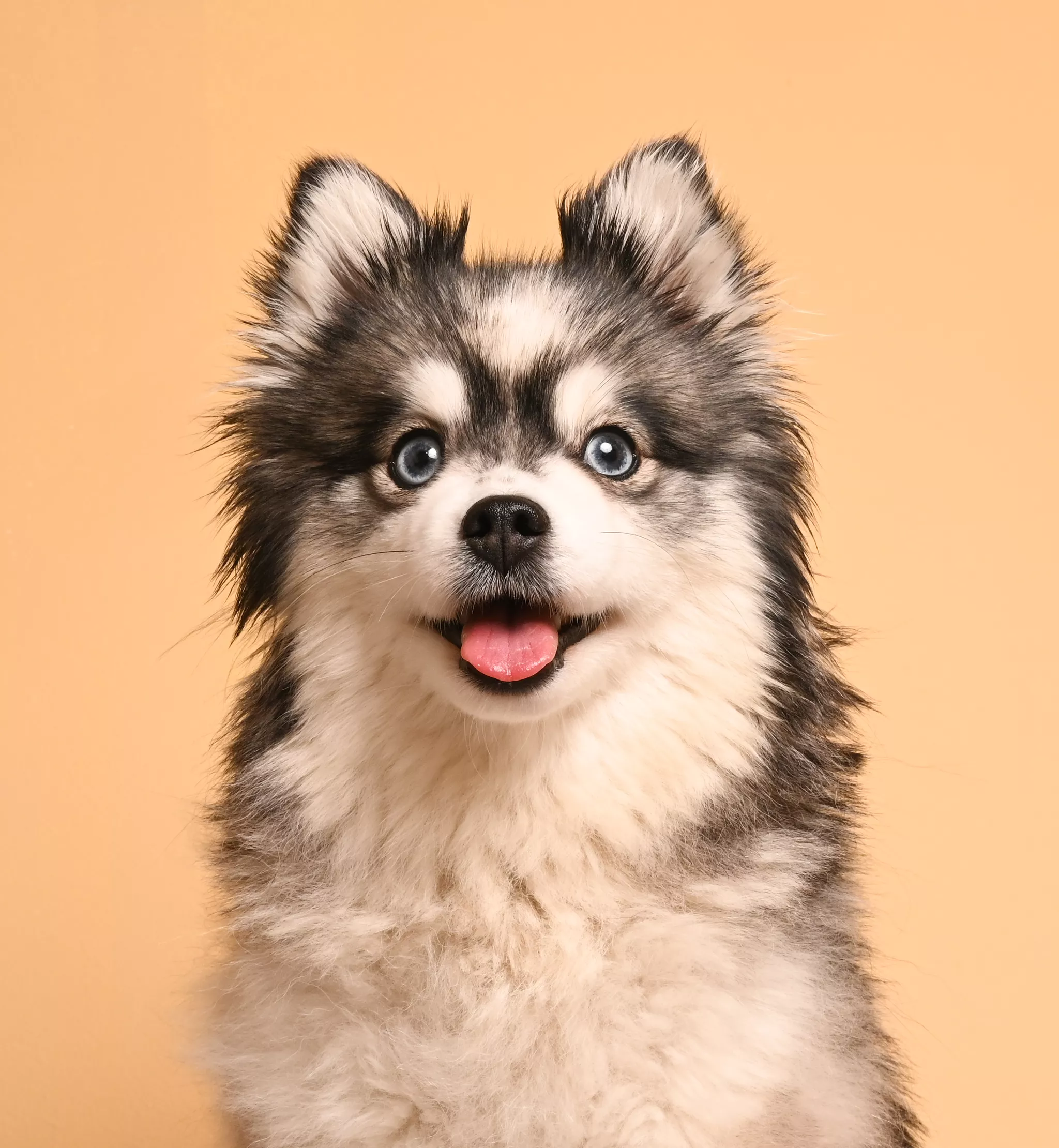
Three things separate a keeper from a camera-roll casualty.
Get down to their level. The single biggest upgrade is physical: crouch, kneel, or lie down so the camera meets your pet's eyes. Shooting down at a dog makes them look small and distant. Meeting them at eye level pulls the viewer into their world.
Focus on the eyes and catch the light. Sharp eyes with a visible catchlight — that tiny reflection of the light source — are what make a pet look alive on screen. Turn them toward a window or shoot outdoors so the light lands in their eyes.
Use soft light, not harsh sun. Midday sun creates hard shadows and makes pets squint. The Animal Humane Society advises shooting in shade or during the softer light of early morning and late afternoon. Our guide to the best and worst outdoor lighting breaks down exactly when that window falls. Above all, be patient and shoot in bursts. The best frame is usually the one between the poses you were trying for.
When to book pet photography services
Phone photos are great for the feed. For a portrait you want to frame, print, or keep for the life of the pet, professional pet photography services are worth it. A pro brings fast lenses that freeze motion, lighting that flatters, and the patience to wait out a stubborn subject, and they hand back edited images rather than a folder of near-misses. Given how few of our photos ever leave the phone, there is a real case for printing the ones that matter.
The friction has usually been finding and vetting a specialist. Snappr removes that. As the largest on-demand photographer network, Snappr covers 95% of the U.S. and lets you book a vetted photographer in about two minutes, with as little as 24 hours' notice, then delivers professionally edited photos within days. No hunting through directories, no back-and-forth over email.
Want portraits of your pet that actually look like them? Book a photography session with Snappr and get gallery-ready shots without the guesswork.
Frequently Asked Questions
What do pet photography services include?
Most pet photography services include a session (in-home, outdoor, or studio), a professional photographer who directs and captures the shoot, and a set of edited digital images delivered afterward. Some packages also offer prints, albums, or multiple pets in one session.
How do I prepare my pet for a photo session?
Schedule the shoot when your pet is naturally calm, such as after a walk or a meal, and bring treats and a favorite toy to hold their attention. Groom them beforehand, and for anxious pets, choose an in-home session so they stay in familiar surroundings.
How much do pet photography services cost?
Pricing depends on session length, location, and how many edited images or prints are included. Booking through an on-demand network keeps pricing transparent and predictable compared with tracking down and negotiating with individual specialists.
Can I just take good pet photos myself?
Yes, for everyday shots. Get down to your pet's eye level, use soft natural light, focus on the eyes, and shoot in bursts with treats to hold attention. For portraits you plan to print or frame, professional pet photography services deliver sharper, better-lit results.
Sources
1. Rover — 65% of dog owners take more photos of their dog than of their significant other
2. Pew Research Center — 97% of pet owners consider pets family; ~half say as much as a human member
3. American Kennel Club — using treats and toys to photograph a dog
4. Animal Humane Society — shooting pets in soft, natural light


