
Patients scroll before they call
A patient with a new referral opens the find-a-doctor page on their phone. Four dermatologists, four small photos. One is a cropped wedding picture, one is a grey silhouette, and one is a friendly face in a white coat. Guess who gets the call.
That scroll happens constantly. Aha Media Group's 2024 survey of 534 people found 92% of patients read a provider's bio before booking, and 77% look for photos or videos first, up from 50% in 2018. And the photo lands fast: Willis and Todorov's study in Psychological Science showed people form judgments of trustworthiness and competence from a face after a 100-millisecond exposure.
Here's how to get medical headshots right, from wardrobe to a clinic-wide shoot day.

Where doctor headshots actually show up
One photo has to work in a lot of places:
• Hospital and practice directories. Aha Media Group found 26% of patients start their search on a hospital website and 19% on an insurance site.
• Insurer and booking directories, where your photo sits in a grid of in-network competitors.
• Google Business Profile. Google's guidelines treat doctors and dentists as individual practitioners who can have their own profile, separate from the practice's.
• Telehealth platforms and patient portals, where the headshot is the face patients see before the video call connects.
Each spot crops differently, so ask your photographer for a loose frame with space above the head. You can cut a square, a circle or a vertical from one file.
White coat, scrubs or business attire?
This one has real data. A BMJ Open study of 4,062 patients across 10 US academic hospitals found 53% said physician attire mattered to them. Formal attire with a white coat was the most highly rated option, patients 65 and older preferred it most strongly, and scrubs were preferred for surgeons.
A practical rule of thumb:
• Primary care and outpatient specialists: white coat over a collared shirt or blouse.
• Surgeons and emergency physicians: clean, well-fitted scrubs.
• Leadership, researchers and LinkedIn: business attire, no coat.
• Nurses, therapists and allied health: whatever you wear with patients, pressed.
Skip busy patterns, and check that embroidered names are spelled right before the shoot.

Approachable, not a toothpaste ad
Warmth matters, but a huge grin isn't automatically the answer. A 2024 Heliyon study of 12,890 physician profiles on online medical platforms in China found that age and glasses strengthened the link between perceived competence and warmth and a patient's choice of doctor, while smiles weakened it. It's one market, but the lesson travels: patients want to see competence first.
Aim for a soft, closed-mouth smile, direct eye contact and relaxed shoulders. A slight forward lean reads as engaged. Our guide to headshot poses covers the angles that flatter most faces. Shoot a few expressions and let the provider choose.
One practice, one look
A directory grid shows every inconsistency. Five backdrops and three crop heights make a practice look like five practices sharing a website.
Write a one-page style sheet before anyone sits down: backdrop color, crop line, attire rule by role, lighting setup and file specs. The same thinking behind good corporate headshots applies here, with one medical-specific addition: nothing identifying a patient can appear in the frame. That means no whiteboards, charts, monitors or people in the background.
Run an on-site headshot day
Chasing 40 providers to book their own sessions takes months. Bring the photographer to them instead. Set up a portable backdrop in a conference room, book 10-minute slots around clinic hours and shift changes, and schedule a make-up day for anyone on call or on leave.
Individual providers can still book solo. If you're choosing someone yourself, here's what to look for in a professional headshot photographer, and why your headshot is part of your personal brand well beyond the directory.
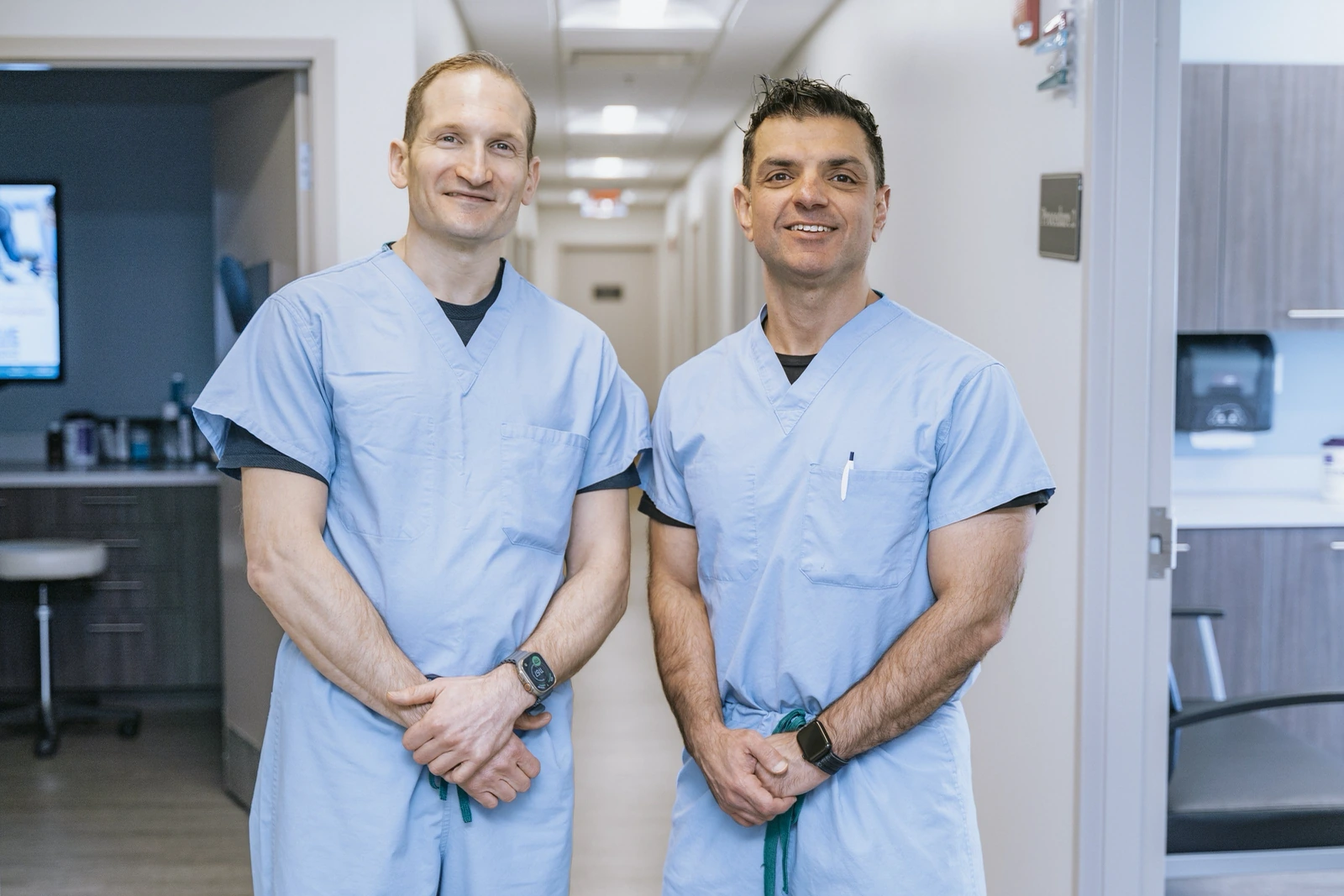
Headshots for every provider, without the scheduling headache
Rolling this out across clinics is where most efforts stall. Snappr handles headshots at scale: its Enterprise page describes a Redfin program that completed 1.4k+ photoshoots across 150+ cities and cut headshot turnaround from weeks to days. Enterprise plans also include expert-assisted creative guidelines and central editing for brand consistency, per Snappr's plan comparison, so a new hire's photo matches the ones from last year.
Photographing a whole practice or health system? Talk to Snappr's Enterprise team about a provider headshot program. Just need your own? Book a headshot session directly.
Frequently asked questions
What should doctors wear for headshots?
Most doctors look best in a white coat over a collared shirt or blouse. A BMJ Open study of 4,062 patients rated formal attire with a white coat highest overall, while scrubs were preferred for surgeons.
Should doctor headshots be smiling?
A soft, closed-mouth smile with direct eye contact usually works best. It reads as warm without undercutting competence, which patients weigh heavily when choosing a provider.
Can I use the same photo for my hospital profile and Google Business Profile?
Yes. Use one high-resolution headshot with room around the head so it can be cropped square, circular or vertical for each platform.
How often should medical headshots be updated?
Update them every two to three years, or sooner after a noticeable change in appearance. Patients should recognize you when you walk into the exam room.
Sources
1. Aha Media Group, How Patients Choose a Doctor (2024 survey): 534 respondents; 92% read bios before booking; 77% look for photos or videos, up from 50% in 2018; 26% start on hospital websites, 19% on insurance sites
2. Willis and Todorov, First impressions: making up your mind after a 100-ms exposure to a face, Psychological Science (2006): trustworthiness and competence judgments after a 100 ms exposure
3. Google Business Profile Help, Guidelines for representing your business on Google: doctors and dentists as individual practitioners with their own profiles
4. Petrilli et al., Understanding patient preference for physician attire, BMJ Open (2018): 4,062 patients, 10 US academic hospitals, 53% said attire was important, white coat with formal attire rated highest, scrubs preferred for surgeons, 65+ preferred white coats
5. Bai et al., How do patients' perceptions and doctors' images impact patient decisions?, Heliyon (2024): 12,890 physicians on Chinese online medical platforms; age and glasses enhanced, smiles weakened the effect of perceived competence and warmth


