
Your attendees came back faster than your exhibitors did
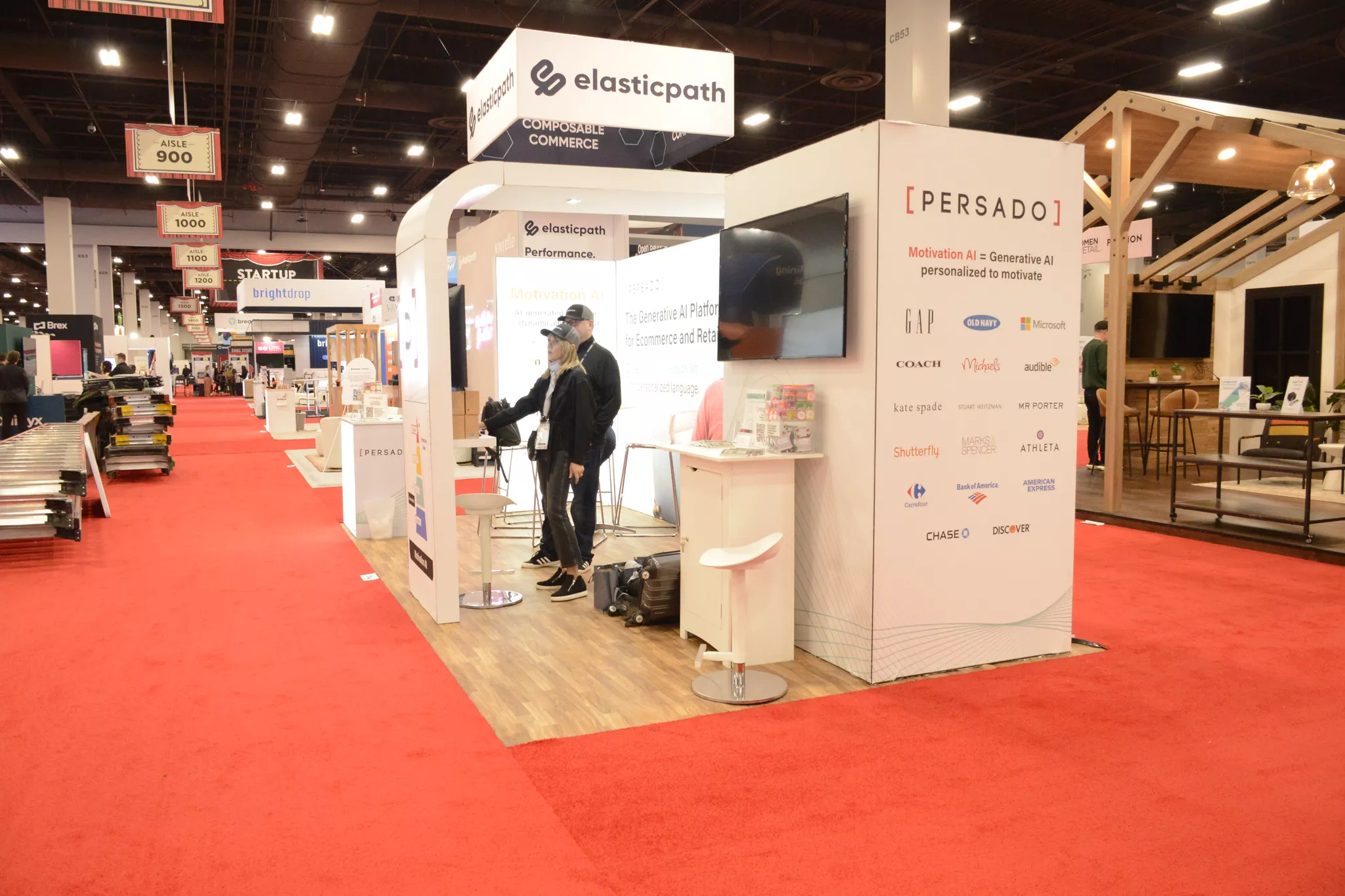
Attendance recovered. Exhibitors did not. The CEIR Q2 2025 Index reported by IAEE breaks the recovery into four components, and the spread tells the story: attendees sat just 3.7% below Q2 2019, net square feet 4.9% below, exhibitors 8.8% below, and real revenues furthest back at 15.6% below. Only 32.7% of events in the sample had surpassed their pre-pandemic performance, down from 39.6% a year earlier.
Translated for anyone who sells booth space: the buyers are in your hall. Your problem is convincing the companies who pay you that the buyers are in your hall.
That is a documentation problem before it is a sales problem, which is why the trade show photographer on your floor does not belong in the production budget. That person is producing next year's sales collateral.
The renewal deck writes itself, if someone shot it
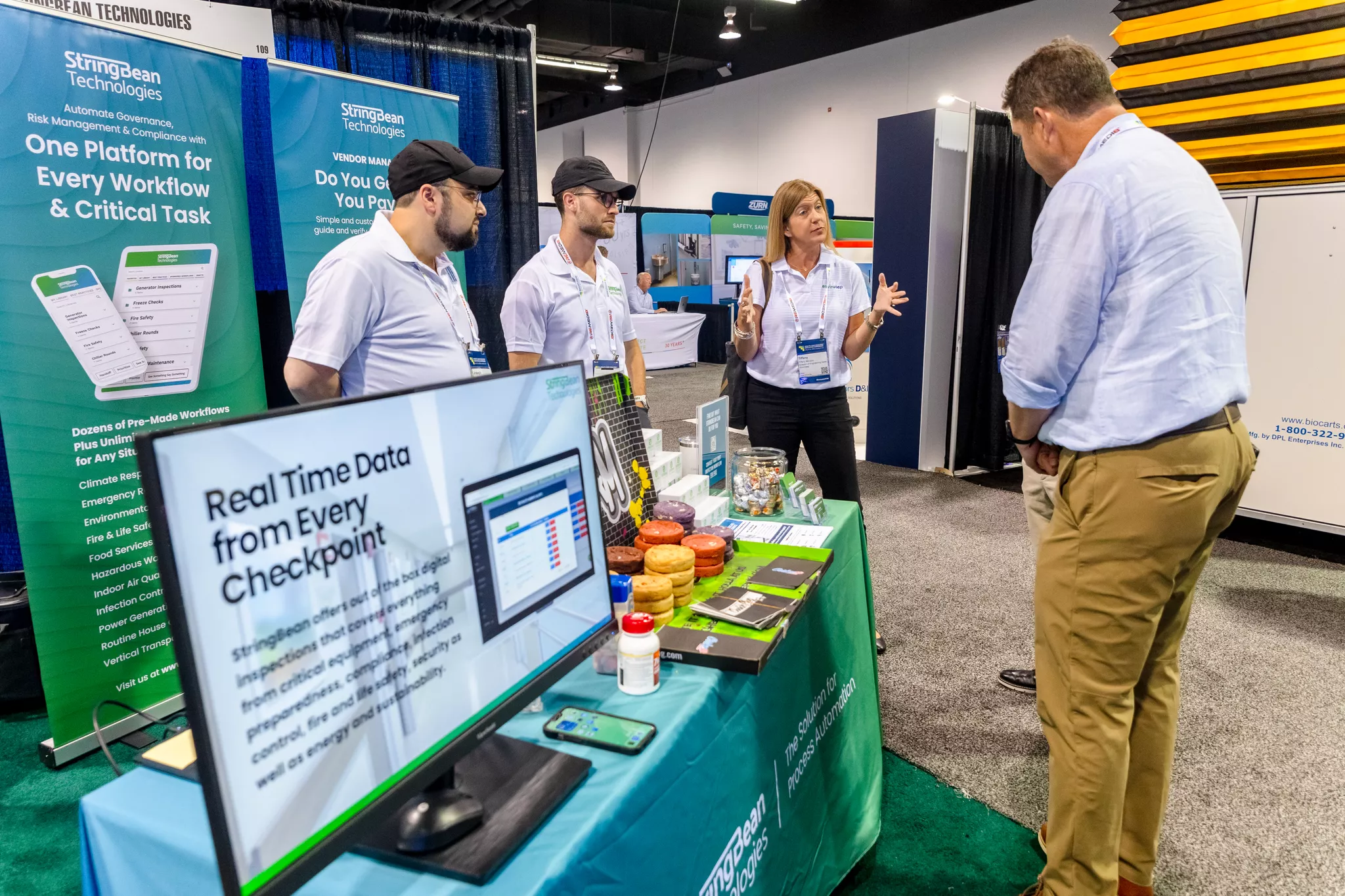
Exhibitors are not disengaged from face-to-face. CEIR's 2026 marketing spend research, reported by PCMA, found that face-to-face exhibitions account for 41 percent of exhibitors' marketing budgets, the largest single share across all budget sizes, based on 362 B2B exhibitors. They are still spending. They are just being far more selective about which shows earn it.
Selection runs on evidence. When a marketing director is deciding between your show and a competitor's, the question is whether qualified buyers stopped and talked. Freeman found that 74% of attendees say in-person events are the best place to discover new products, and 58% say discovery is their number one commercial objective. PCMA reports that 84 percent of attendees rate connecting with subject-matter experts at exhibitor booths as extremely or very important.
Those numbers are your pitch. Photographs of six people three-deep at a mid-tier exhibitor's demo station are the proof they apply to your floor.
What show organizers should actually brief
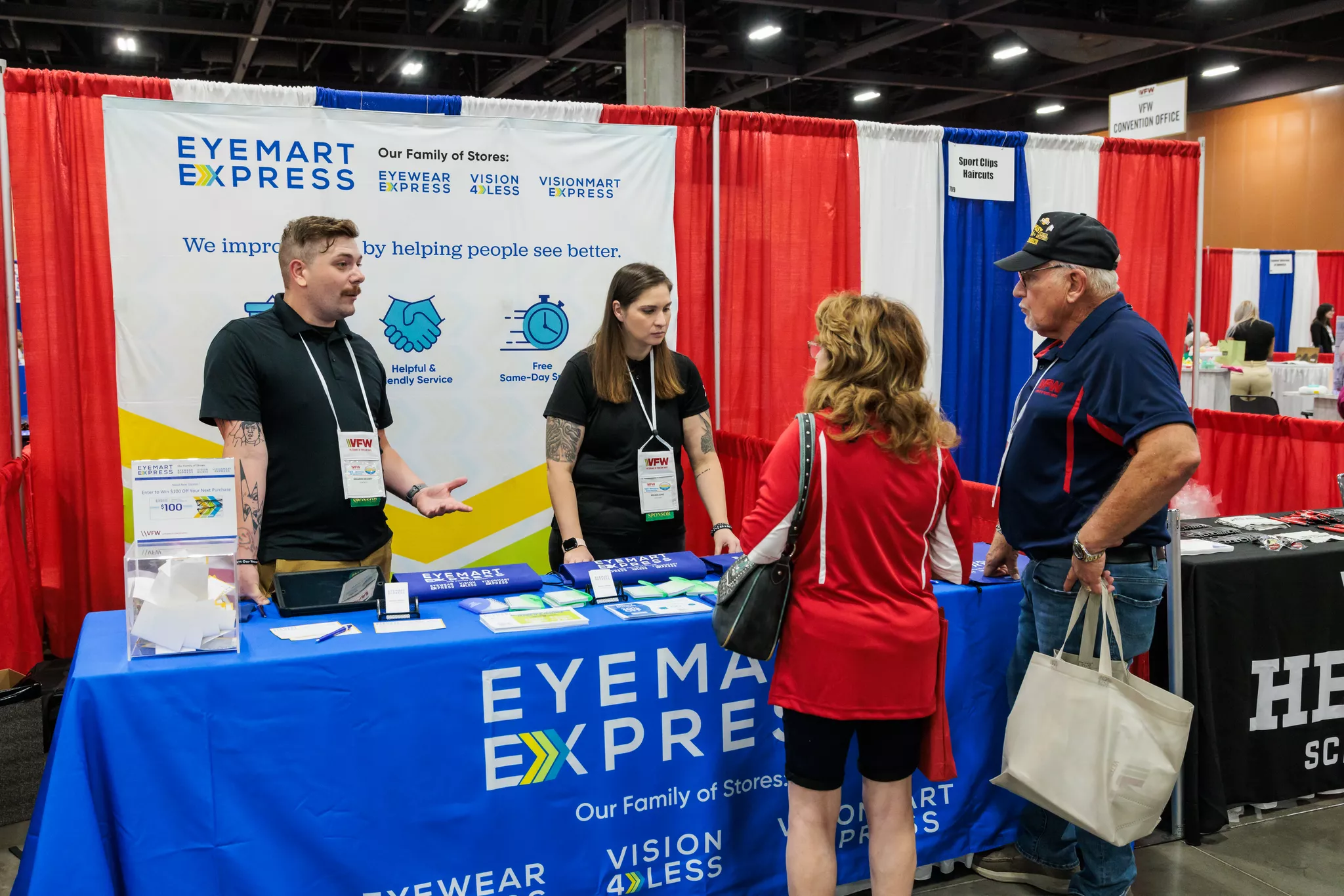
Most floor photography gets briefed as coverage. It should be briefed as inventory. Three categories matter:
• Density frames. Elevated aisle shots and booth-level crowd shots, timed for peak floor hours rather than whenever the photographer arrives. These sell square footage.
• Exhibitor-specific sets. Every booth above a certain tier gets its own small gallery, delivered to that exhibitor within 48 hours. This is a retention tool disguised as a courtesy, and it puts your show's imagery into their internal reporting.
• Sponsorship and activation coverage. Branded lounges, stage backdrops, badge lanyards in use, keynote step-and-repeats. Sponsorship renewals are argued with photographs more than with attendance figures.
Quality is doing real work here, not just polish. A peer-reviewed study in the Journal of Marketing Research found that professionally shot, high-quality pictures consistently drive higher engagement across platforms and product categories. The channel data agrees: Socialinsider's Q2 2026 LinkedIn benchmarks, built on 1.3 million posts from 16,645 business pages, put image posts at a 5.20% average engagement rate against 3.95% for text-only, with multi-image posts at 6.90%.
If you have ever wondered why your recap post underperformed, our piece on what happens when stock photos get replaced with real professional images covers the mechanics, and the nine tips for better event photographs is the practical companion for whoever runs your floor team.
The multi-show problem
One show is a hire. A portfolio of eight shows across six cities, each needing the same look, the same turnaround, and the same delivery spec so the exhibitor galleries are comparable year over year, is an operations problem. Sourcing and re-briefing a new freelancer in every market resets your quality baseline every time.
Snappr's photographer network covers 95% of US geography and 90% of the English-speaking world, and shoots book in minutes with as little as 24 hours' notice. Shoot guidelines are written once and applied automatically to every photographer on every date, so a hall in Chicago matches a hall in Orlando. Edited galleries come back within 48 hours, and the business events team can push exhibitor sets directly into your CRM or portal by API instead of through a zip file and a prayer.
The category is healthy enough to be worth fighting over. UFI counted 32,000 exhibitions worldwide in 2024, where 4.7 million exhibiting companies welcomed 318 million visitors. Those 4.7 million companies are choosing between shows every year. Give yours something to look at.
Talk to Snappr's Enterprise team about floor coverage that runs to the same standard across every show in your portfolio.
Frequently asked questions
What should a trade show photographer capture for a show organizer?
Prioritize three things: elevated aisle and crowd density frames shot at peak hours, individual booth galleries for exhibitors above a set tier, and sponsorship activation coverage. Organizers use these for rebooking decks, sponsor renewals, and next year's marketing campaign.
How is this different from what exhibitors hire a photographer for?
Exhibitors shoot their own booth to prove their own ROI. Organizers need coverage of the whole floor, including booths they do not own, because the product being sold is the density and quality of the audience across the hall.
How quickly should exhibitor galleries be delivered?
Within 48 hours, while the show is still live in everyone's inbox. Fast delivery gets your imagery into the exhibitor's own internal recap, which means your show gets credited in their reporting rather than in a follow-up email nobody opens.
How many photographers does a trade show need?
Floor size and hall count drive the number more than attendance. A single-hall show can run on one or two photographers, but anything spanning multiple halls with concurrent keynote programming needs three or more to cover peak hours in every space at once.
Do exhibitors actually value the photos?
Face-to-face exhibitions take 41 percent of exhibitor marketing budgets according to CEIR, so exhibitors are under real pressure to justify that spend internally. Handing them usable, professionally shot proof of booth traffic makes your show the easiest one on their list to defend.
Sources
1. CEIR Q2 2025 Index, via IAEE — exhibitor, attendee, square footage and revenue recovery vs. 2019
2. CEIR 2026 Marketing Spend Decision Report, via PCMA — face-to-face exhibitions as 41% of exhibitor marketing budgets
3. Freeman Trends Report, 2025 — attendee discovery behavior at in-person events
4. PCMA, Retention Is Real Growth Strategy — attendee value of connecting with experts at exhibitor booths
5. Journal of Marketing Research, Li and Xie — professional image quality and social engagement
6. Socialinsider, LinkedIn Organic Benchmarks — image vs. text engagement rates on LinkedIn
7. UFI Global Exhibition Industry Statistics — global exhibitions, exhibiting companies and visitors in 2024


