
Everything that makes a beach beautiful also makes it hard to shoot
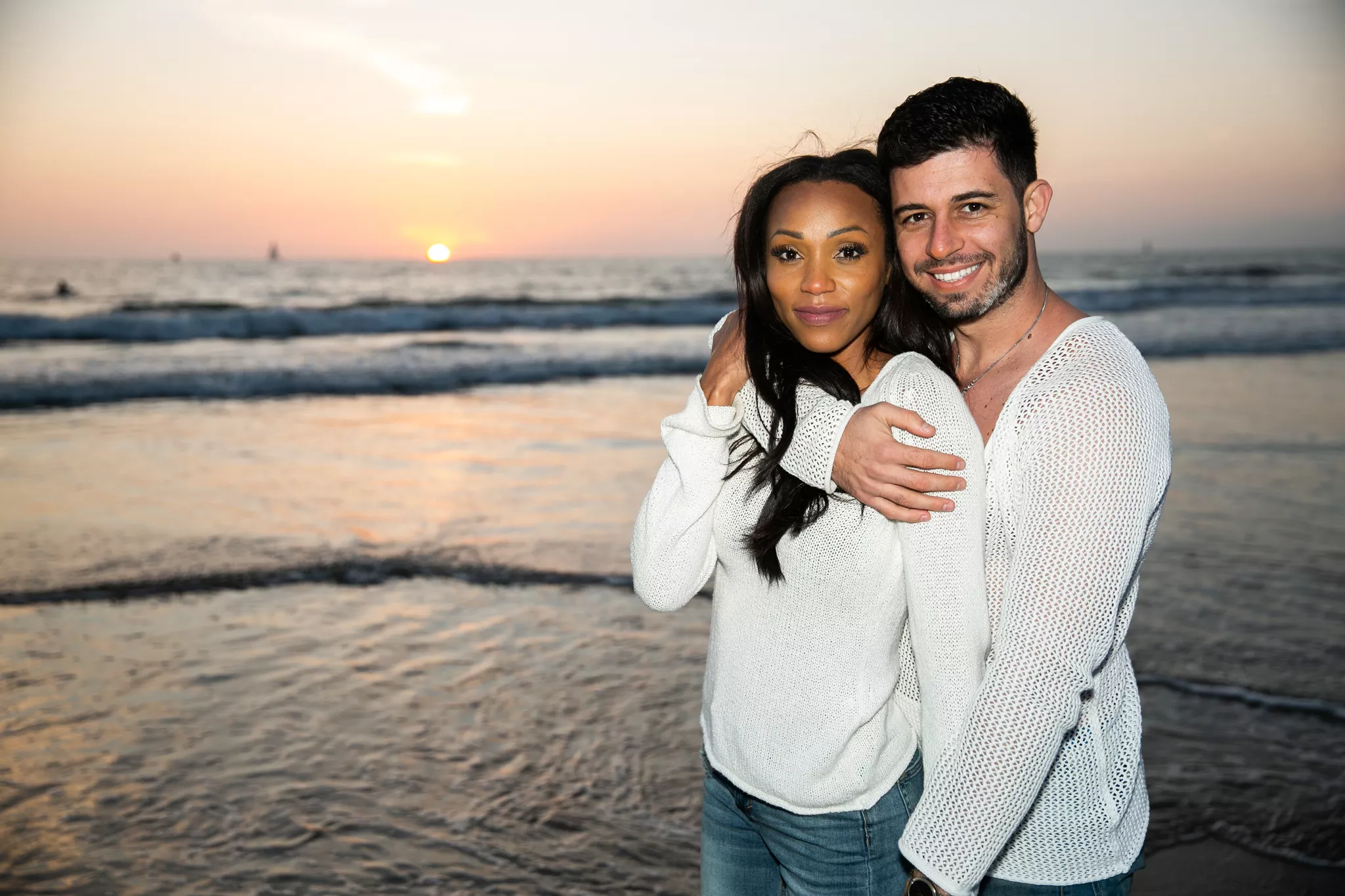
An open beach at two in the afternoon is one of the least forgiving places to photograph a person. The sun is directly overhead, the sand throws light back up into everyone's faces, there is no shade for a quarter of a mile, and the wind is doing something unhelpful to hair.
None of which is an argument against beach sessions. It is an argument for planning one properly, because the same location an hour before sunset is about as good as photography gets. Low sun across the water, wet sand acting as a mirror, and a horizon that gives every frame somewhere to breathe.
So the first decision is not which pose. It is what time, and after that the poses mostly take care of themselves.
Timing, which decides everything else
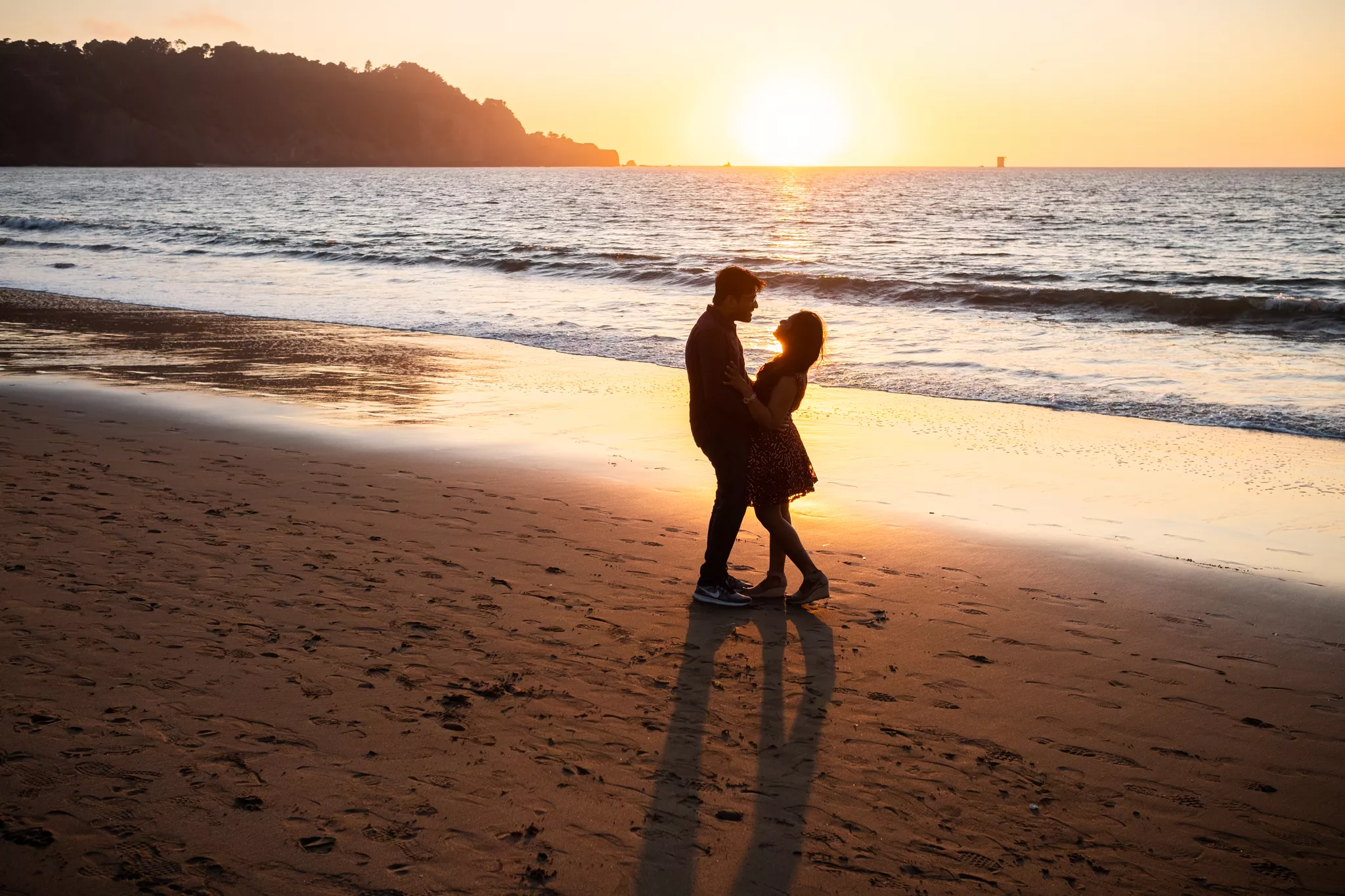
The hour or so before sunset is the window. Faces are lit softly from the side, nobody is squinting, and hair gets a rim of light that no amount of editing reproduces.
Midday is the one to avoid. If you are stuck with it, get into the water rather than staying on dry sand, since the reflection fills the shadows under eyes, and keep everyone's backs to the sun.
Our notes on the best and worst options for outdoor photo light cover the principle, and the sunset guides help with picking a stretch of coast. There are lists for where to photograph the sunset in San Diego and sunset spots in Miami.
Solo poses on a beach
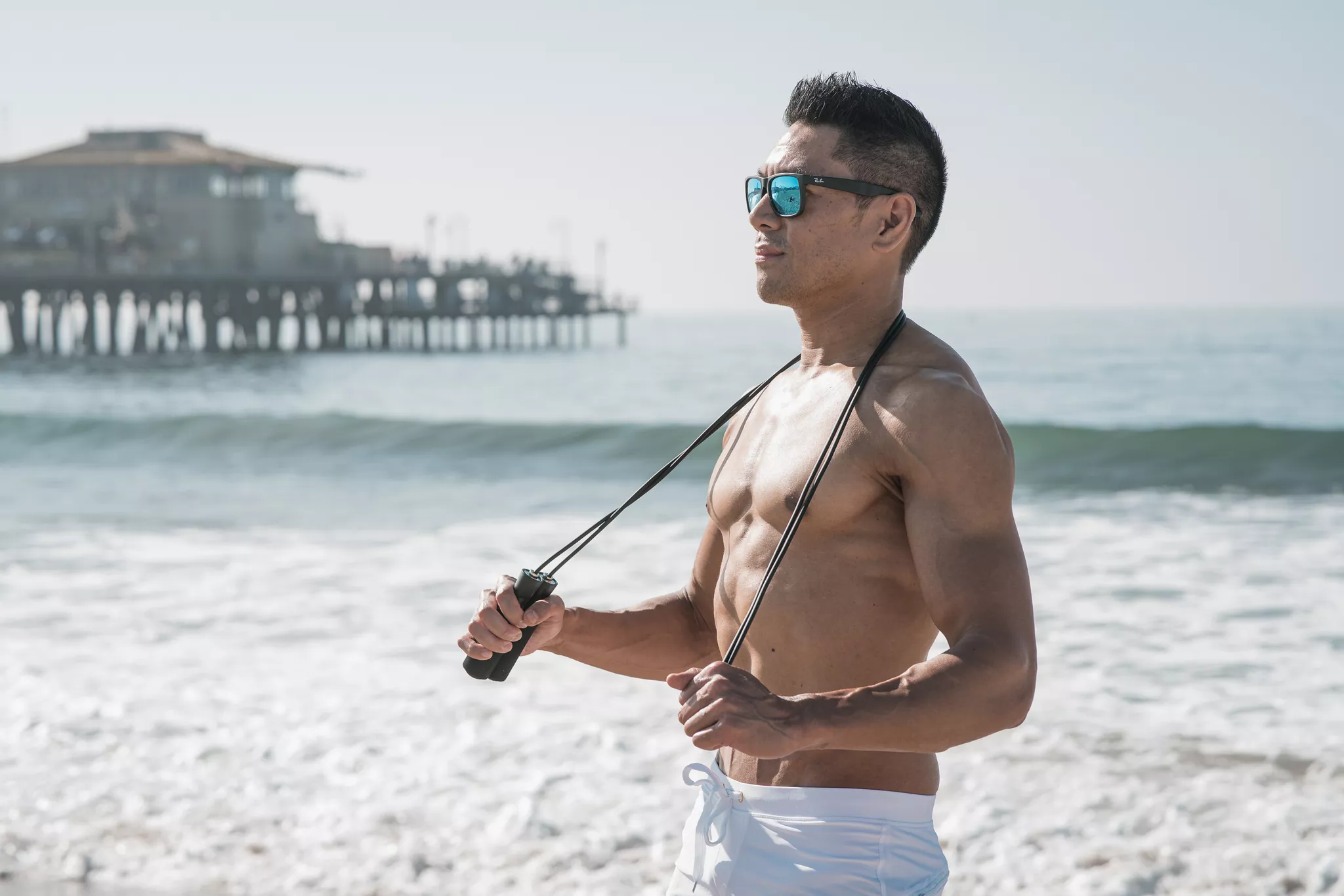
Walking the shoreline is first and best. Walk parallel to the water, ankle-deep, and let the photographer shoot from the side and slightly behind. Look down at the water rather than at the camera for half the frames.
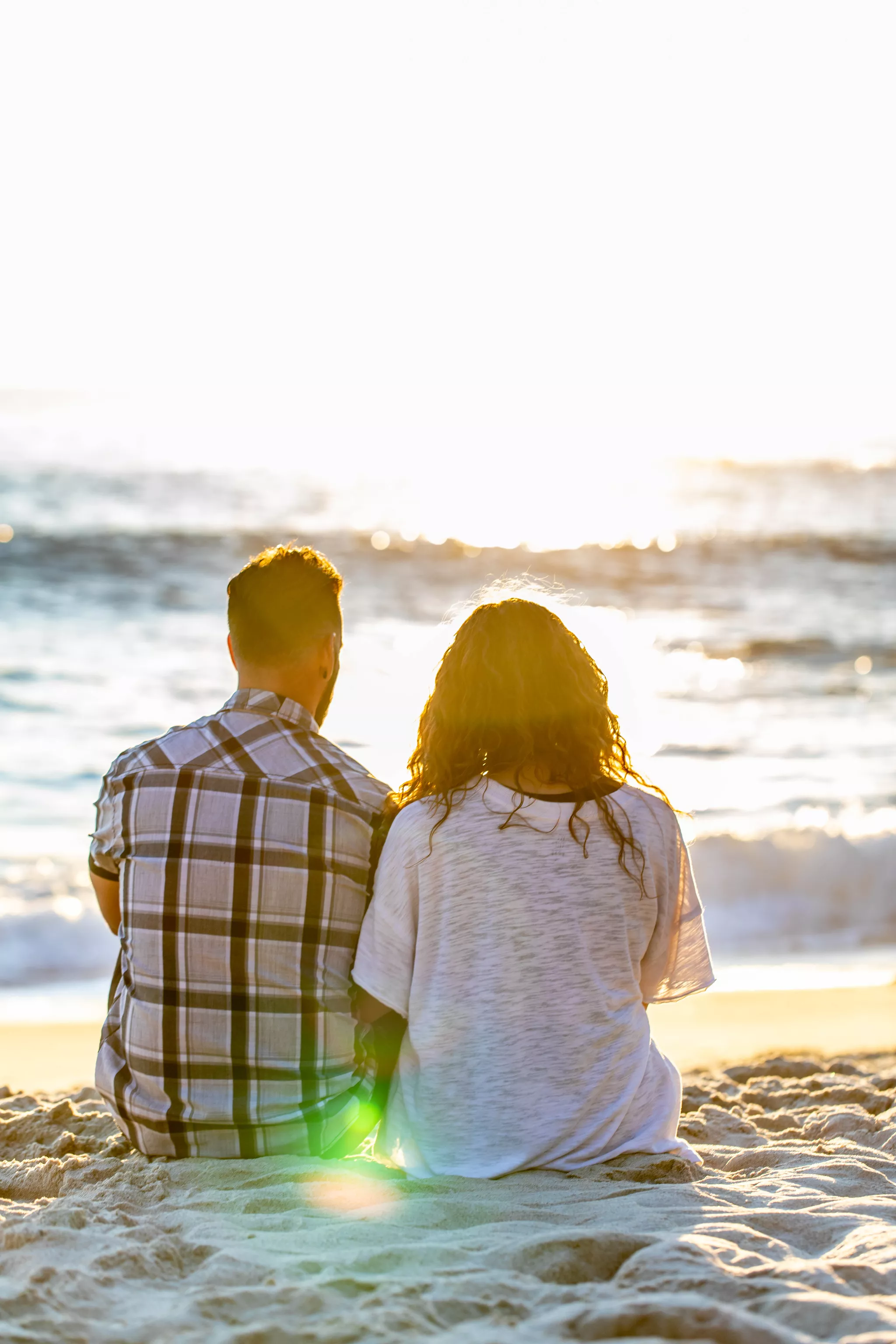
Seated in the sand is second, and it works because low camera angles put the horizon behind your head instead of cutting across your neck. Legs folded to one side, one hand in the sand, weight leaning onto that arm.
For wind, work with it rather than against it. Stand so the breeze comes from the side or slightly behind and lifts hair away from your face, since wind straight into your face pushes hair across your eyes and flattens clothing against you.
Couple poses that suit the setting
The shallow-water walk is the one to plan the session around. Hands linked, ankle-deep, talking to each other rather than performing.
Silhouettes belong to the last fifteen minutes of light. Face each other at the water's edge with the sun directly behind, foreheads together or in a kiss, and let the photographer expose for the sky. The shapes have to be clean, which means space between your bodies and separated limbs, because a silhouette with no gaps reads as one dark blob.
The back hug facing the water works in any light. It solves height differences on its own, and neither of you has to hold an expression.
Family and kids on sand
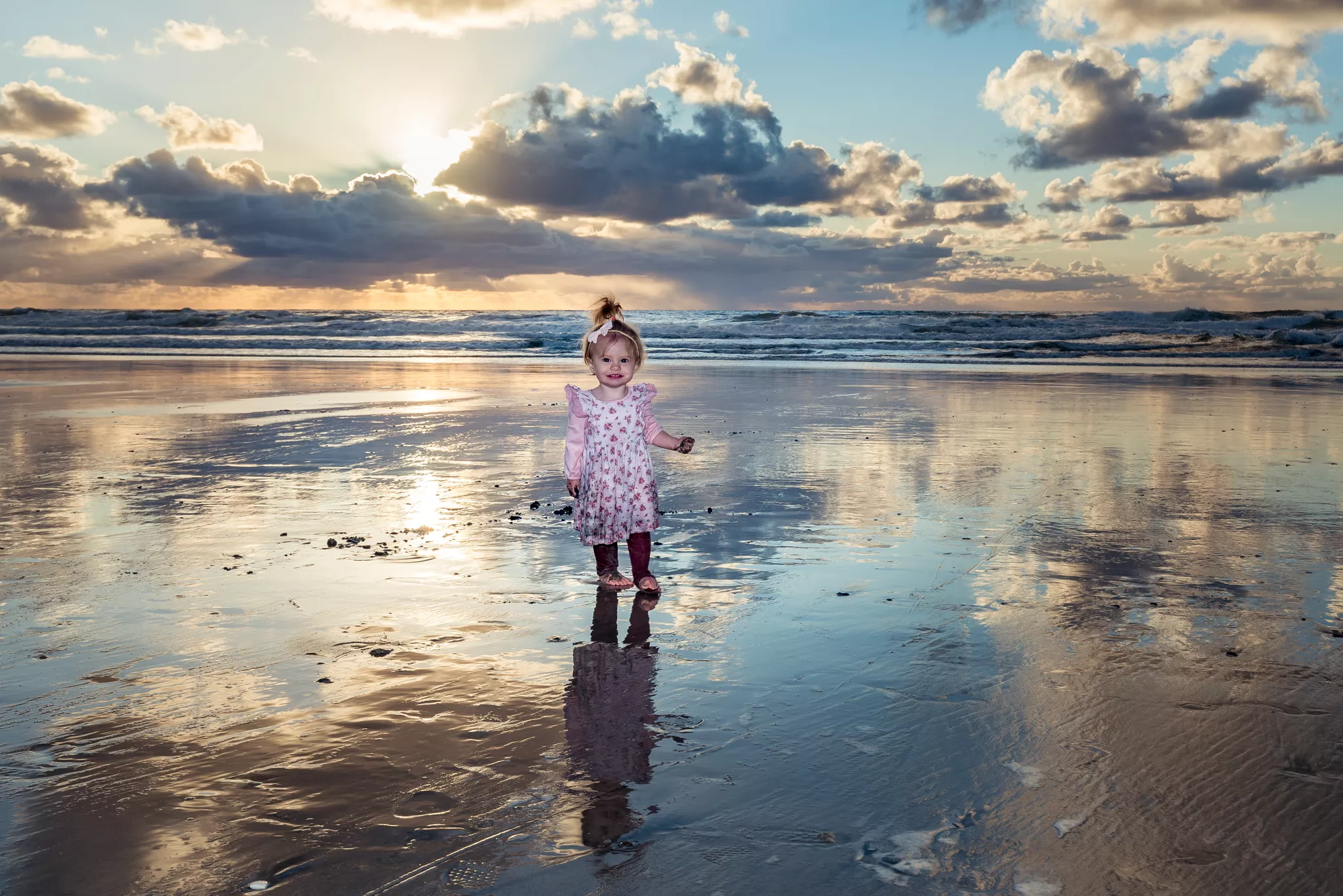
Sand is an advantage with small children, because it is the one location where a child sitting down and digging is a photograph rather than a lost frame.
Get everyone low. Sitting or kneeling in the sand puts adult and child faces at similar heights, which is the biggest single improvement available in family beach frames.
Walking as a group works if you keep it loose and let the kids run, and frames where nobody is looking at the camera are the point rather than the failure. Do the one organised group frame first, while patience lasts.
What to wear so the wind works for you
Fabric that moves is the whole point. A long dress or a loose shirt catches the breeze and gives the frame motion a fitted outfit cannot.
Avoid anything that needs constant adjusting, because if you are holding a strap or a hem in place, that is what your hands will be doing in every photograph.
Barefoot photographs better than shoes on sand and removes the question of footwear entirely. Light and mid tones hold up better against bright sand and water than dense black, which tends to flatten into a shape in strong backlight.
Book a beach photoshoot
Beach sessions live or die on timing, which is the argument for someone whose job is knowing when to be where. With Snappr, booking takes about 90 seconds and edited photos come back within 48 hours, with as little as 24 hours' notice. Book a beach photographer and get the hour that matters.
Frequently asked questions
What are the best poses for beach photos?
Walking the shallows parallel to the water, seated low in the sand with legs folded to one side, and a backlit silhouette at the water's edge. For couples, the shallow-water walk and a back hug facing the water are the most reliable.
What time of day is best for beach photos?
The hour before sunset, or the hour after sunrise. Low side light stops people squinting and gives hair a rim of light. If you are stuck with midday, get into the shallows so the water fills the shadows under everyone's eyes.
How do I stop squinting in beach photos?
Keep the sun behind or to the side of you rather than in front. If you have to face it, look down, close your eyes and open them on a count of three so the frame lands before your face tenses. Shooting near the water helps too, since reflected light is softer than direct sun.
What should I wear for a beach photoshoot?
Something that moves in the wind, like a long dress or a loose shirt, and nothing that needs constant adjusting. Go barefoot rather than fighting shoes on sand. Light and mid tones read better against bright sand than dense black.


