
Eight seconds of motion is now a line item, not a production
The interesting question about image to video AI stopped being "does it look real." It looks real enough. The question now is which commercial jobs it can take off your plate this quarter.
The tools are specific about what they produce. Google's Veo 3.1 generates eight-second clips in 1080p and 4K from a still image plus a prompt, and extends a clip by using its last second as the start of the next. Adobe Firefly's image to video tool adds explicit pan, zoom, and tilt controls, and routes to partner models including Veo 3.1, Runway Gen-4.5, and Kling. Eight seconds is the working unit. Every use below either fits inside that, or stitches it.
Five jobs where the math already works, hardest last.
1. Product and catalog video
Retail platforms have stopped treating video as optional. Amazon's Sponsored Products video accepts clips from seven seconds with no maximum, which means a single Veo clip clears the floor. Amazon reports campaigns with video saw a 9% uplift in click-through rate, and that CTR jumped 8x among the 20% of shoppers who watched past five seconds. A 2025 shopper study it cites found 72% say the most engaging videos highlight concrete product details.
One caution worth reading straight from Amazon's own don't-list: overly animated videos may erode shopper trust. Animate the real product photo. Don't invent a product that doesn't exist.
2. Menu and food content
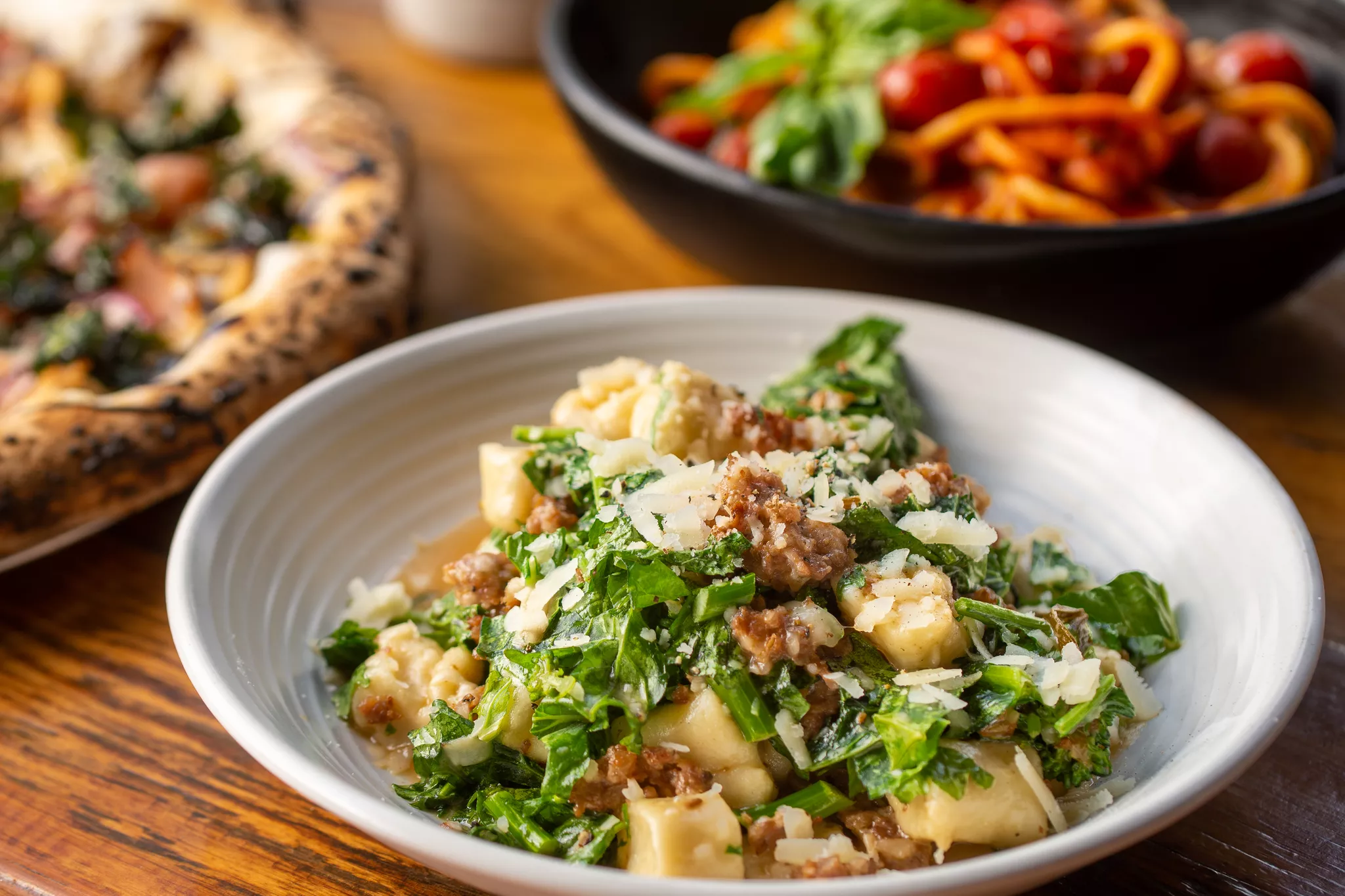
Food is the most photo-dependent category in commerce, and the baseline is already established. DoorDash data from a study of over 15,000 merchants found menus with item photos get up to 44% more monthly sales. Motion is the next increment on the same asset, and delivery apps have been steadily adding video slots to the storefront.
The practical play is not shooting new video. It is animating the strongest existing dish photos into a scroll-stopping vertical, then reusing the same asset on Instagram. Our guide to food photography for restaurants covers what makes the source image work.
3. Paid social and ad creative
Ad accounts don't fail for lack of budget so much as lack of fresh creative. Firefly positions its image to video tool explicitly at B-roll, inserts, and transitions, which is precisely the gap in most in-house edits: the campaign has three hero shots and needs fifteen cutaways.
This is the highest-volume commercial use because the accuracy stakes are lowest. You are generating motion around a product you already photographed, for a channel where a clip lives eight days rather than eight months.
4. Hospitality and short-term rentals
The evidence for visual quality in lodging is unusually clean. Carnegie Mellon researchers analyzing Airbnb found rooms with verified photos were booked 9% more often, and isolated an extra $2,455 in yearly earnings attributable to high photo quality alone.
Generated motion extends that library cheaply: a slow push across a made bed, the view off a balcony, the pool at golden hour. It works because a guest wants atmosphere before they want a floor plan. Keep the clip inside the frame of a real photograph and it stays honest.
5. Real estate video tours
Hardest, most valuable, and last for a reason. Video is already normal here: NAR's 2025 Technology Survey found 52% of agents use drone photography and video and 46% use AI-generated content, while 32% have not used AI at all. Buyers reward depth, too. Zillow reports Showcase listings see 79% more page views, 76% more saves, and 91% more shares than comparable nearby listings.
Two things make real estate different. First, accuracy is a legal matter, not a taste one: AI-altered listing imagery has already prompted disclosure laws in California and Wisconsin, with legislation pending in New York and New Jersey. Second, eight seconds cannot show how a home flows, which is the entire job a tour exists to do. A generic clip gives you a mood; a buyer needs a route through the property.
That gap is the product. Snappr's AI virtual video tours are built as full walkthroughs running one to two minutes, generated from a completed listing shoot rather than from a single frame, so the sequence follows rooms that actually connect. Our post on the dos and don'ts of virtual staging covers the disclosure habits that carry over.
Where the source photography comes in
Every use above depends on the same input. Models animate what they can see, so a sharp, well-lit, professionally composed frame produces motion that reads as real, and a phone snapshot produces motion that reads as a glitch. Poor source photography produces poor video, just faster.
That is the part Snappr handles. Its photographer network has nationwide coverage and 250M+ photos captured worldwide, powering visual content for 73% of the Fortune 500, so the source frames are consistent from the start. Snappr AI generates and edits derivative assets from those images with human QC in the loop, and Workflows pushes approved files to your listing, catalog, and social destinations by API.
Start with the input, not the tool
If you are planning generated video across a catalog, a menu, or a portfolio, fix the photography pipeline first. Book time with Snappr's Enterprise team to map how professional capture, AI generation, and QC fit your inventory.
Frequently asked questions
What is image to video AI?
Image to video AI is a generative model that takes a still image and produces a short video clip from it, typically four to eight seconds long. You direct the result with a text prompt describing camera movement and style. Adobe Firefly and Google's Veo are two of the most widely used options.
What are the best commercial uses for image to video AI?
The strongest commercial uses are product and catalog video, food and menu content, paid social B-roll, hospitality listing atmosphere, and the front end of real estate video tours. All five share one trait: the clip animates a real photograph rather than inventing a subject.
Is AI-generated video long enough for a product listing?
Usually yes. Amazon's Sponsored Products video accepts clips of seven seconds and longer, so a standard eight-second generation clears the minimum. Longer formats need clip extension or stitching, since most models cap a single generation at around eight seconds.
What are the legal risks of using AI video commercially?
The risk is misrepresentation. California and Wisconsin have passed disclosure laws covering significantly AI-altered real estate listing imagery, and truth-in-advertising rules apply to any category. Disclose generated visuals, and never generate a feature the product or property does not have.
Sources
1. Google DeepMind, Veo 3.1 model page: eight-second clip length, 1080p and 4K output, clip extension from the last second
2. Adobe Firefly, Image to Video: pan, zoom and tilt controls, B-roll and insert positioning, partner models including Veo 3.1, Runway Gen-4.5 and Kling
3. Amazon Ads, Sponsored Products video guide: seven-second minimum with no maximum, 9% CTR uplift, 8x CTR among shoppers watching past five seconds, 72% shopper preference for product detail, guidance against overly animated video
4. DoorDash, 6 Tips for Taking Amazing Restaurant Menu Photos: study of 15,000+ merchants, menus with item photos get up to 44% more monthly sales
5. Zhang, Lee, Singh and Srinivasan, Carnegie Mellon University, ICIS 2016: Airbnb rooms with verified photos booked 9% more often, $2,455 extra yearly earnings from high photo quality
6. National Association of REALTORS, 2025 Technology Survey: 52% drone photography and video, 46% AI-generated content, 32% have not used AI
7. Zillow, Zillow Showcase brings listings to life: 79% more page views, 76% more saves, 91% more shares on Showcase listings
8. Zillow, Zillow's take on AI-generated listing photos: California and Wisconsin disclosure laws, pending legislation in New York and New Jersey


