
The Difference Between Listed and Sold
Picture this: a buyer opens their phone during their lunch break. They have 20 minutes and 30 listings to scroll through. The first twelve have dim photos, shot at knee height, with blinds half-open and a gym bag visible in the corner. Then they hit listing thirteen — wide-angle shots that make the living room feel expansive, a golden-hour exterior that makes the facade glow, a floor plan that answers every spatial question before it's even asked.
They take a screenshot of that one and text it to their partner before they've even seen the price.
That's real estate photography working the way it should. Not as a formality you check off before hitting "publish," but as the primary sales tool for the most expensive purchase most people will ever make.
According to the National Association of Realtors' 2024 Profile of Home Buyers and Sellers, 43% of home buyers used the internet first during their home search. The same report found that photos were rated the single most valuable content feature on real estate websites. Buyers spend the overwhelming majority of their time viewing listings on photos. The image gallery is consistently the first thing they engage with, well before reading the description, checking the price breakdown, or looking at the neighborhood map.
The market has caught up to this reality. Professionally photographed homes sell 35% faster and, according to Redfin research, can command between $3,400 and $11,200 more than comparable listings shot with smartphones or basic point-and-shoot cameras.
This guide covers everything you need to know to produce exceptional real estate photoscaling, including equipment, lighting, composition, aerial photography, virtual tours, virtual staging, editing workflows, and how to scale photography operations
How Real Estate Photography Became Non-Negotiable
![Real estate photography evolution from grainy newspaper classified ad to modern professional listing photo]](https://cdn.prod.website-files.com/5ceda27bc61ed23757d6d8d9/6a6d3d61fa31956a6a30be8f_everything-you-need-to-know-about-real-estate-photography-01.avif)
Not long ago, a classified listing in the Sunday paper with a single grainy photo (if any) was considered adequate marketing for a home. Buyers called the agent, arranged a tour, and made decisions with limited visual information.
Then came the internet.
When Realtor.com launched in 1996, and Zillow followed in 2006, the game changed entirely. For the first time, buyers could filter, browse, and shortlist properties from the comfort of their couch. Listings with no photos quickly became invisible. The pressure to show well online transformed real estate photography from a nice-to-have into a baseline expectation.
Smartphones accelerated the amateur phase — suddenly, every agent had a camera in their pocket. But amateur photography at scale produced a generation of terrible listing photos: distorted wide-angle shots from doorways, blown-out windows, cramped angles that made rooms look like closets. Buyers became visually literate faster than sellers became photographically skilled.
By the mid-2010s, the data was unambiguous: professional photography had a measurable impact on sale price and days on market. The profession was formalized. Dedicated real estate photographers built businesses. Specialized gear, editing workflows, and delivery pipelines emerged. And now, in 2026, the bar has moved again: professional stills are table stakes, and drone footage, 3D virtual tours, virtual staging, and cinematic video are the new differentiators.
The Business Case: What's Actually at Stake
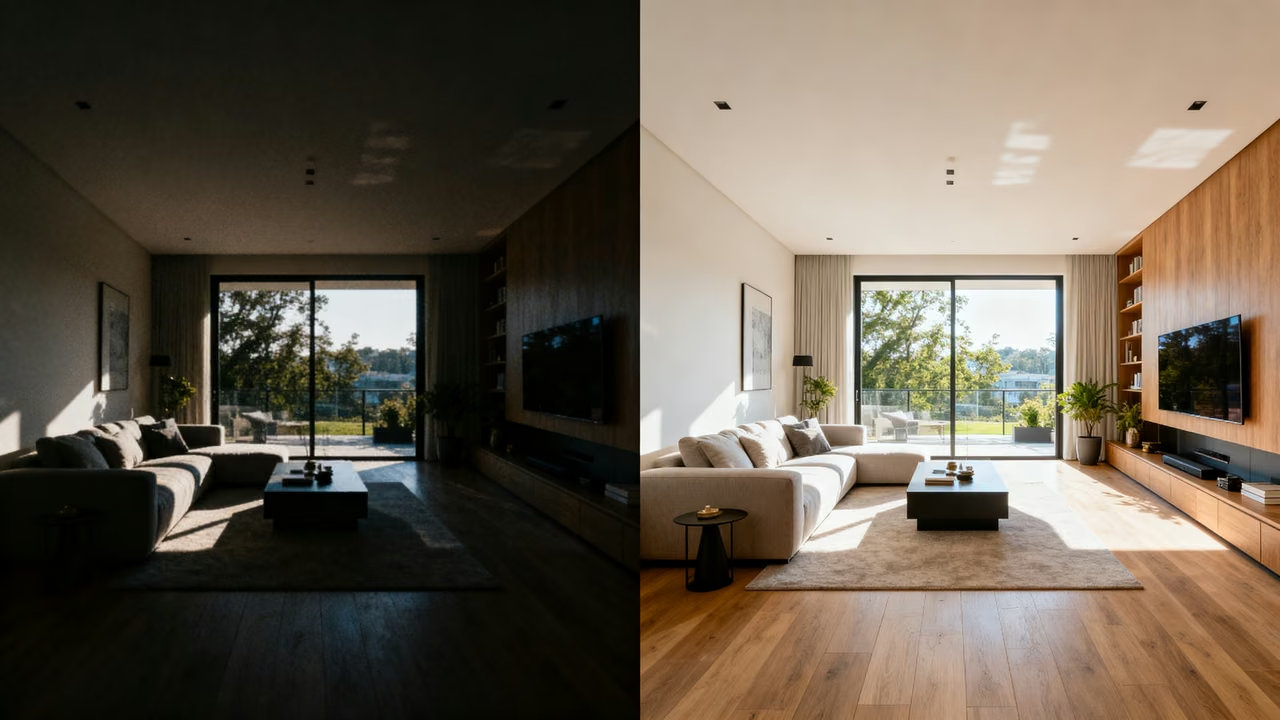
Before we get into technique, let's talk about money. Because this isn't just an aesthetic argument — it's a financial one.
Faster Sales, Higher Prices
Listings with professional photography sell 32% faster than those without, spending an average of 89 days on the market compared to 123 days for listings with amateur photography. For a seller carrying monthly costs on an unsold property, that's a difference worth thousands of dollars.
On the price side, a Redfin study found homes shot with professional DSLR cameras sold for between $3,400 and $11,200 more than comparable properties. For context, a professional real estate photography package typically ranges from $180 to $500 for a standard residential shoot. The math is hard to argue with.
Online Impressions and Engagement
More eyeballs flow to listings with professional photography. Better images perform better in platform search algorithms, earn more shares, and hold attention longer — all of which drive more potential buyers to the listing and create more competitive offer situations.
The Agent Revenue Effect
The case isn't just about individual listings. A 2015 REAL Trends study found that agents who use professional photography earn double the average gross commission income compared to agents who don't prioritize imagery. Professional photography attracts better listings, produces more visible marketing, and builds a reputation that compounds over time.
Equipment: What You Actually Need
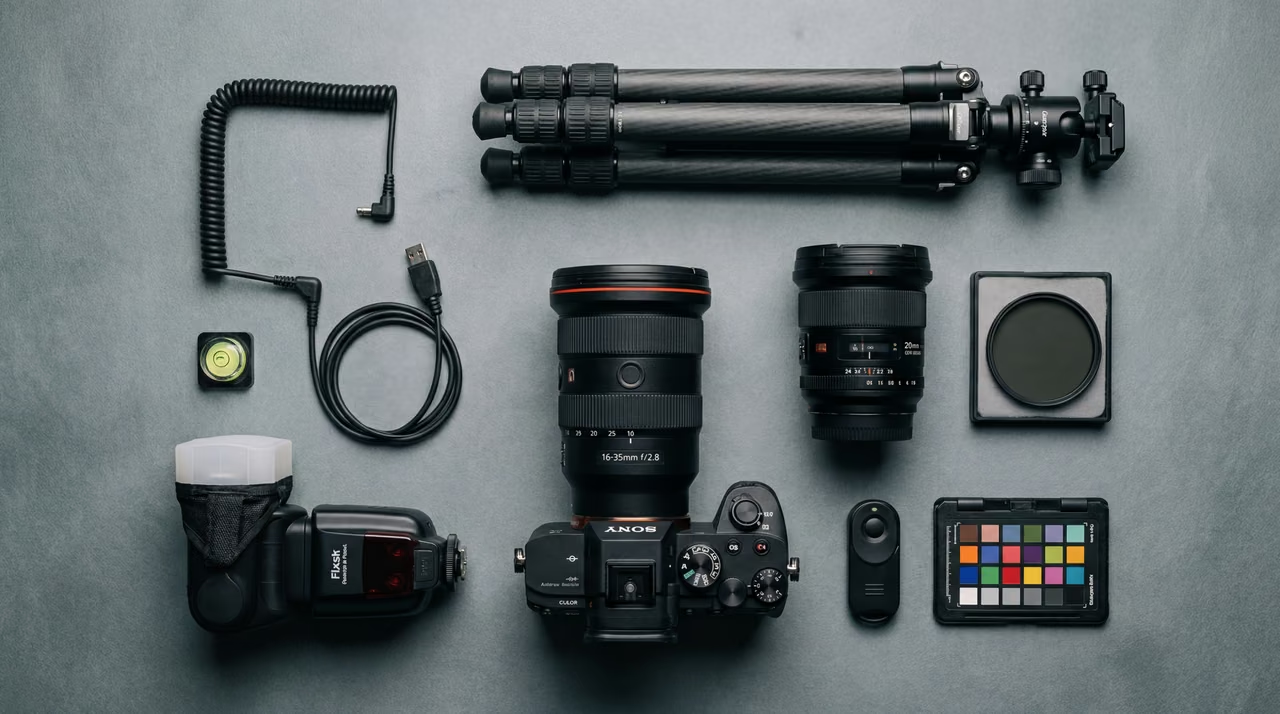
Good real estate photography doesn't require a $10,000 camera rig. But it does require the right tools — and understanding which investments matter most.
Camera Body
A full-frame DSLR or mirrorless camera is the professional standard. Bodies from Canon (EOS R series), Nikon (Z series), and Sony (A7 series) all deliver the dynamic range and low-light performance that interior real estate photography demands. If you're just starting, an APS-C crop-sensor body can work — but expect to compromise on dynamic range in high-contrast rooms with bright windows and shadowed corners.
For property management teams or agents who need to produce consistent volume without a professional photographer on retainer, modern smartphones with RAW shooting capability have closed some of the gap — but they still can't match a wide-angle lens on a full-frame sensor for accuracy of space representation.
Lenses
The lens matters more than the body in real estate photography. A wide-angle lens in the 16-24mm range (full-frame equivalent) is the workhorse of interior shooting. It allows you to capture full rooms from corner positions without the distortion that comes from extreme ultra-wides. The Canon 16-35mm f/2.8, Nikon 14-24mm f/2.8, and Sony 16-35mm f/2.8 are industry staples.
Avoid going below 16mm for interior shots unless you're deliberately shooting architecture — anything wider introduces barrel distortion that makes rooms look physically curved and misrepresents the actual space.
Tripod
A sturdy tripod is non-negotiable. Real estate photography requires long exposures to capture multiple brackets for HDR blending, and handheld shooting at 1/30s or slower produces unusable blur. Look for a carbon-fiber tripod with a ball head that allows precise leveling.
Lighting
This is where most amateur real estate photography falls apart. On-camera flash creates harsh shadows and flat lighting. The professional approach uses one of two methods:
Ambient/natural light blending: Capture multiple exposures at different settings, then blend in post-production. This is the HDR approach — more on that in the technique section.
Off-camera flash: Use one or more speedlights or strobes positioned to mimic natural light. Bounce flash off the ceiling or walls to create soft, even lighting that fills shadows without creating harsh hotspots.
Many professional real estate photographers use a hybrid technique: expose for the window view in one bracket, expose for the interior with flash in another, and blend in Lightroom or Photoshop.
Accessories
- Remote shutter release: Eliminates camera shake on long exposures.
- Bubble level: Ensures perfectly level horizons and vertical lines — essential for interiors.
- Circular polarizer: Reduces glare on windows and reflective surfaces in exterior shots.
- Color reference card: Helps calibrate white balance across rooms with different light sources.
Interior Photography: Technique and Settings
Every room is a different challenge. Here's how to approach the most common interior situations.
Camera Settings for Interiors
Start with these baseline settings and adjust based on the specific room:
- Aperture: f/7.1 to f/9. This range maximizes depth of field so the entire room stays sharp, without the diffraction softness that kicks in at f/11 and beyond.
- ISO: Keep below 400 to minimize noise. Modern full-frame sensors handle ISO 800 cleanly if needed, but lower is always better.
- Shutter speed: Adjust to achieve correct exposure at your target aperture and ISO. Expect 1/15s to 2s for most interiors, which is why the tripod is mandatory.
- White balance: Shoot RAW and set in post. Auto white balance often shifts between shots; setting a custom WB from a reference card gives you consistency across the entire property.
The HDR Approach
High Dynamic Range (HDR) photography is the most common technique for real estate interiors because it solves the core problem: rooms with bright windows create a dynamic range that no single exposure can capture. Either the window looks burned out, or the interior looks like a cave.
The process:
- Set your camera to bracket exposures, typically three to five shots at 2 EV intervals (e.g., -4 EV, -2 EV, 0 EV, +2 EV, +4 EV).
- Shoot from a tripod with a remote shutter to eliminate shake.
- Merge the bracket in post-production using Lightroom HDR Merge, Photomatix, or Aurora HDR.
- Adjust tone mapping carefully to avoid the characteristic "HDR look": over-saturated, haloed, and artificial. Real estate HDR should look natural, not like a video game screenshot.
Composition Rules for Interiors
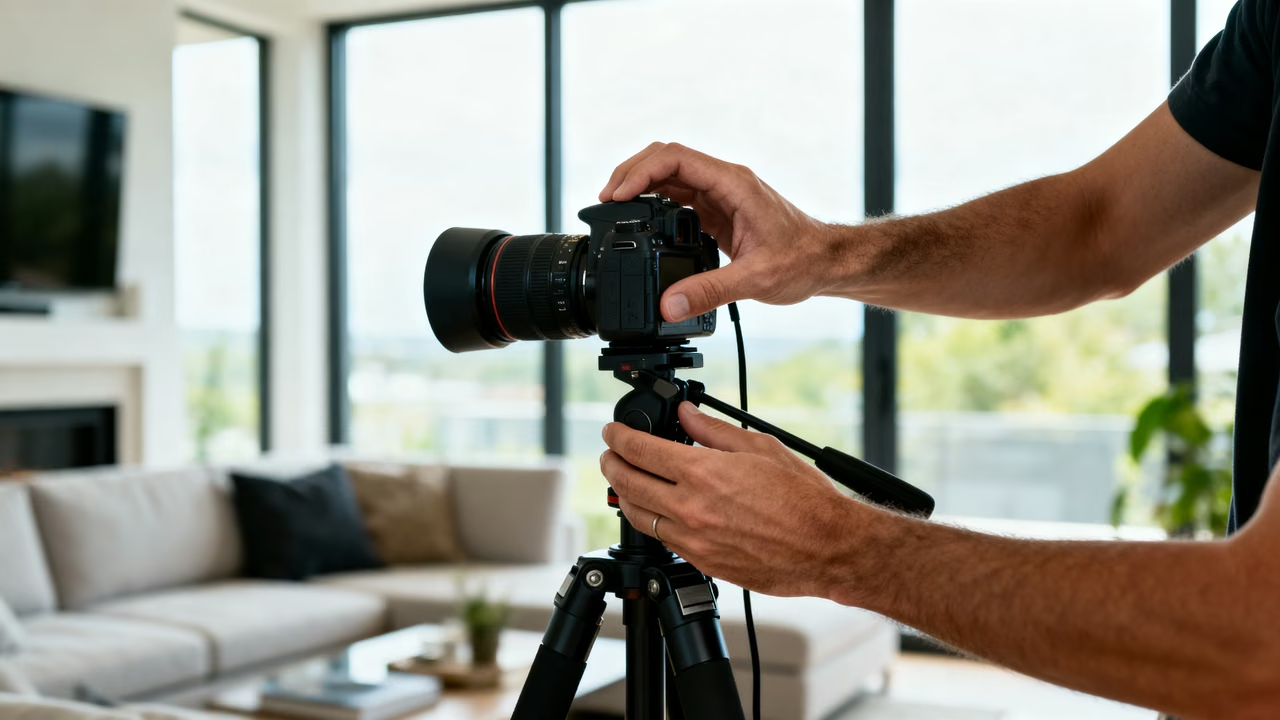
Shoot from a corner: Positioning the camera in the corner of a room at about 5 feet of height (roughly chest level on a tripod) creates the most flattering, spatially accurate view of most rooms. It shows two walls, the floor, and the ceiling, conveying the actual proportions of the space.
Keep the camera level: Converging vertical lines are the number-one sign of an amateur interior shot. This is what happens when walls appear to lean toward each other in the frame. Use your camera's digital level or grid overlay to keep horizontals and verticals true.
Include foreground interest: An empty photo of a room is a colorized floor plan. A photo that includes a corner of a couch, a dining table, or a kitchen island gives the viewer a sense of scale and helps them emotionally place themselves in the space.
Straighten the vertical lines in post: Even with a level camera, wide-angle lenses introduce some perspective distortion. Lightroom's Guided Upright tool and Adobe Camera Raw's Transform panel let you precisely correct converging verticals.
Exterior Photography: Golden Hour, Twilight, and Drone
First impressions in real estate listings are almost always exterior shots. The exterior photo sets the buyer's expectations for everything that follows.
Timing: The Golden Hour Advantage
The best time to shoot residential exteriors is during the golden hour — the 30-60 minutes after sunrise or before sunset, when the sun is low on the horizon and casts warm, directional light that flatters architecture. Harsh midday sun creates flat lighting and deep shadows, making homes look two-dimensional.
Check which direction the home's front facade faces before scheduling the shoot. A south-facing home looks spectacular in morning light from the east. A north-facing home is shadowed in the morning and lit in the afternoon — which may require a schedule adjustment.
Twilight Photography
Twilight photography produces dramatic listing photos that consistently outperform standard daylight exterior shots. Shot during the "blue hour" just after sunset, with interior lights on and the sky a deep, saturated blue, these images have a cinematic quality that standard daytime shoots can't replicate. Industry data from real estate photography providers consistently shows that listings with twilight photos outperform those with standard daytime exterior shots by a significant margin in views and click-through rates.
The technical challenge: the window for perfect twilight exposure is narrow, typically 15-20 minutes. Shoot fast, bracket your exposures, and have your interior lighting pre-staged before the shoot. You're blending ambient twilight sky with interior window glow — the balance is what makes the shot.
As we explored in our guide on how twilight photography can help hard-to-sell properties, this technique is particularly powerful for properties with challenging daytime presentations — north-facing facades, busy street frontage, or unappealing landscaping that looks better in low light.
Drone and Aerial Photography
Drone footage has moved from a luxury add-on to a near-standard expectation in many markets. The data is compelling: homes with aerial photos sell 68% faster than those without.
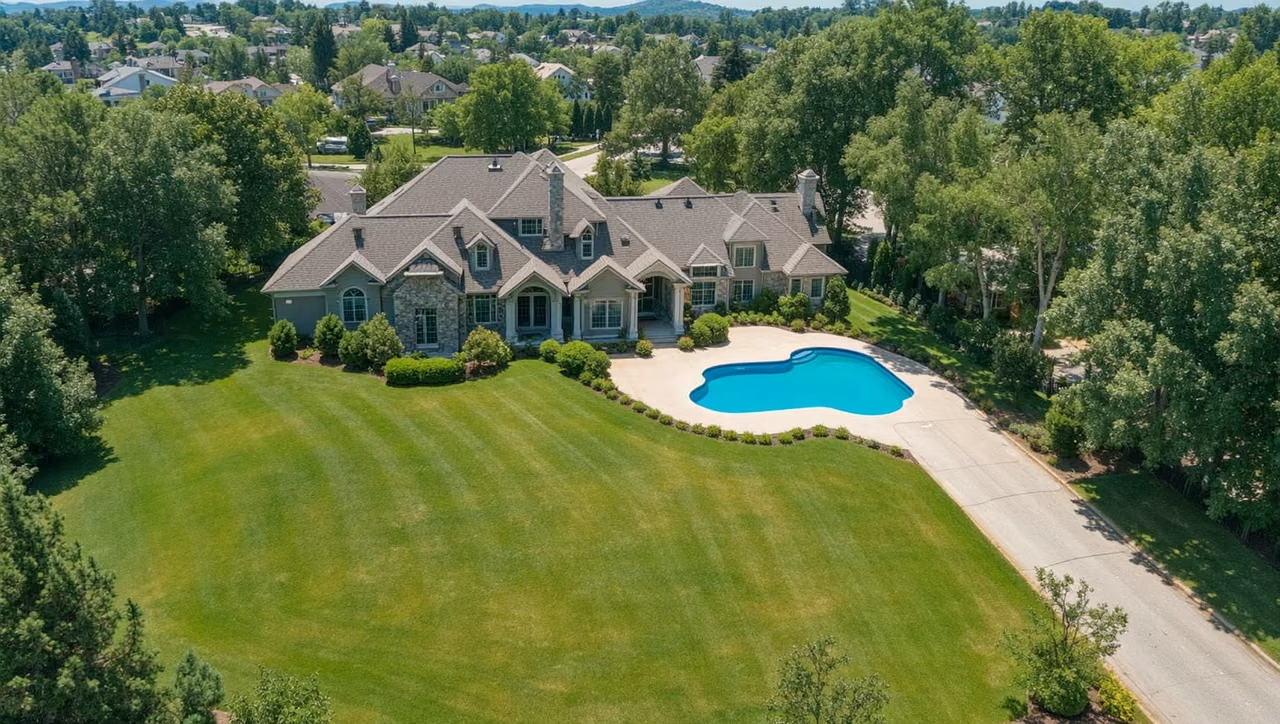
The strategic value of drone photography:
- Location context: Aerial shots show proximity to parks, water, transit, and schools, as well as neighborhood character that ground-level photos can't capture.
- Property scale: Large lots, acreage, pools, and outbuildings are impossible to convey from the ground. A single aerial instantly establishes property size.
- Curb appeal at scale: The hero aerial of a home set in its landscape — lush grounds, a wraparound driveway, a waterfront position — is often the shot that stops a buyer mid-scroll.
Drone regulations: In the US, commercial drone operators must hold an FAA Part 107 license. Confirm your photographer is licensed before booking a drone session — unlicensed commercial drone work carries significant penalties. Snappr does not currently offer this service.
Virtual Tours and 3D Tours: The New Standard
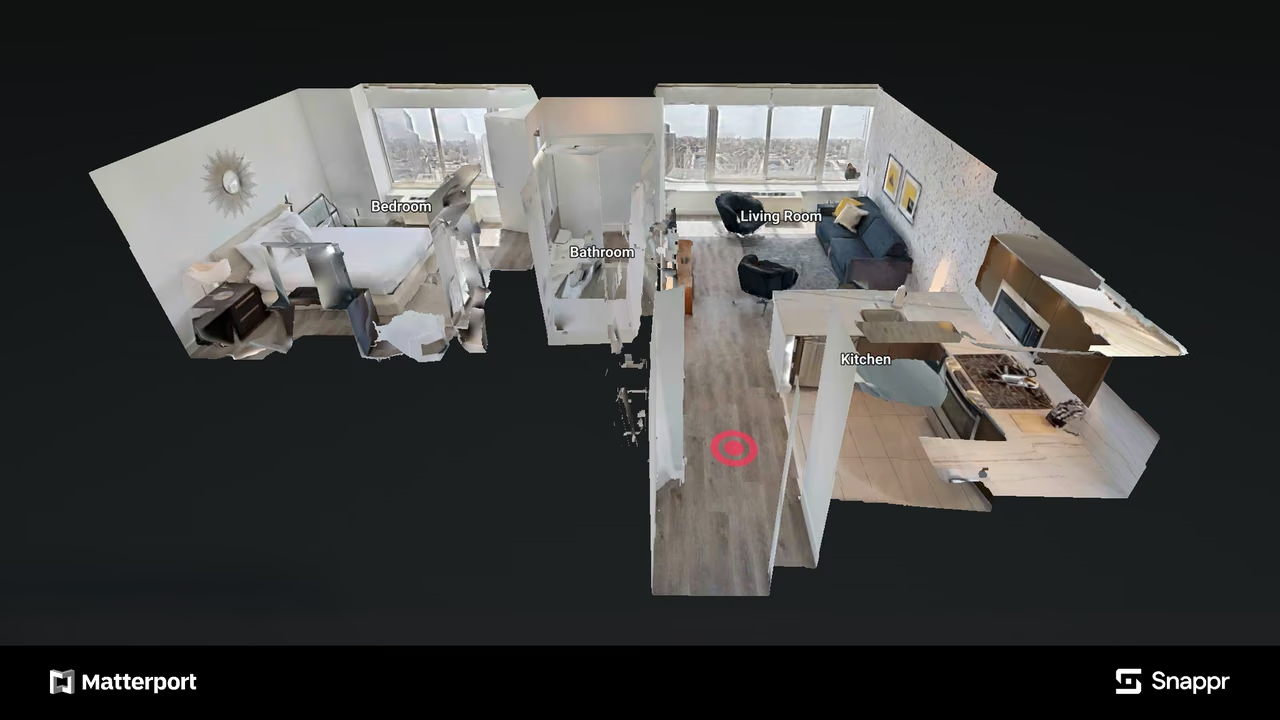
The pandemic accelerated something that was already inevitable: buyers now expect to explore properties virtually before committing to an in-person visit. According to Zillow's 2022 Consumer Housing Trends Report, 62% of buyers actively seek listings that offer immersive 3D tours.
The results when virtual tours are present are significant. Listings with virtual tours receive 87% more views than those without, and buyers who engage spend five to ten times longer exploring those properties. 54% of buyers report they won't even consider a home without a virtual tour — a threshold that signals this feature has crossed from differentiator to expectation in competitive markets.
On the transaction side, properties featuring 3D tours close up to 31% faster than those without, and sell for up to 9% more on average.
For more on the evolution of this technology and how forward-thinking property teams are using it, our 2026 guide to automating property photos and 3D tours walks through current platforms and workflow considerations in detail.
Types of Virtual Tours
Matterport-style 3D scans: A camera captures the entire property in 3D, generating a "dollhouse view" that buyers can navigate room by room. Matterport is the dominant platform, with competitors like iGUIDE and Zillow 3D Home offering alternatives at different price points.
360° photo tours: Stitched panoramic photography creates a less immersive but lower-cost alternative to full 3D scanning. Suitable for smaller properties or markets where a full 3D investment isn't justified.
Video walkthroughs: A scripted, narrated video tour shot with a gimbal or Steadicam. Less interactive than 3D tours but more cinematic and emotionally engaging. Listings with video receive 403% more inquiries than those without any video.
Which Properties Justify Virtual Tour Investment?
For residential sales above $500,000, full 3D tours should be considered standard. For luxury-tier properties, video walkthroughs and drone footage are expected. In rental markets, 3D tours have shown particularly strong ROI because they reduce the number of in-person tours required before a lease is signed, saving both tenants and the leasing team time.
Virtual Staging: Empty Rooms, Full Potential
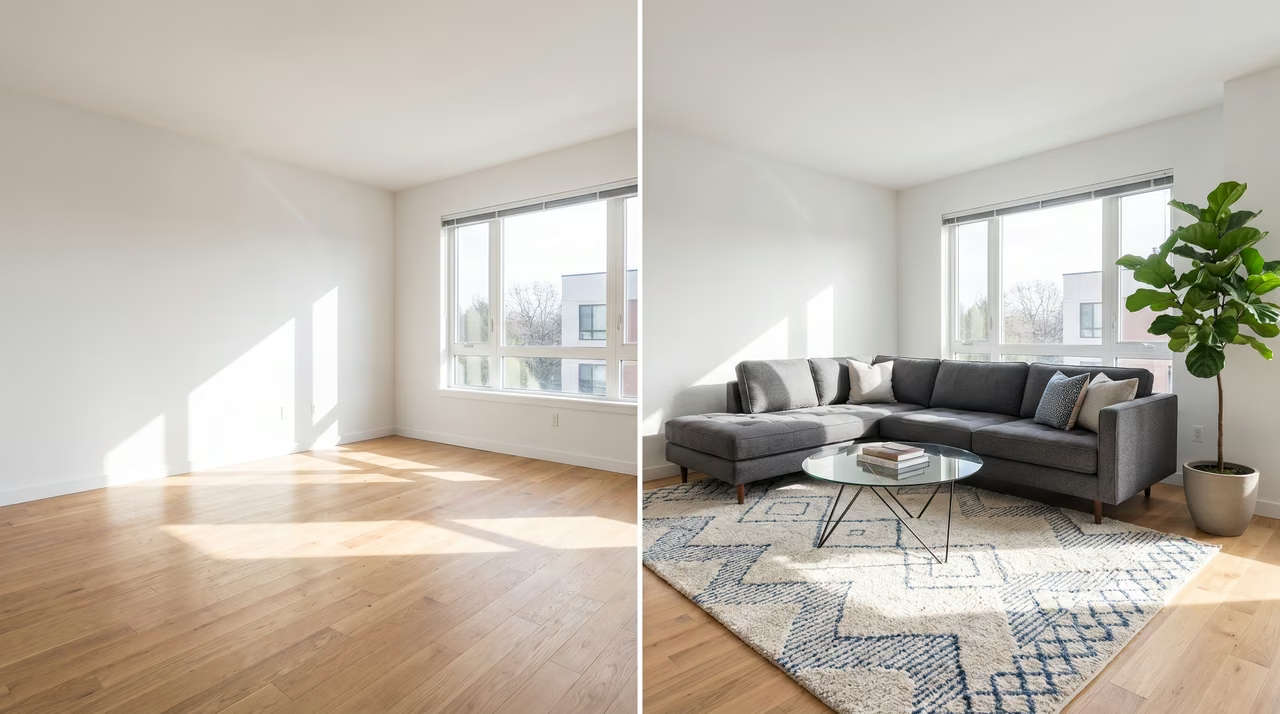
Vacant properties present a challenge: empty rooms are hard to imagine as homes. Traditional physical staging can cost $1,500-$5,000 for a full property and requires logistics coordination. Virtual staging offers an alternative.
The technology has matured significantly. AI-powered virtual staging tools can now generate realistic-looking furnished room photos from empty room images in minutes. The virtual staging market is growing rapidly as adoption accelerates across agents and property managers alike.
The performance case for staging is solid: the Real Estate Staging Association has found that staged homes sell significantly faster than unstaged properties. A 2015 study by the National Association of Realtors found that 30% of sellers' agents reported staging a home decreases the time a home spends on the market.
Cost for virtual staging ranges from approximately $5–$15 per photo, compared to $25–$75 for manual virtual staging — a fraction of the cost of physical staging. For our detailed breakdown of dos and don'ts in this space, see our guide on virtual staging for real estate.
Important disclosure note: California's AB 723, effective January 1, 2026, requires clear disclosure when listing images have been digitally altered, along with access to the original unaltered image. Expect similar disclosure requirements to expand to other states. Best practice: always disclose virtual staging on any photo where it's used.
AI and Technology: Reshaping Real Estate Photography
The technology layer of real estate photography is evolving faster than at any point in the industry's history. Photographers and property teams who understand where AI fits (and where it doesn't) will be the ones who stay competitive.
Photo Editing
The most immediate impact of AI in real estate photography is in post-processing. Tools like Adobe Lightroom's AI-powered Denoise, Luminar AI's sky replacement, and specialized platforms like BoxBrownie and PhotoUp use machine learning to automate:
- Sky replacement (swapping a grey, overcast sky for a blue one)
- Virtual twilight conversion (simulating a twilight shot from a daytime photo)
- Object removal (eliminating bins, cars, and clutter from exterior shots)
- HDR processing and tone mapping
- Color correction and white balance normalization across a full shoot
Editing tools have moved from niche to near-ubiquitous among professional real estate photographers over the past two years. The line between photography and post-production has blurred significantly.
AI Photo Generation for Catalog Gaps
For property management companies and rental platforms managing large portfolios, AI-generated photos are emerging as a tool for filling visual coverage gaps. A unit that lacks professional photography can have AI-generated visuals created from floor plan data and reference images, enabling the listing to go live while an actual shoot is scheduled.
This is the approach Snappr takes: generating and enhancing property visuals using AI, with human-quality review, so listings can be published or updated without waiting for a full photo shoot. The key is the human-in-the-loop component — AI generation without quality oversight produces inconsistent results that can backfire when buyers arrive expecting what the photos showed.
What AI Still Can't Replace
AI is good at processing and generating. It's not good at reading a room. The decision about which corner to shoot from, how to arrange a lamp to eliminate a reflective glare, and when the light quality is exactly right for an exterior — these are judgment calls that require a skilled photographer with eyes on the property.
The competitive advantage in 2026 is combining AI speed and scale for editing, generation, and processing with human photographers for original capture and creative decisions. It's not either/or.
For a deeper look at the editing side of this equation, our guide on AI photo editing and when to use it covers the specific tools and workflows professional teams are using today.
Scaling Real Estate Photography: The Enterprise Challenge
Here's the thing about real estate photography at the individual agent level: it's manageable. You have a handful of active listings. You build a relationship with a local photographer. You know the drill.
Now multiply that by 500 properties.
Property management companies, real estate investment trusts (REITs), leasing platforms, and large brokerages face a fundamentally different challenge. They need consistent, high-quality photography across dozens or hundreds of markets. Tenants turn over, units refresh, and new developments come online. The photography workflow never stops.
The operational breakdown tends to look like this:
A leasing coordinator at a 400-unit property management company gets notified that a tenant is vacating. They need photos of the refreshed unit before it goes live. They call their local photographer contact, who is booked. They try three others. One is available in two weeks. The listing goes up with last year's photos, or worse, no photos at all. Inquiries trickle in slowly. The unit sits vacant for longer than it should.
As Snappr's own case study with Renters Warehouse showed, the right photography workflow isn't just about image quality — it's about speed and operational reliability. By implementing professional photography at scale, Renters Warehouse increased property inquiries by 10x and in-person tours by 3x. The photos were of the same quality as those any professional photographer could produce. The difference was that they could get it done reliably, on demand, at scale, across all their markets.
For property teams managing multiple locations, image quality and consistency are also key factors in determining success for leading real estate brands. Inconsistent photography quality across a portfolio signals disorganization and erodes brand trust at scale.
What Enterprise Real Estate Photography Operations Actually Need
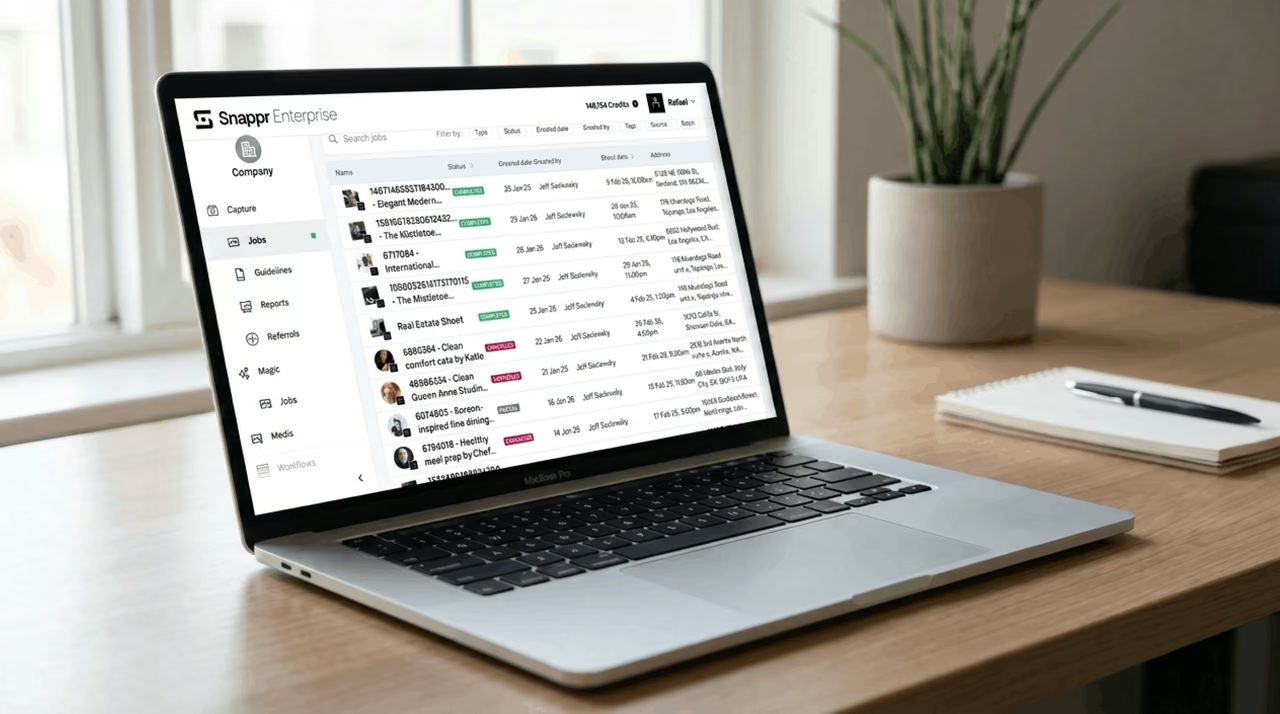
The requirements for high-volume real estate photography operations go beyond just "book more photographers." What enterprise property teams need is a system with:
Geographic coverage: A national property management company can't have five different photography vendors for five cities and one market with no coverage at all.
Speed: When a unit turns over, photography needs to happen within 24-48 hours of the property being ready, not one to two weeks later. Every vacant day is lost revenue.
Consistency: Photo style, editing treatment, composition standards, and delivery format need to be uniform across the portfolio. Buyers and renters on platforms like Zillow, Apartments.com, and MLS expect consistency within a brand.
Automation: Manual booking, file management, and upload processes don't scale. Enterprise teams need API-based triggers that can auto-schedule a shoot when a vacancy event occurs, auto-deliver photos to listing platforms, and auto-tag images for property CRM systems.
This is exactly the operational gap that Snappr Enterprise is built to fill. The platform connects a national network of vetted professional photographers (covering 95% of US geography) with automated booking triggers, custom shoot guidelines applied automatically to every shoot, and API integrations that push finished photos directly to listing platforms and property management systems. No inbox ping-pong. No chasing photographers. No re-explaining your brand standards to someone new every time.
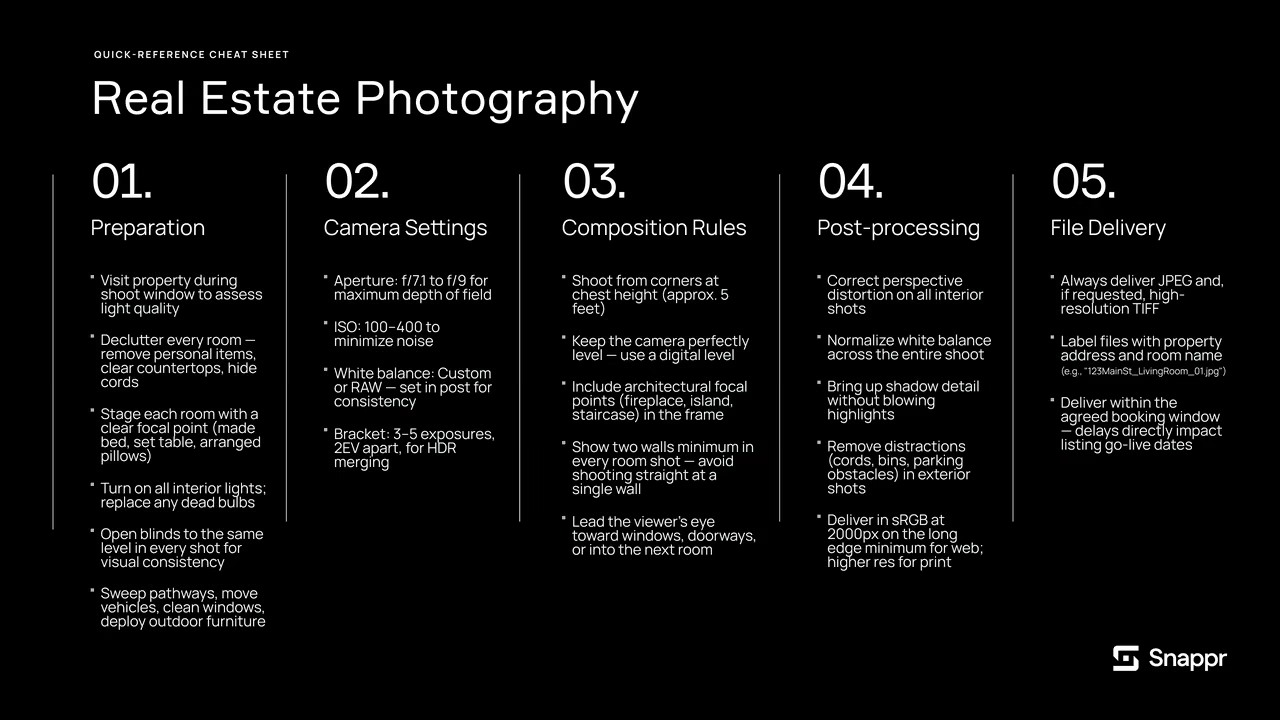
Real Estate Photography Quick-Reference Cheat Sheet
For the reader who wants actionable takeaways, here's a distilled version of what separates good real estate photography from great real estate photography.
Building the Business Case: ROI Framework
If you're making the case internally for investing in professional real estate photography, here's a framework for quantifying the return. This applies whether you're running a brokerage, a property management company, or a real estate platform.
For Real Estate Agents and Brokerages
Investment: A professional photography package runs $180-$500 for a standard residential listing. Premium packages with a virtual tour and video range from $500 to $2,000.
Revenue impact:
- Faster sale: Each day off the market saves the seller one day of carrying costs. For a $500,000 property with $2,000/month in costs, a 30-day reduction in time on market saves $2,000.
- Higher sale price: Redfin's research found that professional photography can add $3,400- $11,200 to the sale price. Even at the low end, that's a 6-22x return on a $500 photography investment.
- Agent reputation: Agents who consistently produce high-quality listing marketing attract better listing clients, which compounds into significantly higher annual commissions.
For Property Management Companies
Investment: Professional photography for a rental unit runs $170-$350 per unit. For a 200-unit portfolio with 30% annual turnover (60 units), the annual photography investment is approximately $10,200- $21,000.
Revenue impact:
- Vacancy reduction: If professional photography reduces average vacancy by even five days, and daily revenue per unit is $100, that's $500 recovered per vacancy event. At 60 vacancies per year: $30,000 in recovered revenue — often exceeding the annual photography budget.
- Renters Warehouse's 10x increase in inquiries translated directly into faster lease-up cycles and better candidate selection.
For Rental Platforms and Marketplaces
Platforms like Apartments.com, Zillow Rentals, and similar marketplaces compete for both landlord listings and renter eyeballs. Consistently high photo quality across the platform increases renter engagement, reduces time-to-lease for landlords, and creates a quality signal that justifies premium listing fees.
For a broader look at how visual content drives tenant acquisition, our piece on attracting tenants with professional photography walks through specific strategies for property management teams.
Real Estate Photography Trends in 2026 and Beyond
The technology and consumer expectations shaping real estate photography are moving fast. Here's where the industry is heading.
1. Cinematic Video as Standard Expectation
Listings with video are widely reported to receive dramatically more inquiries than those without — a figure commonly cited at 403% more. However, the source predates modern listing platforms, and the real-world impact likely varies by market. Yet video adoption among agents has lagged significantly behind that data, with the vast majority of listings still going to market without any video. The gap between what the data says and what agents actually do is closing — expect video to reach near-universal adoption among active agents by 2027.
The emerging format is short-form vertical video (15-60 seconds) optimized for Instagram Reels and TikTok. Younger buyers discover listings on social media before they ever open Zillow.
2. AI-Assisted Virtual Staging Becomes a Workflow Layer
AI-assisted virtual staging isn't replacing photographers — it's becoming a post-production step applied to virtually every vacant listing. As quality improves and costs drop (AI staging already runs $5-$15/photo versus $25-$75 for manual virtual staging), expect it to become as standard as sky replacement is today.
3. 3D Tours as a Baseline, Not a Premium
54% of buyers say they won't consider a listing without a virtual tour. As buyers internalize this expectation, listing platforms will increasingly flag listings without 3D tours as incomplete. The cost curve for 3D scanning equipment has been falling; Matterport and similar systems are increasingly accessible for independent photographers.
4. Automated Portfolio Photography
For enterprise property managers and platforms, the future of real estate photography is event-triggered automation. Vacancy event fires → photographs booked automatically → photos delivered to the listing platform without human coordination. This is not a theoretical future state; it's what leading property management companies are already running.
5. Disclosure Requirements Are Growing
California's AB 723 disclosure requirement for digitally altered listing images is a preview of regulatory changes coming to more markets. As editing and generation become more sophisticated, buyers and regulators will demand transparency about what they're seeing. Build disclosure practices into your workflow now.
The real estate photography industry is projected to grow at a solid pace through 2028, driven by both rising listing volumes and rising visual content expectations per listing. The real estate photography services market is experiencing significant growth as professional photography is increasingly recognized as a critical tool rather than a discretionary marketing expense.
How Snappr Powers Real Estate Photography at Scale
Agents and property managers tell us the same thing: the photography itself isn't the problem. The operational logistics are.
Finding a photographer who's vetted, available on short notice, knows your style guidelines, and delivers reliably — in every market you operate in — is where the wheels come off. Teams trying to manage any real volume know this problem well.
Snappr built the solution to that specific problem. As the largest on-demand photography network in the world, Snappr provides 95% US geographic coverage, meaning whether you manage properties in Phoenix, Providence, or anywhere in between, you can book a vetted professional photographer in minutes — with as little as 24 hours' notice.
Here's how it works at the enterprise level
Custom shoot guidelines, applied automatically: Set your photography standards once — angles, lighting approach, must-have shots for each room type, editing treatment. Every photographer who shoots your properties follows those guidelines automatically, without a briefing call every time.
Event-triggered booking: When a vacancy event is logged in your property management system, Snappr Workflows can automatically trigger a photography booking — no manual coordination required. The photographer shows up, the photos get delivered, and the listing goes live.
Direct platform delivery: Photos can be pushed via API directly to your listing platforms, property management dashboard, or cloud storage — without anyone manually uploading files.
Quality assurance built in: Snappr's post-production team reviews every shoot. If something doesn't meet the standard, it gets corrected before delivery. Your leasing team never has to open a set of photos and wince.
For platforms and marketplaces that want to offer photography as a service to their landlord or agent base, Snappr operates as a visual content infrastructure — the photography network you can embed into your product without building it yourself.
More than 70% of Fortune 500 companies trust Snappr for their visual content operations. For real estate teams ready to stop treating photography as a one-off task and start treating it as a streamlined operational workflow, check out how Snappr can help you scale.
Frequently Asked Questions
What is real estate photography, and why does it matter?
Real estate photography is the professional capture, editing, and delivery of property images for use in listings, marketing materials, and online platforms. It matters because 43% of home buyers use the internet first during their home search, and photos are the primary filter buyers use to decide which properties to explore further. Listings with professional photography sell 32% faster and command measurably higher sale prices.
How much does real estate photography cost?
Standard residential real estate photography packages run approximately $180-$500, depending on property size and market. Premium packages that include virtual tours or video typically range from $500 to $2,000.
For property management companies and enterprise teams booking at volume, per-shoot rates decrease as scale increases. The ROI on professional photography is strong: Redfin research found professional photos can add $3,400-$11,200 to a home's sale price.
What equipment do professional real estate photographers use?
Most professional real estate photographers work with a full-frame DSLR or mirrorless camera body (Canon, Nikon, or Sony), a wide-angle lens in the 16-24mm range, a sturdy carbon-fiber tripod, and off-camera flash or speedlights. The lens choice is particularly important — a quality wide-angle that avoids barrel distortion is more impactful than the camera body itself.
What is HDR photography in real estate?
HDR (High Dynamic Range) photography is a technique that blends multiple exposures of the same scene to capture detail across the full tonal range. Bright windows and shadowed corners in the same room exceed what any single exposure can record accurately. The photographer shoots three to five bracketed exposures from a tripod, then merges them in post-production. When done well, the result looks natural and accurately represents the actual property.
How does virtual staging work for real estate listings?
Virtual staging involves digitally adding furniture and décor to photos of vacant rooms. Traditional virtual staging is done manually by designers and costs $25-$75 per image. AI-powered virtual staging tools can now generate furnished rooms from empty-room photos in minutes, at costs ranging from $5 to $15 per image. Staged listings sell 73% faster than unstaged properties. Note that virtually staged photos should be disclosed as such to comply with increasingly prevalent regulations.
How do large property management companies handle photography at scale?
High-volume property management teams typically either build relationships with regional photography vendors (which can create coverage gaps and inconsistencies) or partner with a platform-based solution like Snappr, which provides nationwide coverage, standardized quality, and workflow automation. The key requirements at scale are geographic coverage, fast turnaround (24-48 hours from property ready to photos delivered), consistency across the portfolio, and API-based delivery to listing platforms.


