
Capturing commitment in pixels
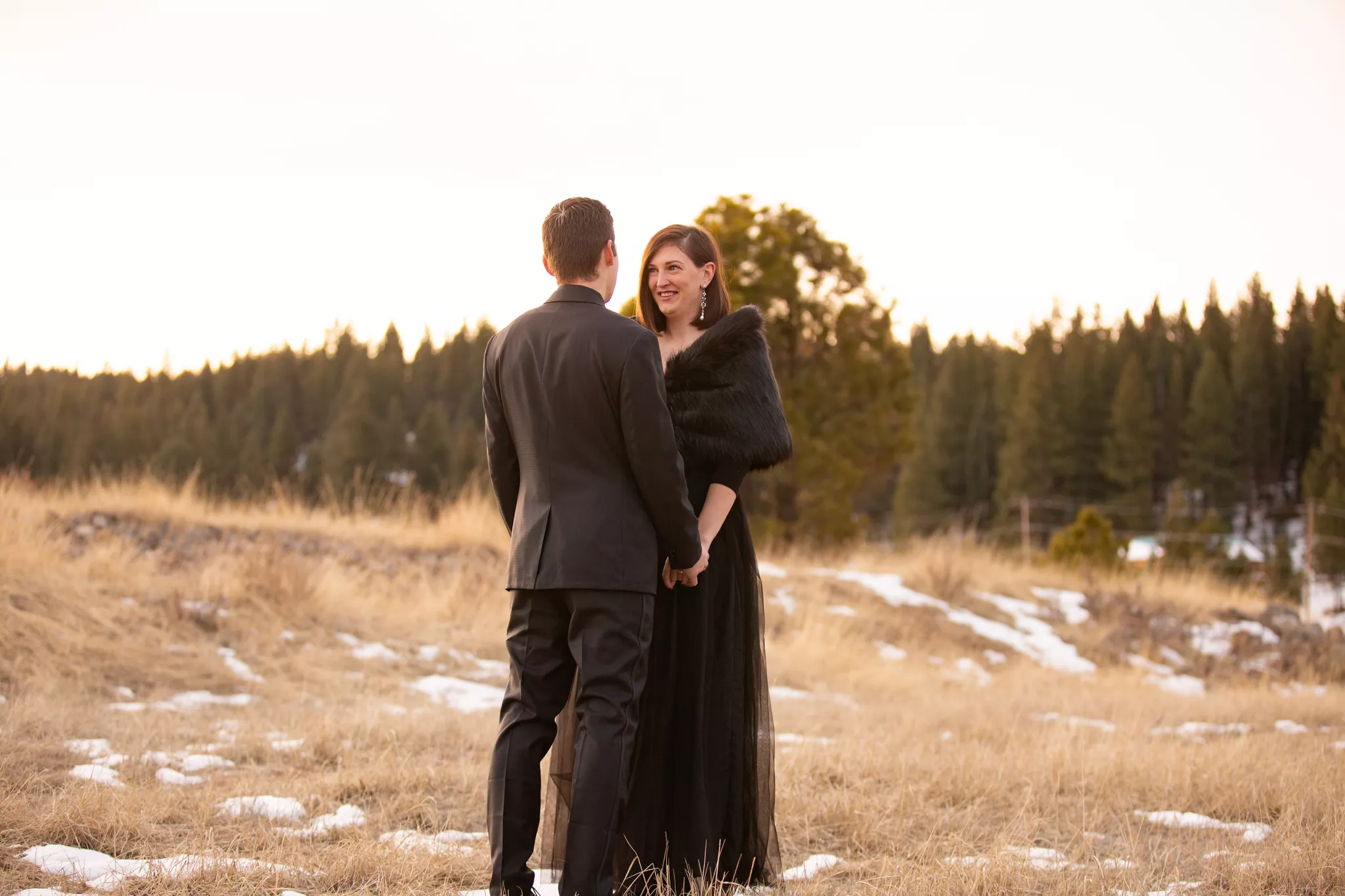
Here is the thing nobody tells couples before an engagement session. The first ten frames are bad. Not slightly awkward. Bad. Two people standing at a distance they have never voluntarily stood at, in daylight, while a stranger points a lens at them and says "just be natural."
That is not the session going wrong. That is the warm-up, and every photographer who has shot more than a handful of engagements expects it. It burns off in about four minutes if you keep moving and roughly never if you stand still.
So the plan is not thirty poses. It is three you know before you arrive, and a willingness to walk around.
Why movement beats standing still
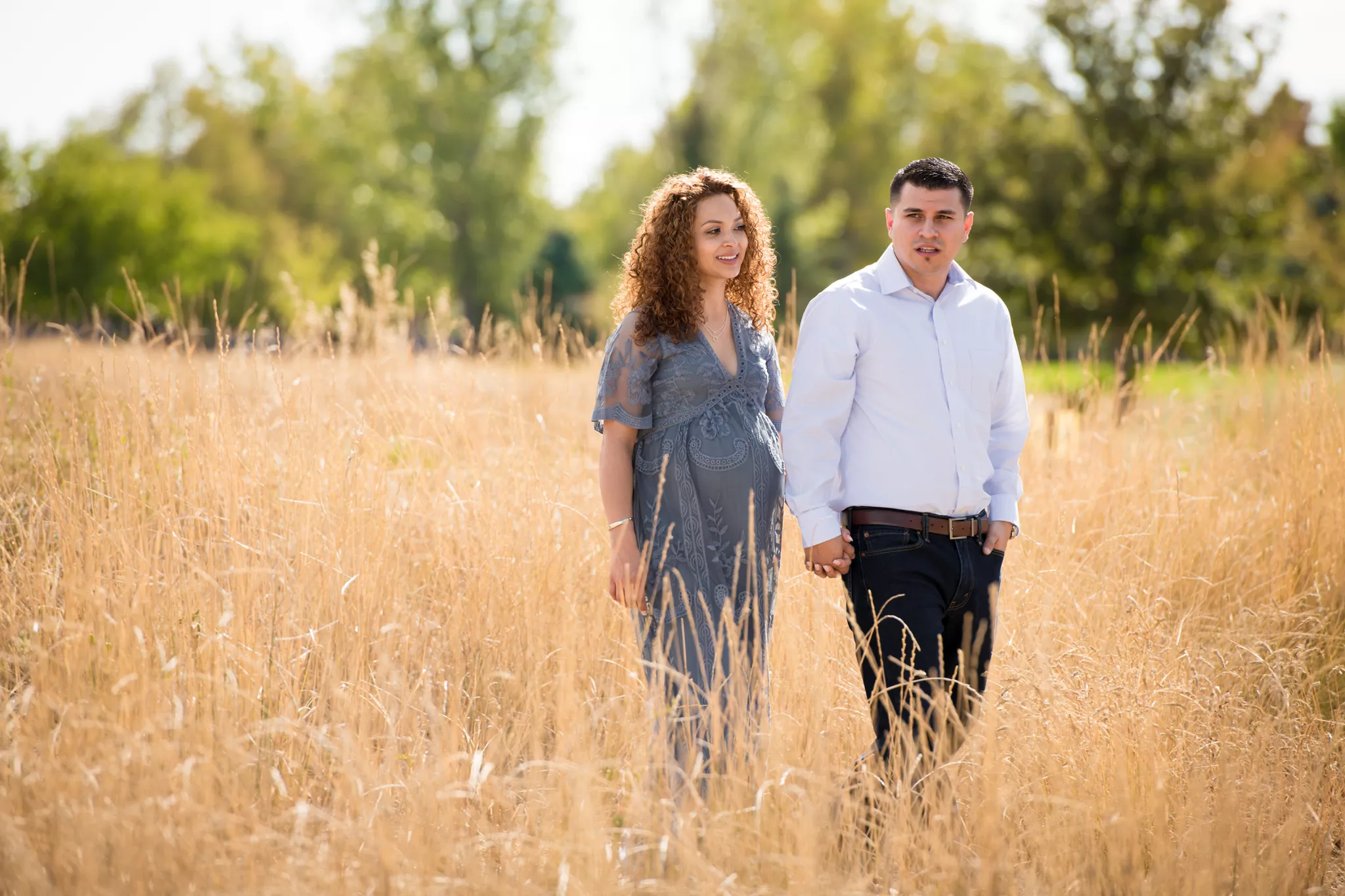
A rigid pose photographs as a rigid pose: shoulders creep up, elbows lock, and your face starts doing something it does not normally do.
Walking fixes all three mechanically. Shoulders drop, arms swing, weight transfers, and your attention goes to not tripping rather than to being photographed. Ask your photographer to shoot the walk toward them and the walk away, and to keep shooting through both rather than calling stop and start.
Two more prompts help: one of you whispers something unexpected, and a slow spin where one of you turns the other under an arm.
Standing poses that hold up
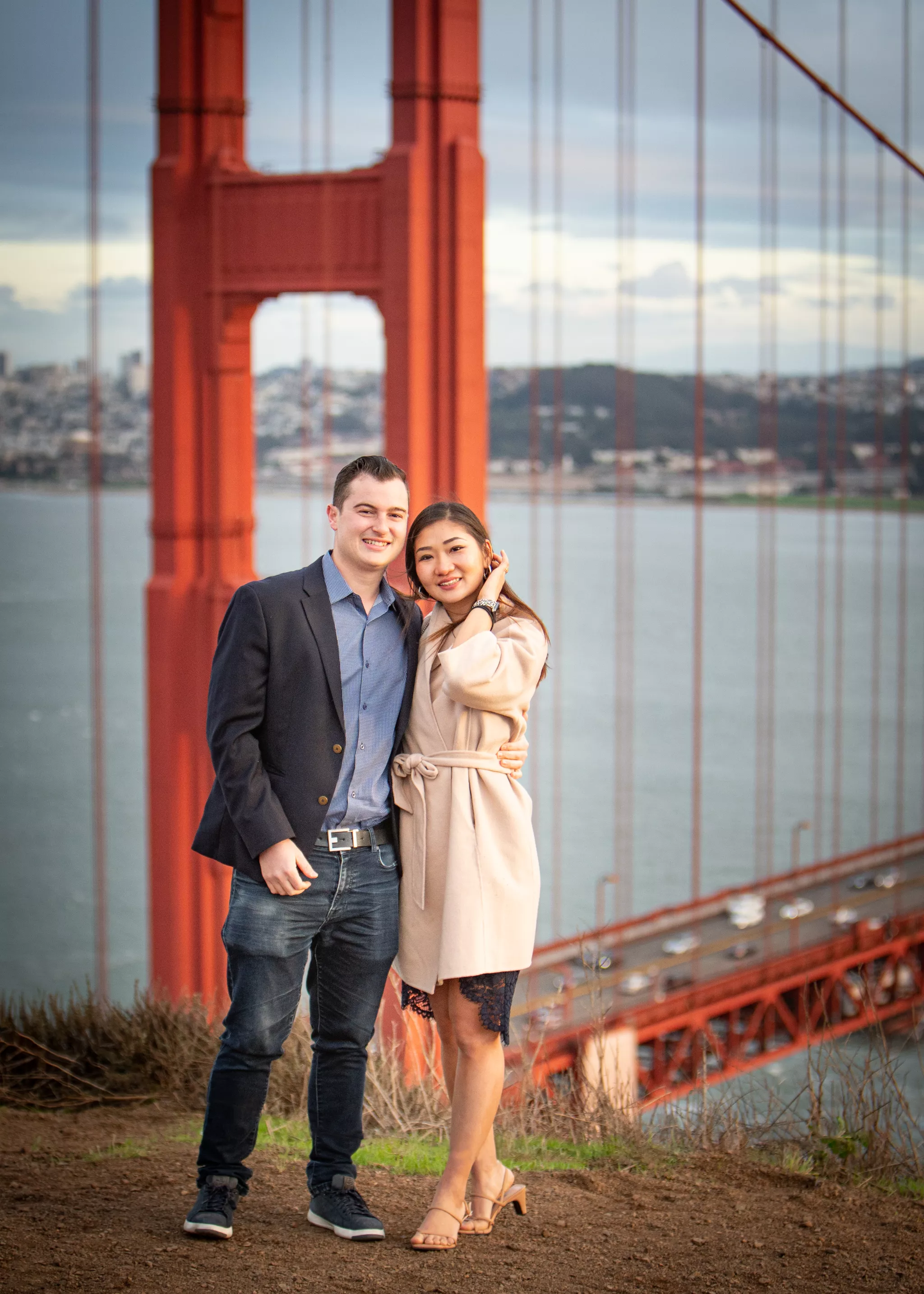
Once the warm-up is done, three standing frames cover most of a gallery.
The front hug is simplest. Face each other, arms around, chins turned toward the light rather than into each other's shoulders. Turning the chins is the difference between a photograph of two faces and a photograph of two ears.
The back hug is most forgiving. One of you stands behind, arms around the waist, the other's hands resting over the top. It reads warm, hides nervous hands, and solves height gaps on its own because contact sits low.
The forehead touch is the quiet one. Foreheads together, eyes closed, hands wherever they are comfortable. Because contact happens at the top rather than the shoulders, a big height difference stops mattering.
Two mechanics apply to all three: weight onto the back foot, and a visible gap between your arm and your body.
Seated and lying poses
Sitting changes the feel of a gallery, so do not skip it.
Steps are the best available furniture: one of you a step above, knees framing the lower one's shoulders, hands linked. It puts your faces at different heights, which composes better than level.
On a blanket, sit facing each other with legs crossed and knees nearly touching, then lean in. One of you resting a head on the other's lap ends up on the save-the-date more often than any deliberate pose does.
Ring shots, and when one of you hates the camera
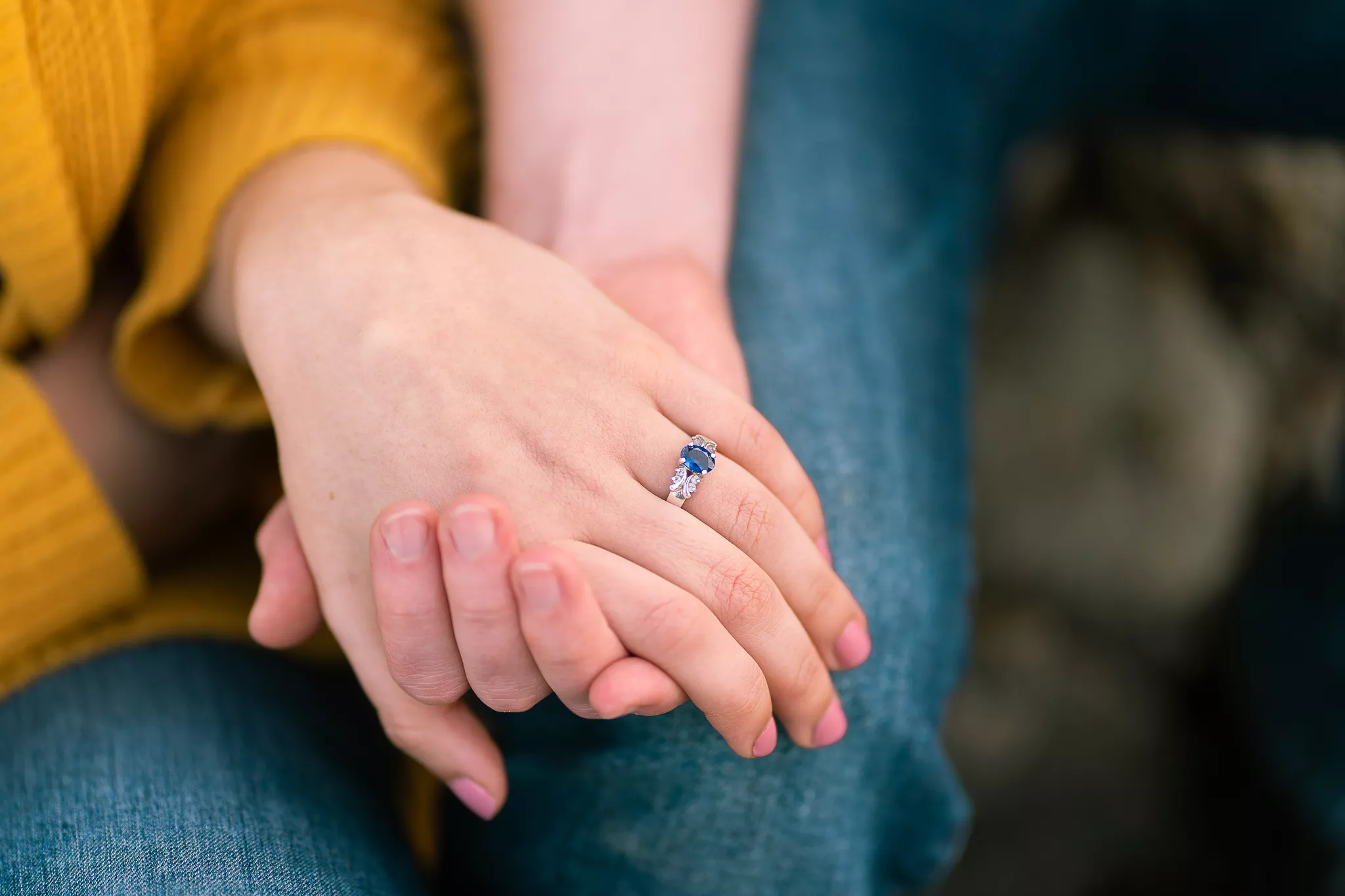
The ring shot goes wrong in one specific way: a flat hand held up at the lens with tense, splayed fingers.
Give the hand something to rest on instead. Drape it over his hand, over a shoulder, against a lapel, or against your own collarbone. Fingers soft and slightly curled, wrist relaxed, no reaching. Then let the photographer come close rather than pushing the hand forward.
Usually one partner is fine on camera and one is counting down. Tell the photographer at the start so they direct to the comfortable partner and let the other react rather than perform, and front-load the frames you care about into the first twenty minutes.
Location and time of day
Pick a place one of you has an actual reason to like, because you will have something to talk about while being photographed.
Shoot in the hour before sunset. Our guide to the best and worst options for outdoor photo light covers what to do when the schedule forces you into the middle of the day.
If you have not settled on where, the city spot guides are a shortcut. There are lists for engagement photography in Los Angeles and engagement photos in San Francisco. For loosening up before the camera comes out, our photoshoot playlist exists for exactly that.
Book an engagement shoot
Most couples book this once and mostly want someone who will direct them rather than leave them on a lawn guessing. With Snappr, booking takes about 90 seconds and edited photos come back within 48 hours, with as little as 24 hours' notice. Book an engagement photographer today.
Frequently asked questions
What are the best engagement photo poses?
The walk, the back hug and the forehead touch cover most of a gallery, because all three rely on movement or contact rather than a held position. Add a seated frame on steps and a ring shot where the hand rests on something rather than being held up.
How do I pose for engagement photos if I'm awkward?
Ask for movement prompts instead of poses. Walking while talking, whispering something unexpected, or spinning under an arm all produce natural frames because your attention is on the action. Also accept that the first several minutes will be stiff for everyone.
How do I hold my hand for the ring shot?
Rest it on something rather than holding it up. Drape it over your partner's hand, a shoulder, a lapel or your own collarbone, fingers soft and slightly curled, wrist relaxed. Let the photographer move in close instead of pushing your hand toward the lens.
What if my partner and I are very different heights?
Use poses where contact happens away from shoulder height, since back hugs and forehead touches both work at any gap. For standing frames, put the shorter partner on a step or a slope, or seat one of you. Never ask anyone to bend or stretch, because both show immediately.


