
Most guys don't hate photos. They hate not knowing what to do
You're standing in front of a camera. Feet planted, arms hanging like two wet towels, a smile you'd never make in real life. The photographer says "just relax," which is the least relaxing sentence in the English language.
Sound familiar? Here's the thing. You don't look stiff because you're unphotogenic. You look stiff because nobody gave your body a job.
And those photos matter more than they seem to. A series of experiments by Princeton psychologists Janine Willis and Alexander Todorov, reported by the Association for Psychological Science, found that people form an impression of a stranger's face in a tenth of a second, and that looking longer doesn't significantly change it. Your dating profile, your LinkedIn photo and your company bio all get that same split-second read.
The good news: posing well is a handful of learnable moves, not a personality trait. This guide covers 30 male poses grouped by context (standing, leaning, sitting, walking, close-ups, outdoor, dating and business), each with a one-line how-to and the mistake that ruins it. We'll also cover what to do with your hands, what to wear, and how to relax when a lens is pointed at you. It works whether you're the guy in front of the camera or the photographer trying to direct him.
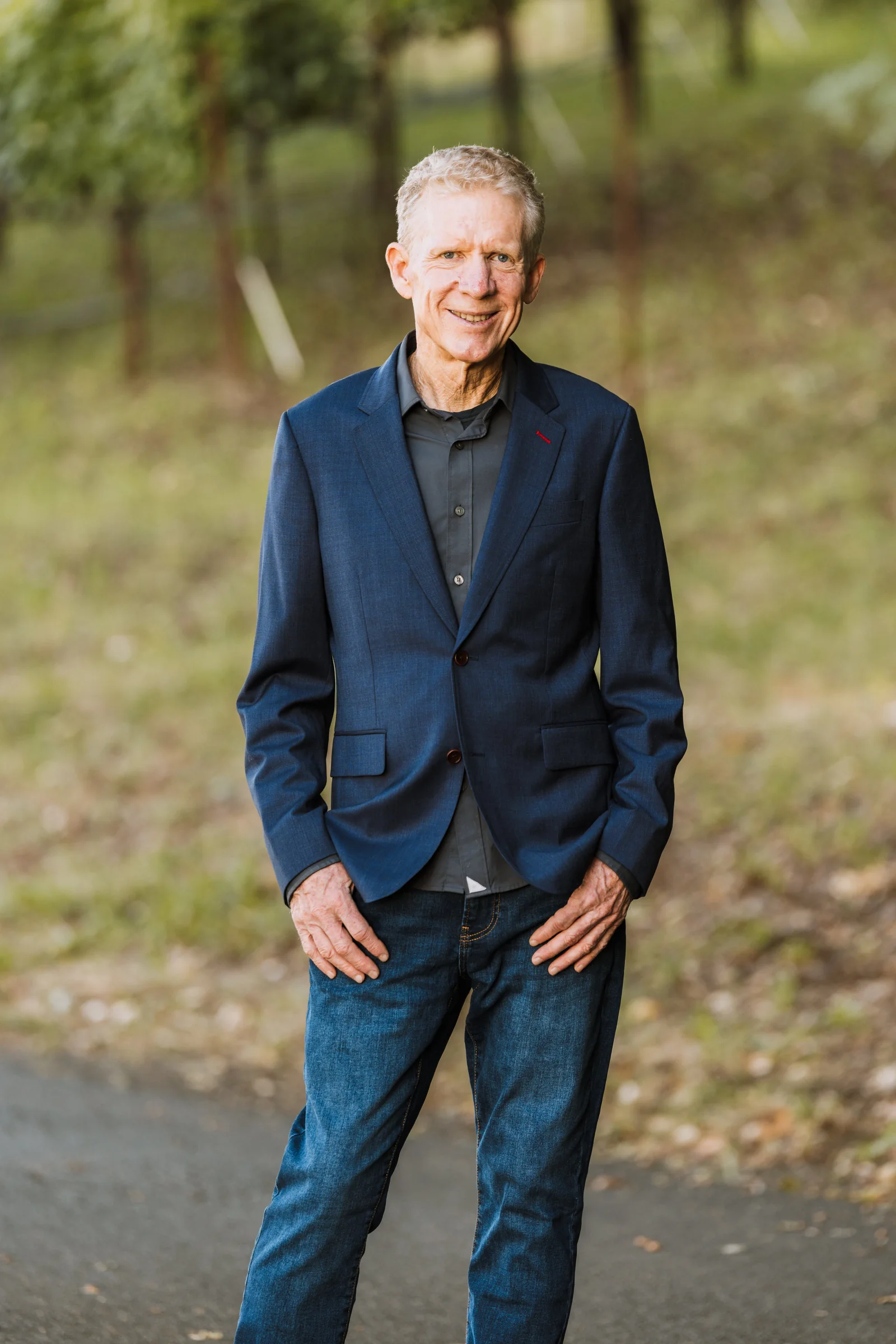
The three rules behind every good male pose
Almost every flattering pose for men comes back to three habits. Learn these and you can improvise the rest.
Rule 1: Put your weight on one leg
Standing with weight split evenly across both feet makes you look like you're waiting for a bus. Shift most of your weight onto your back leg and let the front knee soften. Your hips and shoulders tilt slightly, and the whole frame relaxes.
Sculptors worked this out a long time ago. Britannica describes contrapposto as a scheme originated by the ancient Greeks in which the figure's weight rests on one leg, called the engaged leg, freeing the other leg to bend at the knee. It's the reason classical statues look alive and passport photos don't.
Rule 2: Give your hands a job
Hands with nothing to do hang, clench or hover. Hands with a task (holding a lapel, resting in a pocket, adjusting a cuff) look natural because they are natural. The next section is all about this, because it's the single most common problem.
Rule 3: Chin forward and slightly down
Push your face a little toward the lens, as if you're leaning in to hear someone, then tip the chin down a touch. This tightens the jawline and removes the soft shadow under the chin. It feels strange. It looks great.
Don't overdo the tip in either direction. In a 2003 study in the Journal of Nonverbal Behavior, researchers Mignault and Chaudhuri found that faces pitched upward were rated as more dominant, while bowed heads read as submissive. A raised chin can tip from confident to arrogant; a dropped chin reads as shy. Aim for level-to-slightly-down with the face pushed forward.

What to do with your hands in photos
Ask a portrait photographer what men struggle with most and the answer is usually the same: hands. Here are six jobs that solve it.
• The pocket: Slide one hand into a front pocket, thumb out, fingers relaxed. The mistake is jamming the whole hand in to the wrist, which bunches the sleeve and hides the arm.
• The cuff or watch adjust: Reach across and fiddle with a shirt cuff or watch strap. The mistake is staring at your wrist; glance down for one frame, then look up while your hand stays there.
• The lapel or collar hold: Rest one hand lightly on a jacket lapel or the edge of an open overshirt. The mistake is gripping it like a steering wheel.
• Something to hold: A coffee cup, sunglasses, a book, a guitar. Objects give hands a reason to be in frame. The mistake is choosing a prop that has nothing to do with you.
• The soft jaw touch: Rest your fingertips near your jaw or chin with the hand relaxed. The mistake is pressing the knuckles into your face, which squashes the cheek.
• The loose clasp: Fold your hands in front of you at waist height, fingers interlaced loosely. The mistake is the "fig leaf" (hands clasped low over your belt buckle), which reads as nervous.
When in doubt, keep a small gap between your arms and your torso. Arms pressed against your sides widen the silhouette and make you look tense.
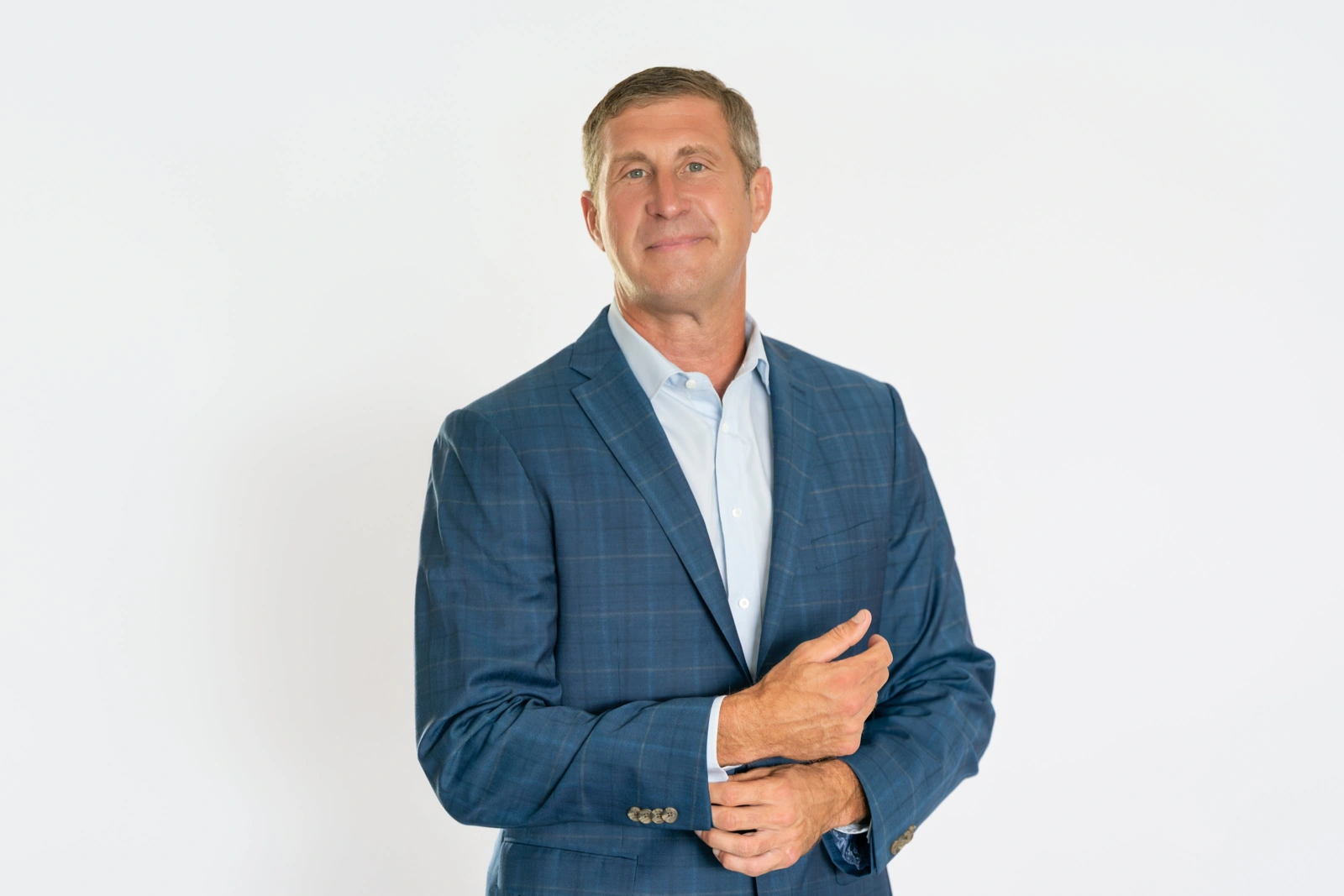
Standing poses for men
Standing shots are the backbone of any portrait session. These are the male poses a photographer will start with.
1. The weight shift (contrapposto)
How: Weight on the back leg, front knee soft, body turned about 30 degrees from the camera, face back toward the lens. Common mistake: locking the back knee, which makes the hips jut sideways.
2. Hands in pockets
How: One or both hands in front pockets, thumbs out, elbows slightly away from the body. Common mistake: both shoulders hunched up toward your ears. Drop them, then breathe out.
3. Crossed arms, done right
How: Cross your arms loosely, with your hands resting on your biceps rather than tucked into your armpits, and add a genuine smile to soften it. Common mistake: gripping tightly with a flat expression, which reads as defensive rather than confident. Turn slightly off-axis so your forearms don't form a wall across the frame.
4. The standing leg cross
How: Weight on one leg, cross the other foot in front at the ankle with the toe touching the ground. Works best paired with a lean or pockets. Common mistake: crossing too wide, which looks like you're about to trip.
5. Jacket over the shoulder
How: Hook the jacket's collar on two fingers and let it hang over one shoulder, the other hand in a pocket. Common mistake: holding the arm straight up, which exposes the armpit and strains the shoulder.
6. One foot up
How: Rest one foot on a step, low wall or bench, with a forearm across the raised knee. It adds height variation and an easy, grounded feel. Common mistake: a step that's too high, forcing you to hunch over the knee.
7. Hands on hips, one side only
How: Place one hand on your hip with the thumb forward, leaving the other arm relaxed or in a pocket. Common mistake: both hands on hips with elbows wide, which looks like a superhero poster unless that's the brief.
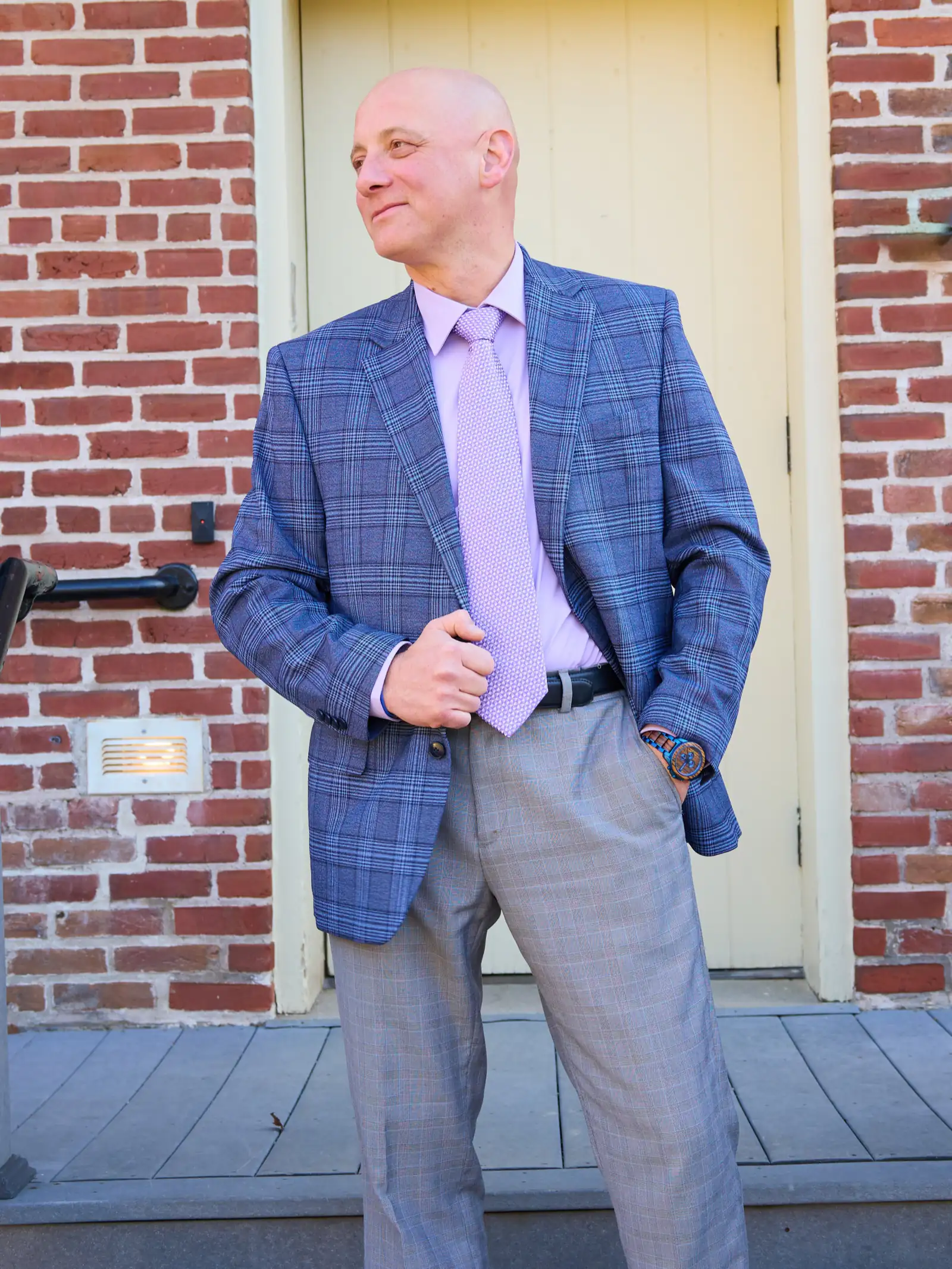
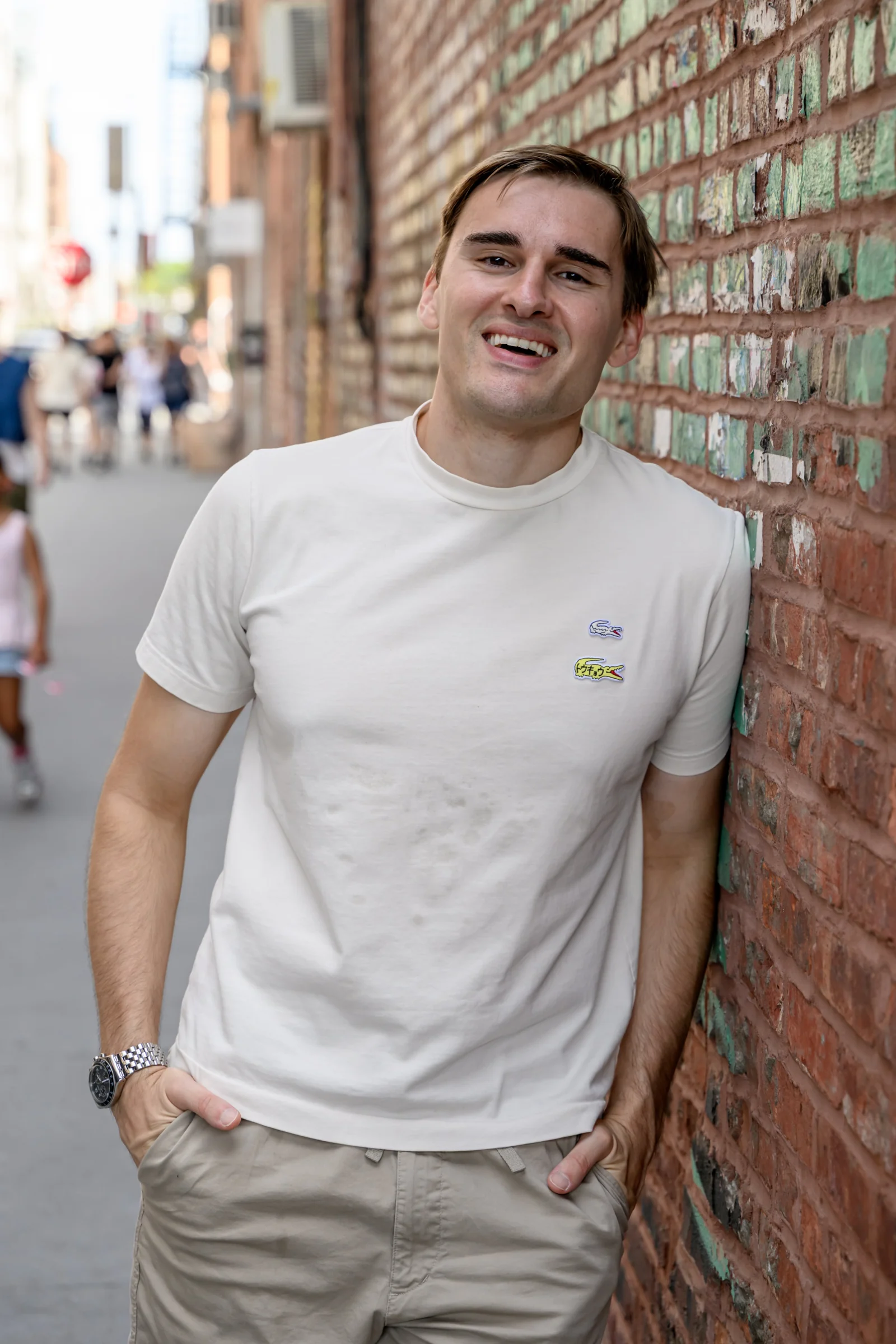
Leaning poses
A wall, railing or doorframe is the fastest way to relax a stiff subject. Leaning takes the load off your legs and gives your body an instant reason to angle.
8. The shoulder lean
How: Rest one shoulder against a wall, cross the outer foot over at the ankle, and put the hand closest to the camera in a pocket. Common mistake: leaning with your full weight, which drops the shoulder and tilts the head.
9. The back-to-wall knee bend
How: Lean your back against the wall, bend one knee and plant that foot flat on the wall behind you. Arms can cross loosely or hang with thumbs in pockets. Common mistake: slouching down the wall so your jacket rides up.
10. The railing lean
How: Stand facing a railing or counter, forearms resting on it, then turn your head toward the camera. Great for rooftops, bridges and bars. Common mistake: letting the forearms press flat, which spreads them wide in the frame.
11. The doorframe
How: Stand in a doorframe with one shoulder or hand on the frame and weight on the opposite leg. The frame does compositional work for free. Common mistake: centering yourself perfectly, which looks like a mugshot with better architecture.
Sitting poses for men
Seated poses are easier to hold, which makes them great for guys who are nervous in front of a lens. The trick is keeping your posture upright without looking rigid.
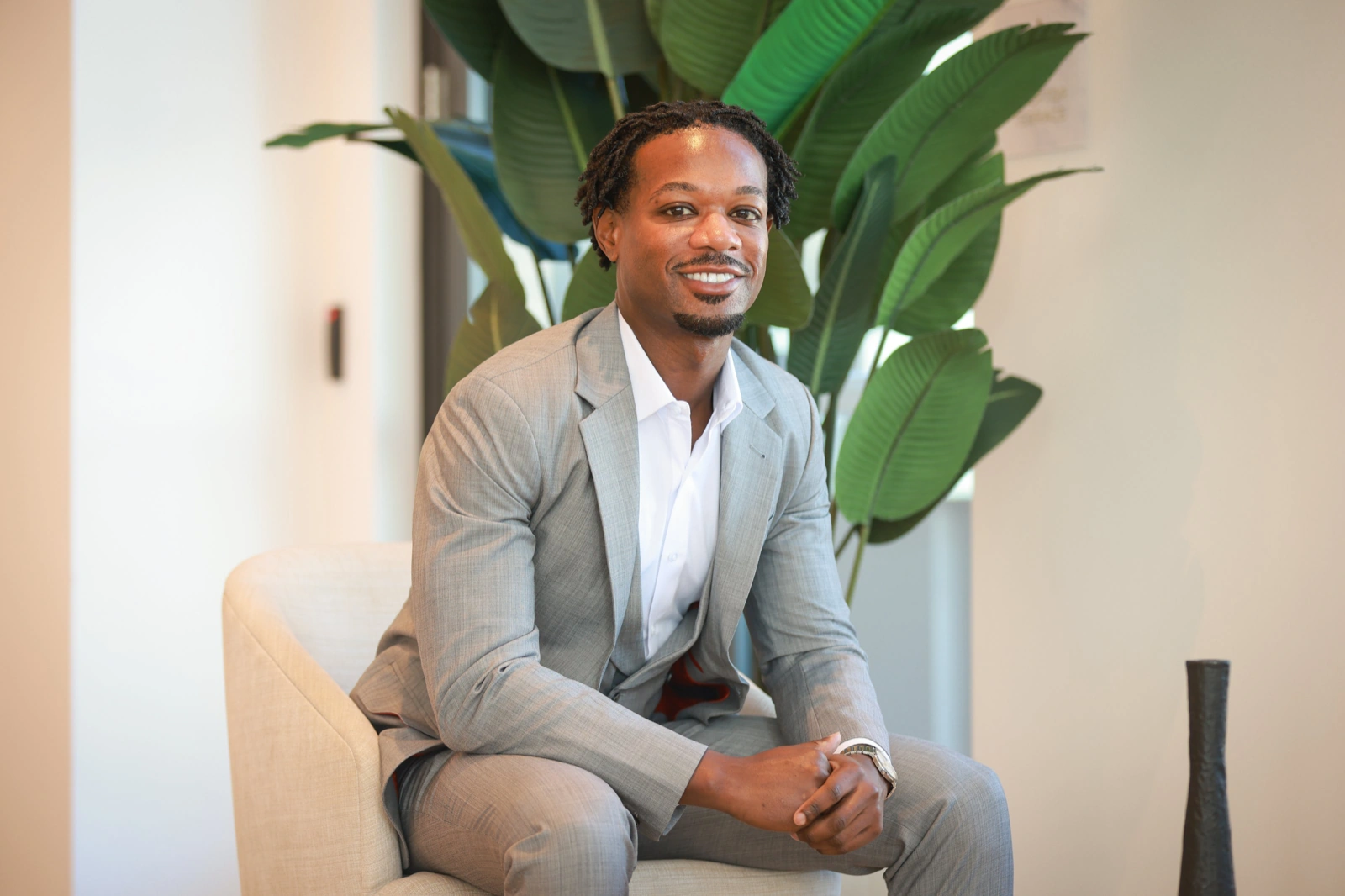
12. Elbows on knees, leaning forward
How: Sit toward the front of the seat, forearms or elbows on your knees, hands loosely clasped, and lean slightly toward the camera. It's warm, engaged and approachable. Common mistake: collapsing the chest; lean from the hips, not the spine.
13. The ankle-on-knee cross
How: Sit back, cross one ankle over the opposite knee, and rest a hand on the raised shin or the chair arm. Common mistake: pointing the sole of the shoe straight at the lens, which becomes the biggest thing in the frame.
14. The backward chair
How: Straddle a chair backward and rest your forearms on the backrest. It's casual and slightly playful. Common mistake: resting your chin on your arms, which pushes the face up and creates a double chin.
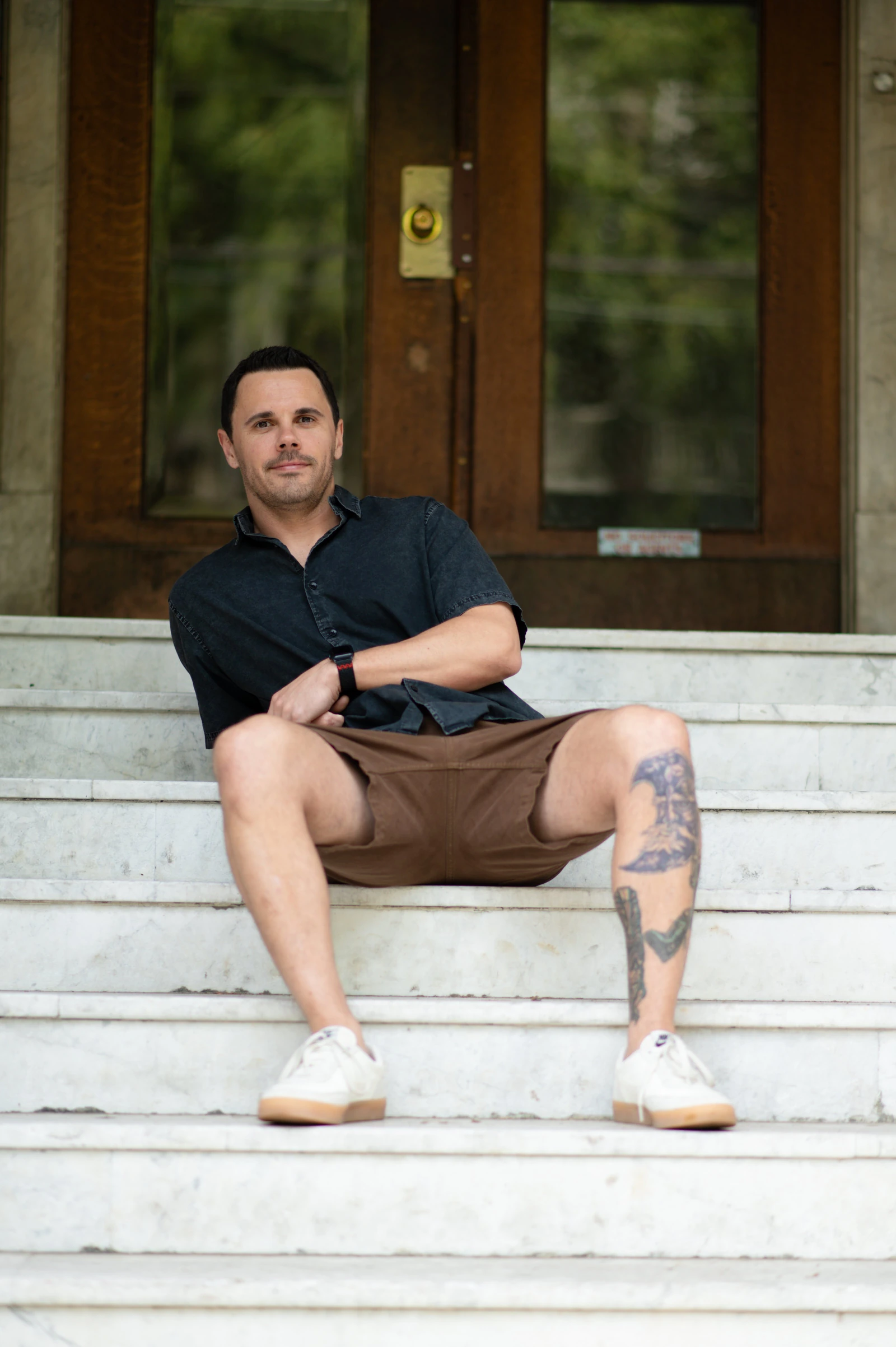
15. Sitting on steps
How: Sit on a step with one leg extended down and the other bent, your elbow resting on that knee. Stairs add depth and leading lines. Common mistake: sitting on the lowest step, which puts your knees in front of your face.
16. The perch
How: Half-sit on the edge of a desk, stool or low wall, one foot on the ground, the other hanging. It sits between standing and sitting and reads as confident. Common mistake: fully sitting down, which loses the energy of the pose.
17. Floor sit, one knee up
How: Sit on the ground with one knee raised and a forearm resting across it, the other leg flat. Perfect for beaches, parks and lifestyle shoots. Common mistake: both knees up, which boxes in your torso.
Walking and movement shots
Movement hides stiffness. When your body is doing something, it stops posing, and that's often when the best frame of the session happens.
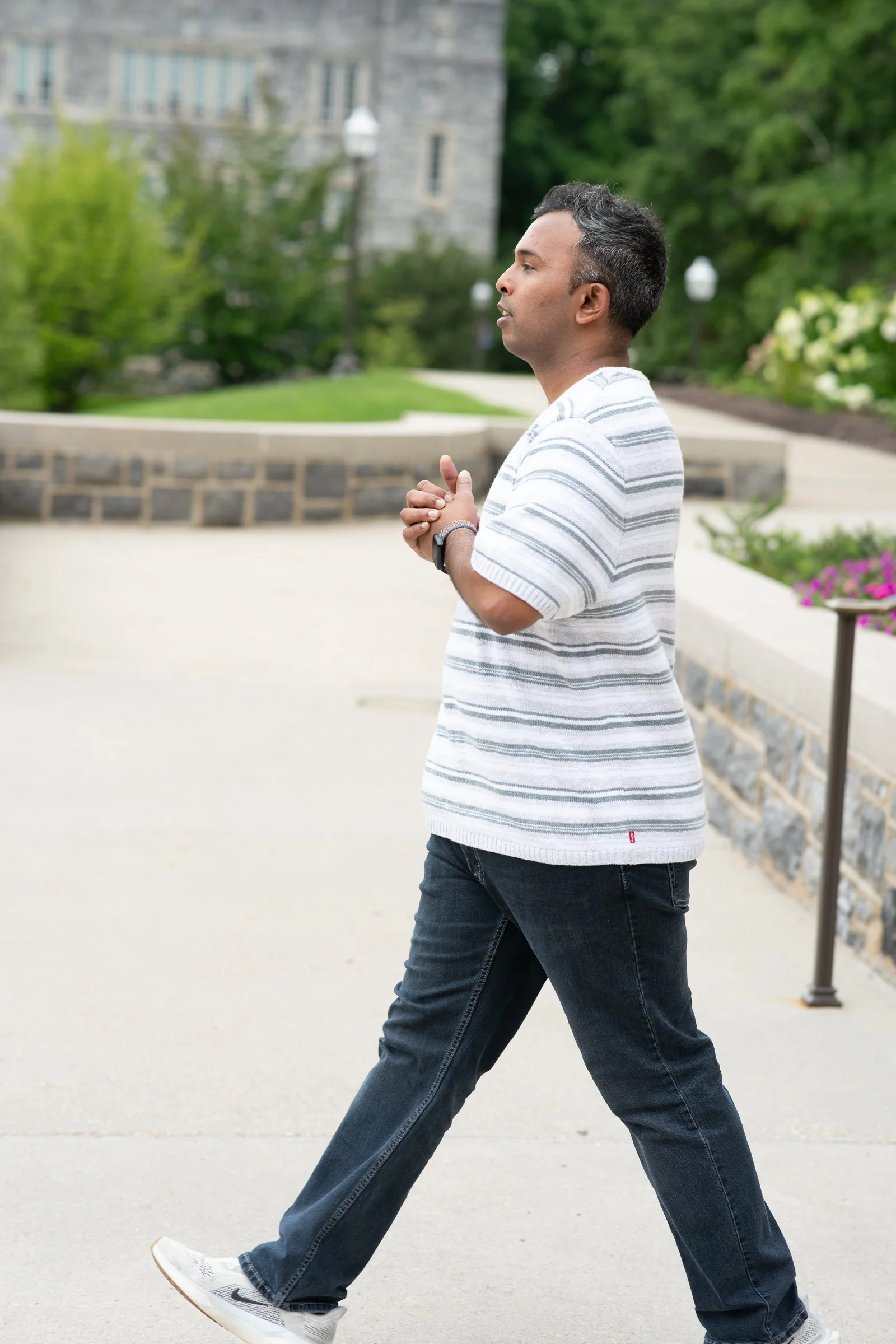
18. The walk toward camera
How: Walk slowly toward the photographer at about half your normal pace, looking just past the lens or down at the ground ahead. Common mistake: walking at full speed, which blurs the shot and makes your stride look awkward.
19. The walk away, look back
How: Walk away from the camera, then glance back over your shoulder mid-stride. Common mistake: turning your whole body around instead of just your head and shoulders.
20. The mid-stride jacket adjust
How: While walking, reach up and adjust your collar or jacket front. Two tasks at once means zero time to feel self-conscious. Common mistake: looking down at the jacket for every frame.
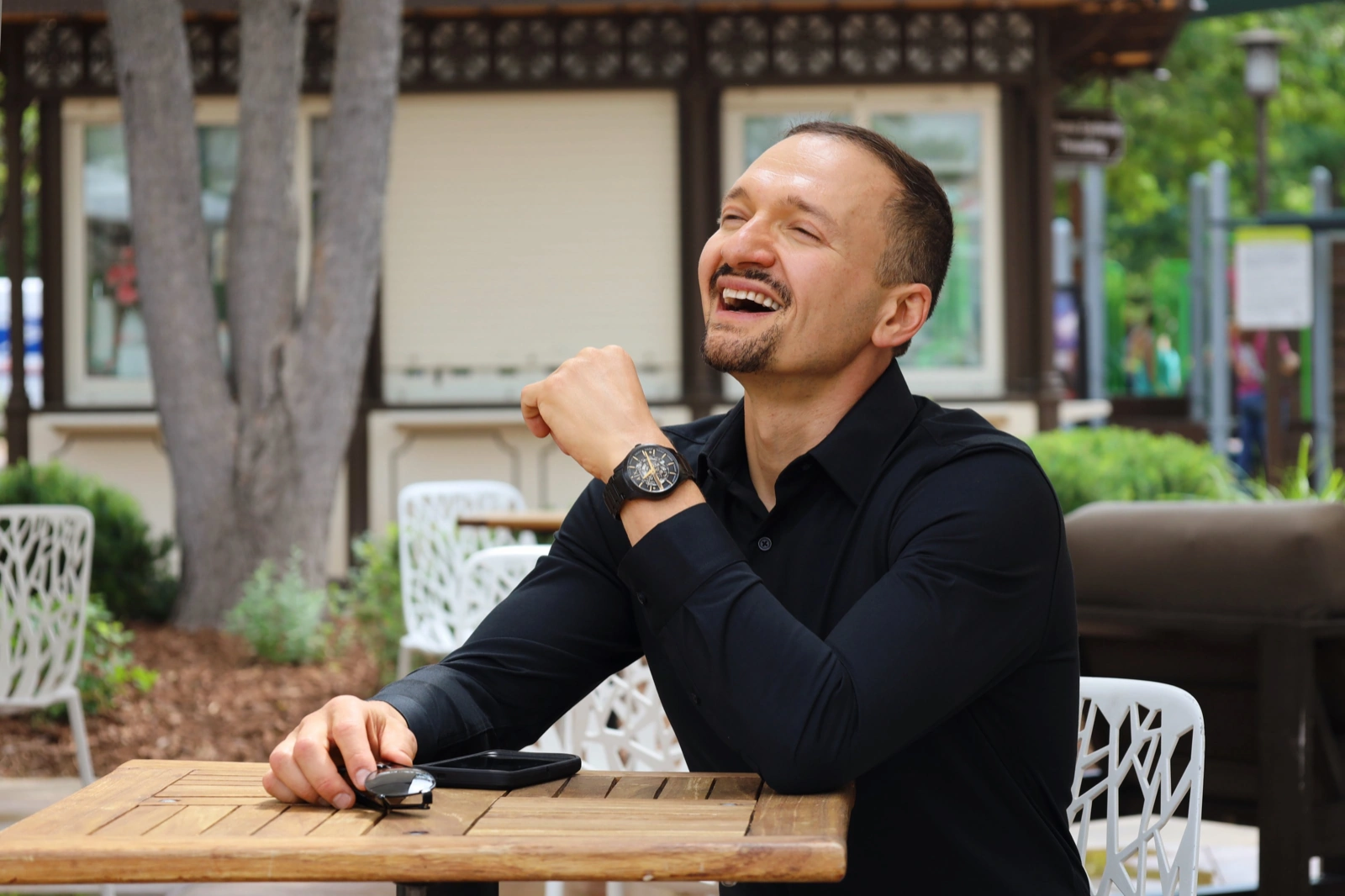
21. The laugh-and-turn
How: The photographer says something ridiculous; you laugh and turn slightly away. It's a candid frame that shows your real expression. Common mistake: faking the laugh. Ask for an actual prompt (more on those below).
Close-up and headshot poses: chin, jaw and eye line
Close-ups magnify everything, so small adjustments make big differences. If you need a dedicated corporate or acting shot, our full guide to headshot poses goes deeper on framing and expressions. These are the moves that matter most for male poses up close.
22. The 45-degree turn
How: Turn your shoulders about 45 degrees from the camera, then bring your face back toward the lens. It narrows the shoulders slightly and adds depth. Common mistake: facing the camera square-on, which flattens the face and widens the frame.
23. The squinch
How: Slightly narrow your lower eyelids, as if you're recognizing a friend across the room. Common mistake: squinting with the whole face, which looks like you've lost your glasses. Photofeeler's study of more than 60,000 ratings across 800 profile photos found that squinching eyes raised average scores for competence by 0.33, likability by 0.22 and influence by 0.37.
24. The defined jaw
How: Chin forward and slightly down, with light falling so there's a shadow line under the jaw. Common mistake: tucking the chin back toward the neck, which does the opposite. In the same Photofeeler study, a shadow line outlining the jaw raised competence by 0.24 and likability by 0.18.
25. The eye line
How: For direct, confident shots, look into the lens itself, not the photographer's face above it. For softer, thoughtful frames, look just past the lens to one side. Common mistake: looking somewhere between the two, which reads as distracted.
26. The hand-to-chin
How: Rest your fingertips lightly along your jaw or chin, elbow supported on a table or your other arm. Common mistake: the full "thinker" with a fist under the chin, which pushes the face up.
Framing matters too. Photofeeler found that head-and-shoulders or head-to-waist crops worked best: face-only close-ups pulled likability down by an average of 0.21, while full-body shots cut competence and influence by 0.29. For a profile photo, crop at the chest or waist.

Outdoor and location poses
Location does half the posing for you. Use what's there: benches, trees, water, railings and textured walls.
27. The bench arm stretch
How: Sit at one end of a park bench with an arm stretched loosely along the backrest and an ankle crossed over the knee. Common mistake: stretching both arms wide, which reads as taking up the whole bench.
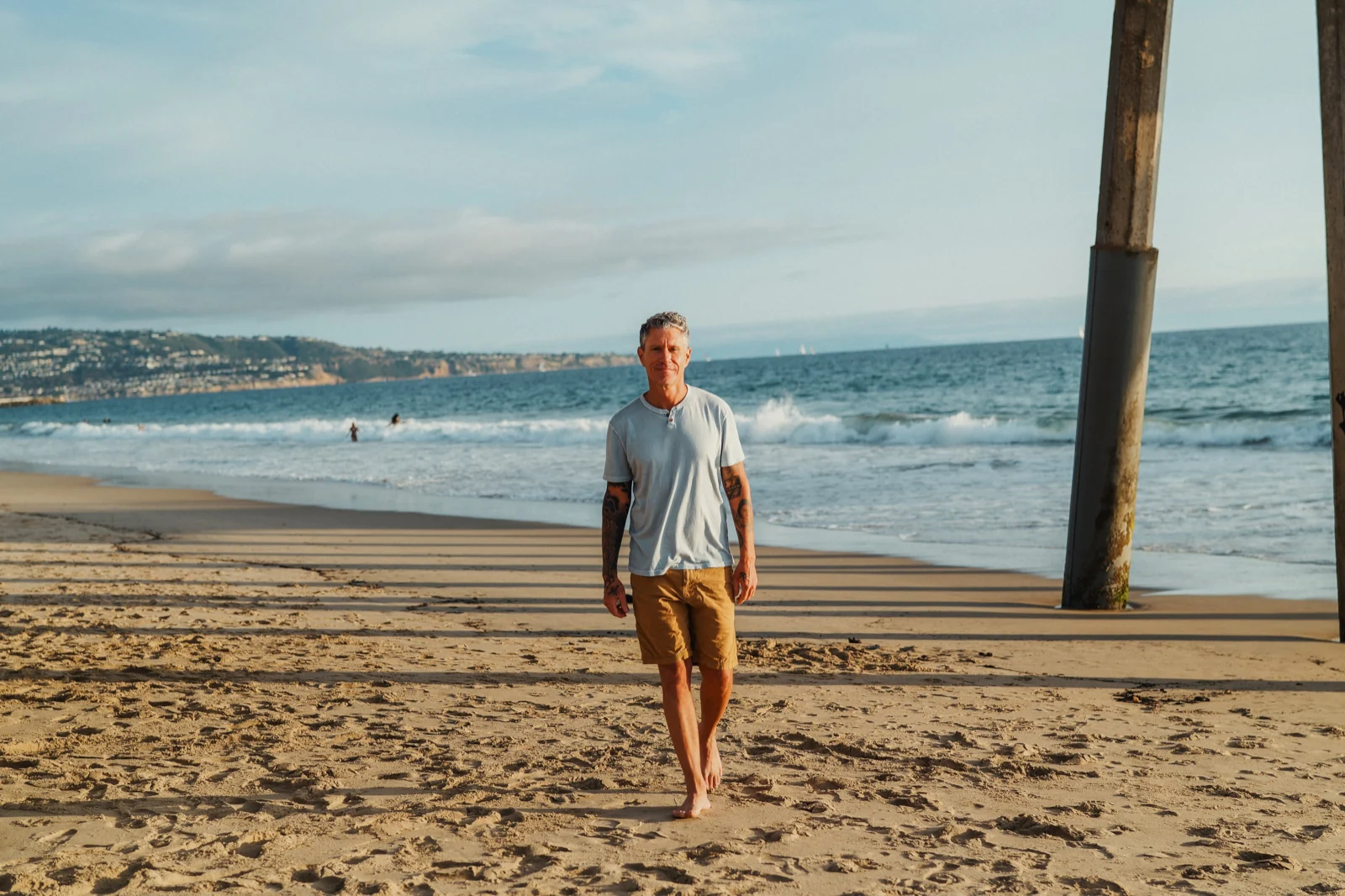
28. The shoreline walk
How: Walk along the water's edge, hands in pockets or holding shoes, and look out toward the horizon for a few frames before turning to camera. Our guide to beach photoshoot poses has more ideas for sand, surf and golden hour. Common mistake: shooting at noon, when harsh overhead sun puts dark shadows in your eye sockets.
29. The tree or pillar lean
How: Lean one shoulder against a tree trunk or column, look slightly off-camera, then back. Texture behind you adds interest without clutter. Common mistake: standing so close to the tree that branches seem to grow out of your head.
Casual vs business vs dating-profile poses
The same guy needs different photos for different jobs. Here's how to choose poses for each context.
Business and LinkedIn
For LinkedIn, your company site or a speaker bio, stick to poses 1, 3, 12, 16 and 22 to 26: upright, open, looking into the lens. LinkedIn's own sales blog states that members with a photo receive 21 times more profile views and 9 times more connection requests, so a missing or blurry photo is the costliest pose of all.
What to wear matters here more than anywhere. Photofeeler's study found formal dress (a dark suit over a light shirt, with tie for men) beat everything else it tested for perceived competence and influence, with average gains of 0.94 and 1.29. If your industry is more casual, a blazer over an open collar is a good middle ground.
For a business shoot, pose 30 is worth adding:
30. The arms-crossed smile at a desk
How: Stand or perch beside a desk in your actual workspace, arms loosely crossed, open smile. Common mistake: a closed-mouth smirk, which turns "capable" into "unimpressed."
Dating profile
Dating photos need to show a real person doing real things. Mix one clear, well-lit close-up (poses 22 to 25) with a full-length shot and at least one movement or activity frame (poses 18 to 21). Our Tinder tips for guys covers profile order and what to avoid in more detail.
On smiling, you'll still hear the old advice to look away and keep a straight face. Photofeeler traces that tip to OkCupid's OkTrends blog in January 2010. When Photofeeler re-ran the analysis on a matching 7,140-photo sample, it found that smiling or not smiling made no statistically significant difference to attractiveness ratings, with one exception: eye contact without a smile was harmful. So if you look into the lens, smile. If you don't feel like smiling, look away.
One more dating-specific tip: lose the sunglasses in your lead photo. Photofeeler found sunglasses dropped likability scores by an average of 0.36.
Casual, social and big occasions
For Instagram, personal brand shoots and family albums, lean on poses 8 to 11, 17 to 21 and 27 to 29. Big occasions follow their own rules: our guides to prom photo poses and graduation photo poses cover suits, dates, caps and group shots.

Outfits and grooming: quick tips for men
The best pose can't save a shirt that doesn't fit. Our guide on how to pick outfits for photoshoots covers colors and layering in full; here are the essentials.
• Fit beats brand. Shoulders should sit at your shoulder bone, sleeves should end at the wrist, and trousers shouldn't pool at the ankle.
• Layers give your hands somewhere to go. An open jacket, overshirt or cardigan instantly adds lapels to hold and pockets to use.
• Solid, mid-tone colors photograph best. Navy, gray, olive and earthy browns flatter most skin tones. Skip tight stripes and small checks, which can shimmer on camera.
• Iron or steam everything. Wrinkles show more in photos than in mirrors.
• Get a haircut about a week before. That's enough time for the fresh-cut edges to soften.
• Beard or no beard, tidy the neckline. A clean line under the jaw helps define it.
• Blot shine. A matte moisturizer or a pack of blotting papers keeps the forehead and nose from reflecting light.
• Bring two options. A dressier and a more casual look double what you get from one session.

How to relax on camera
Posing is half technique and half nerves. These are the habits that get guys out of their own heads.
• Warm up with throwaway frames. Tell yourself the first ten minutes are practice. The best shots tend to come once you've settled in.
• Breathe out before the shutter. Take a breath in, let it go, and let your shoulders drop with it. Held breath is where the frozen smile comes from.
• Move between poses. Shift your weight, step, turn, reset. Small movement between frames keeps you loose, and the in-between moments are often the keepers.
• Ask for prompts, not instructions. "Tell me about the worst haircut you ever had" gets a real laugh; "smile" gets a grimace.
• Bring music. A playlist you like changes your face more than any cue.
• Think of someone. For a warm expression, picture a person you're happy to see walking toward you.
• Check a few frames, then stop checking. A quick look at the back of the camera builds confidence. Checking every shot breaks the rhythm.
For photographers directing men
If you're behind the camera, demonstrate the pose yourself rather than describing it. Give one instruction at a time, and praise specifically ("that hand on the lapel is great, keep it"). Men often relax once they have a task, so lead with movement and props before stationary poses.
Selfie, self-timer or a photographer?
You can use every pose in this guide with a phone on a tripod. But distance changes your face more than most people realize.
A Rutgers and Stanford model published in JAMA Facial Plastic Surgery found that a selfie taken about 12 inches from the face makes the nasal base appear roughly 30 percent wider and the nasal tip 7 percent wider than a photo taken at 5 feet, a standard portrait distance. That's why an arm's-length selfie never looks quite like you, and why portrait photographers step back and use longer lenses.
If you're shooting yourself:
• Put the phone on a tripod or shelf at chest-to-eye height, at least five feet away, and use the zoom lens if you have one.
• Use burst mode or a 10-second timer with interval shooting, so you can move between poses.
• Face a window for soft, even light.
A self-timer works for a quick profile refresh. For photos that carry real weight (a dating profile you're serious about, a LinkedIn headshot, a personal brand launch), a photographer does three things a tripod can't: controls light, directs your pose in real time, and catches the in-between moments you'd never time yourself.
Book a portrait shoot that makes posing easy
Knowing 30 male poses is one thing. Holding them while someone points a camera at you is another. The fastest fix is a photographer who directs you in real time and knows which poses suit your build, outfit and goals.
With Snappr, you choose a time and place and get matched with a vetted local photographer. Book with as little as 2 hours' notice, and get your edited photos within 48 hours. They'll bring the gear and the prompts; you bring a couple of outfits.
Book a professional portrait session with Snappr and walk away with photos that actually look like you.
Frequently Asked Questions
What are the best male poses for beginners?
Start with the weight shift, hands in pockets and a shoulder lean against a wall. All three give your body an angle and your hands a job without needing any practice. Once you're comfortable, add walking shots and seated poses.
What should men do with their hands in photos?
Give them a small task: one hand in a pocket with the thumb out, a hand on a jacket lapel, adjusting a cuff or holding a prop like a coffee cup. Avoid letting them hang at your sides or clasping them low over your belt, which reads as nervous.
How do guys look less awkward in photos?
Shift your weight onto one leg, keep a small gap between your arms and body, and push your chin slightly forward and down. Movement also helps: walking, turning and laughing at a real prompt all hide stiffness better than holding a still pose.
Should men smile in photos?
For most photos, yes. Photofeeler's re-analysis of OkCupid's famous 2010 advice found smiling made no significant difference on its own, but looking into the camera without a smile hurt ratings. If you look at the lens, smile; for serious or editorial frames, look away.
What are good photo poses for men on dating apps?
Use a clear head-and-shoulders shot with a smile as your lead photo, then add a full-length pose, a walking or activity shot and a candid laugh. Skip sunglasses in your main photo and avoid arm's-length selfies, which distort your features.
What are the best male poses for a LinkedIn or business headshot?
Turn your shoulders about 45 degrees from the camera, bring your face back to the lens, and push your chin slightly forward and down. A slight squinch and a natural smile with teeth read as confident and approachable, and a head-and-shoulders crop works best.
Sources
1. Association for Psychological Science, "How Many Seconds to a First Impression?": Willis and Todorov's finding that face impressions form in a tenth of a second and longer exposure doesn't significantly alter them
2. Britannica, "Contrapposto": definition of contrapposto, weight on the engaged leg, origin with the ancient Greeks
3. Mignault and Chaudhuri, "The Many Faces of a Neutral Face: Head Tilt and Perception of Dominance and Emotion," Journal of Nonverbal Behavior (2003): raised heads perceived as more dominant, bowed heads as submissive
4. Photofeeler, "New Research Study Breaks Down 'The Perfect Profile Photo'": 60,000 ratings of 800 photos; effects of squinching, jawline, framing, formal dress and sunglasses
5. Photofeeler, "OkCupid Is Wrong About Men's Dating Photos": 7,140-photo re-analysis of smiling and eye contact in men's dating photos
6. LinkedIn Sales Blog, "Picture Perfect: Make a Great First Impression with Your LinkedIn Profile Photo": 21 times more profile views and 9 times more connection requests for members with a photo
7. Rutgers University, "Selfies Drive Self-Image and May Lead Many to Seek Plastic Surgery": selfie distortion at 12 inches versus 5 feet (JAMA Facial Plastic Surgery)


